“Fuel tourism” under control. The Germans and Czechs are refueling, but there is no mass attack

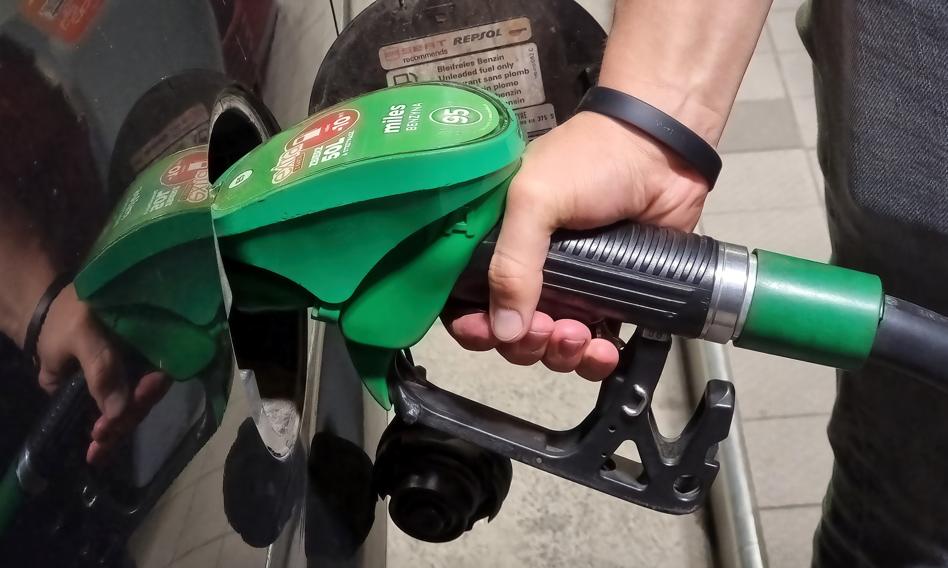
On Wednesday, there were more foreign drivers at border gas stations in Poland, mainly from Germany, but there is no question of mass fuel tourism to our country – according to information collected by PAP correspondents.
In Poland, maximum fuel prices at stations have been in force since Tuesday. According to the announcement of the Minister of Energy on Wednesday, a liter of EU95 petrol will cost no more than PLN 6.21, EU98 petrol – PLN 6.81 and diesel oil – PLN 7.66. From Tuesday (until April 30 this year) there is also a reduced rate of 8%. VAT on fuel.
At gas stations in the border town of Lubieszyn (in the West Pomeranian Voivodeship) on Wednesday at noon, there were small queues of two or three cars to one pump. At one of the two Orlen stations, approximately 20 cars with German license plates and one with ZS (Szczecin) plates refueled within a quarter of an hour.
At Orlen stations, EU95 petrol cost PLN 6.16 per liter, while diesel cost PLN 7.54. Prices were higher at nearby BP and CricleK stations. The British concern offered the “95” for PLN 6.21, and the diesel for PLN 7.66. The smaller CircleK station sold diesel for PLN 7.62 and 95 petrol for PLN 6.17.
German drivers refueling in Lubieszyn commented that their fuel was about 35 euro cents more expensive per liter. In the border state of Mecklenburg-Vorpommern, diesel costs over PLN 10 per liter.
In the border town of Kostrzyn nad Odrą – as PAP learned from the staff of two gas stations – on Wednesday early afternoon there were slightly more customers from Germany than usual, but there were no large crowds. As an employee of one of the stations put it, customers from across the Oder appear in waves to refuel their cars.
The situation was similar in the border town of Słubice, neighboring the much larger Frankfurt (Oder) on the German side. As PAP learned from employees of two local gas stations, there are slightly more German customers, but there is no general rush to the pumps. Fuel prices in Germany have been higher than in Poland for a long time.
In the case of border towns, such as Kostrzyn nad Odrą or Słubice, the so-called shopping tourism is the order of the day. Germans have been visiting local bazaars and shops for years, and also filling up their cars.
Also in Cieszyn, near the border with the Czech Republic, there are no fewer Czech customers at gas stations. Employees of one of them, located on the outskirts of the city center, reported that there have been a lot of southern neighbors since yesterday. The difference in the price of a liter of gasoline or diesel between stations in Poland and the Czech Republic located 2-3 km apart is approximately PLN 1. Filling up the entire tank can mean saving several dozen zlotys.
It was a bit different on Wednesday in Zgorzelec, a city bordering on German Görlitz. According to information collected by PAP from the inhabitants of Zgorzelec, there is no increase in “fuel tourism” from the western neighbors on Wednesday. There are slightly more cars with German registration numbers at self-service gas stations located next to supermarkets. Fuel there is usually much cheaper than at stations of large chains.
In turn, in Podkarpacie, the situation at gas stations in the border regions with Slovakia remains stable. Despite price differences, there was no increased traffic of vehicles with Slovak registration numbers.
In the Dukla commune, through which the key Via Carpatia transport route runs towards the border crossing in Barwinek, employees of several gas stations contacted by PAP did not notice any increased traffic. And one of them (BRO-PAL AUTO SERVIS station) has even observed slightly less traffic in the last two days. As he said, there are even fewer local customers, and none from Slovakia.
The services also did not observe any major traffic.
According to Wednesday's e-petrol.pl study, a liter of the popular “95” costs on the retail market on average PLN 6.16, while a week ago it was PLN 7.14, and diesel oil has become cheaper from a record PLN 8.69 to PLN 7.54/l.
According to the publication, the cheapest gasoline – with an average price of PLN 6.09/l – is in Upper Silesia and the most expensive in the Świętokrzyskie Voivodeship, where it costs PLN 6.16 per liter. In the case of diesel, this fuel is the cheapest in Warmia and Mazury (PLN 7.50 per liter), and the most expensive in Małopolska – there its liter is sold for an average of PLN 7.57.
On Sunday, an amendment came into force changing, among other things, Act on Petroleum Stocks. It introduced a mechanism for calculating the maximum fuel price to be applicable at stations. The amendment provides that during the period in which reduced VAT rates apply, entities selling fuel are obliged to apply a sales price no higher than the maximum price. It is determined according to a formula that includes the average wholesale price of fuels on the domestic market, plus excise duty, fuel surcharge, sales margin of PLN 0.30 per liter and VAT.
In accordance with the regulations, the Ministry of Energy will publish an announcement on maximum fuel prices every day. Sales above the maximum price will be subject to a penalty of up to PLN 1 million, and inspections will be carried out by the National Tax Administration.
From Monday, the regulation of the Minister of Finance and Economy regarding the reduction of excise duty on fuels comes into force. According to it, until April 15, the reduced excise tax on gasoline is PLN 1,239 per 1,000 liters; in the case of diesel fuels – PLN 880 per 1,000 liters; in the case of biocomponents constituting independent fuels – PLN 880 per 1,000 liters. The regulation was issued on the basis of the amendment to the Excise Duty Act, which entered into force on Sunday. The amendment made it possible to temporarily reduce excise tax rates on fuels by means of a regulation until June 30. (PAP)
bpk/ tma/ mmd/ szf/ pdo/ api/ drag/ mhr/