
After years of coldness, the US and Russian armies are talking again. Can the world breathe a sigh of relief? The expert answers [OPINIA]


Whether the renewed exchange will be a success will depend on what expectations we set for it and how we conduct it. In my opinion, it will not bring as many benefits as we would like. But it will still be better than no conversation at all.
As a Soviet and later Russian military specialist who served in the U.S. military for 30 years, I have been involved in many similar interactions with Russian counterparts—some confrontational, others cooperative. In practice, such contacts consist mainly in the exchange of intelligence information regarding the strategic and operational capabilities and intentions of both sides.
The military relationship between Washington and Moscow is almost as old as the United States itself. However, history shows that we should remain cautiously optimistic about expecting positive results.
For example, in 1855, the American Department of War sent a group of officers to Russia, including the future commander of the Union troops, General George McClellan. Their task was to collect information about the Crimean War, which Russia ultimately lost to Great Britain, France and Turkey. After arriving in St. Petersburg, the officers waited for months for permission to go to the war zone – ultimately they did not receive it. Nevertheless, they observed Russian military training and returned to the US with Russian military manuals, which proved very useful in training the still young US army.
Of course, significant cooperation and dialogue occurred during World War II, when both the U.S. and the Soviet Union fought a common enemy—Nazi Germany. However, the lack of direct communication between units at the end of the war almost led to tragedy. As both armies approached the German town of Torgau on the Elbe, Soviet forces mistakenly opened fire on the Americans from across the river. American Lieutenant William Robertson of the 69th Division had to find a German prisoner of war who spoke Russian to convince Soviet soldiers that they were dealing with Americans and not Germans. The now famous meeting on the Elbe almost did not take place the day before due to lack of communication.
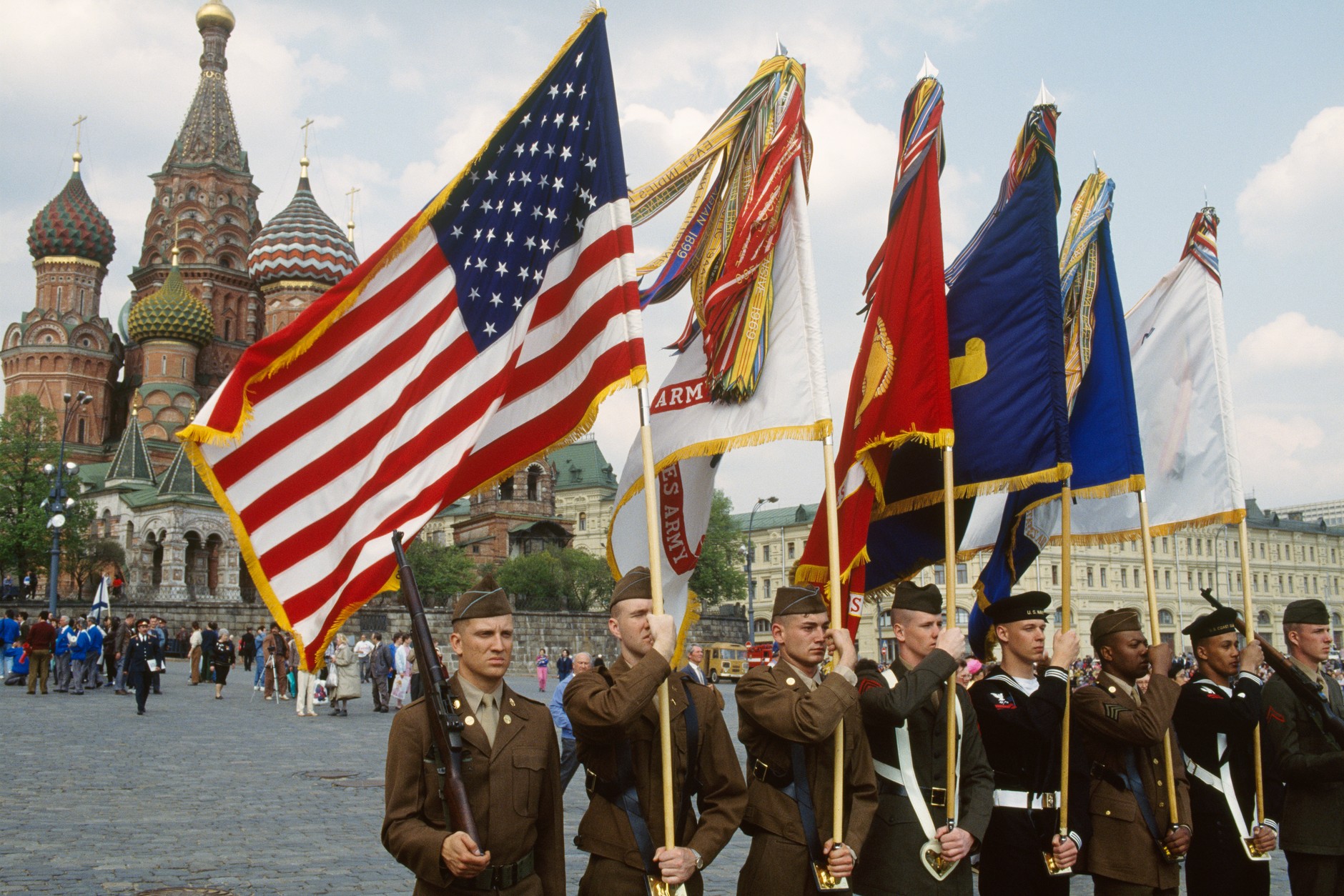
American soldiers parading on Red Square during the celebration of the end of World War II (stock photo)Georges De Keerle/Getty Images
During the Cold War, top U.S. and Soviet military commanders were directed to conduct talks and negotiations aimed at increasing transparency and preventing an accidental outbreak of conflict. For over 40 years, both countries maintained liaison missions in their zones of responsibility in West and East Germany. These units, equipped with bilingual officers and non-commissioned officers, provided direct communication between U.S. and Soviet commanders stationed along the inner German border and reported on troop dispositions and movements – as it was often said, “keeping the cold war cold“.
Partnership interrupted by war
Although such transparency proved effective, tensions often escalated. In several incidents, the lives of American soldiers were threatened. In 1985, one of the liaison officers, Lieutenant Colonel Arthur Nicholson, was shot by a Soviet guard.
Back in the first decade of the 21st century, the annual plan of military cooperation between EUCOM and Russia included approximately 100 different events. In 2010, American soldiers from the 1st Infantry Division marched in the May 9 Victory Day parade in Moscow. At the same time, officers and cadets from both countries visited each other's training centers and military academies.
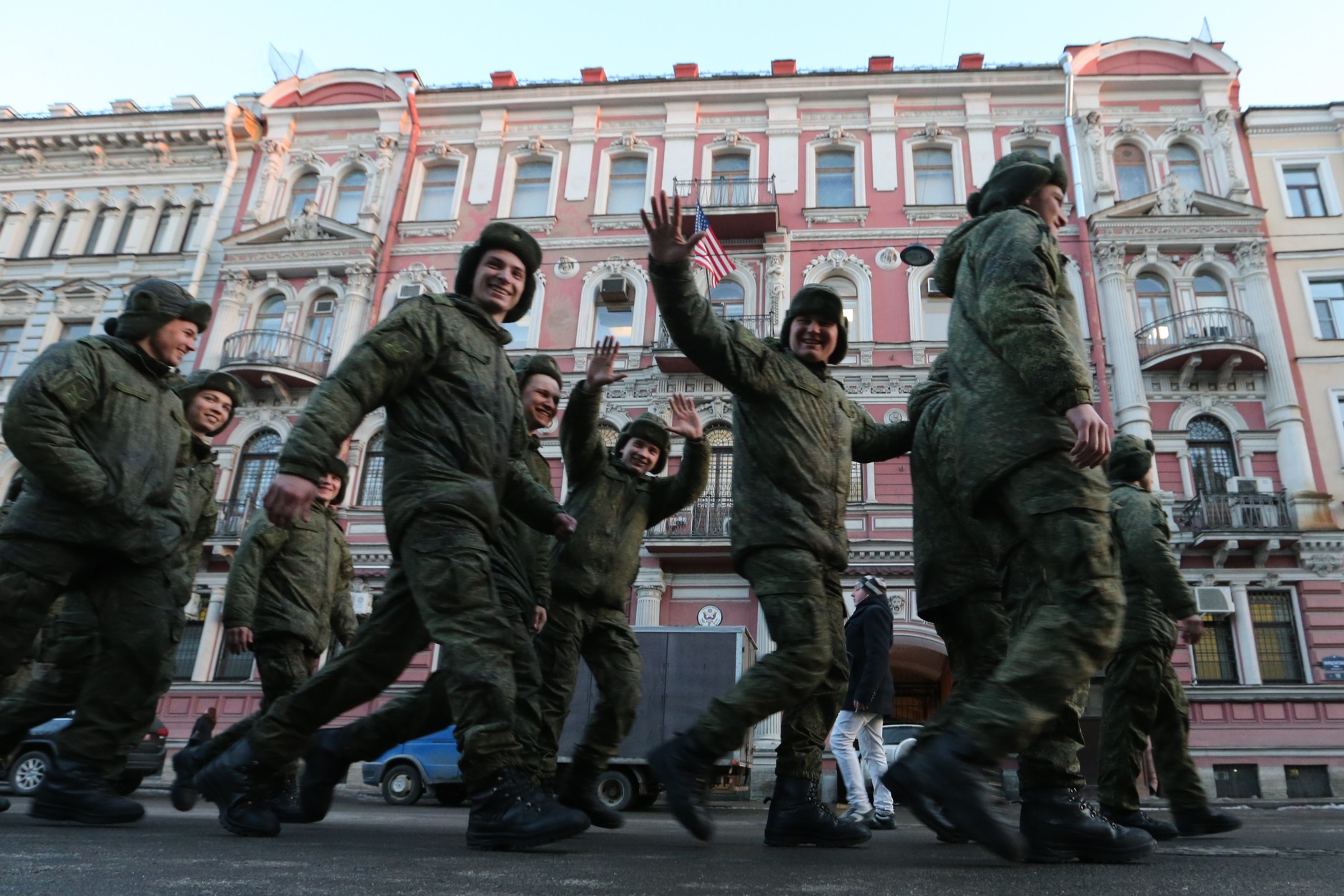
Russian soldiers marching in front of the United States Consulate General, Saint Petersburg, Russia (stock photo)SOPA Images/Contributor/Getty Images
In 2021, however, the United States canceled the last EUCOM dialogue activities on the eve of a full-scale Russian invasion of Ukraine.
Who actually conducts the talks?
After the end of the Cold War, most military contacts were indeed conducted by EUCOM and its subordinate commands. However, meetings were also organized independently by other structures: Pacific Command, Strategic Command and the chairman of the Joint Chiefs of Staff. The heads of the various branches of the US armed forces also arranged meetings with their Russian counterparts. The U.S. Coast Guard maintained intensive operational cooperation with the Russian Coast Guard in the North Pacific.
The main reason there are so many freelance contacts is because the command structures in the US and Russian armies are not well suited to each other. There are commanders of individual types of armed forces in both countries, but their competences are not fully analogous. American commanders are responsible for recruiting, training and equipping their formations, but do not command them in combat. Russian commanders are responsible for both.
At first glance, the equivalent of the chairman of the US Joint Chiefs of Staff appears to be Russian Chief of the General Staff Valery Gerasimov – both are the highest-ranking officers in their respective militaries. However, their responsibilities vary significantly. The Russian Chief of the General Staff is also the First Deputy Minister of Defense and commands all branches of the armed forces. The American chairman has no such powers. American commanders of regional combat commands—like EUCOM—naturally maintain relationships with the armies in their operational regions. In the case of Russia, however, it is more difficult to find a clear equivalent.
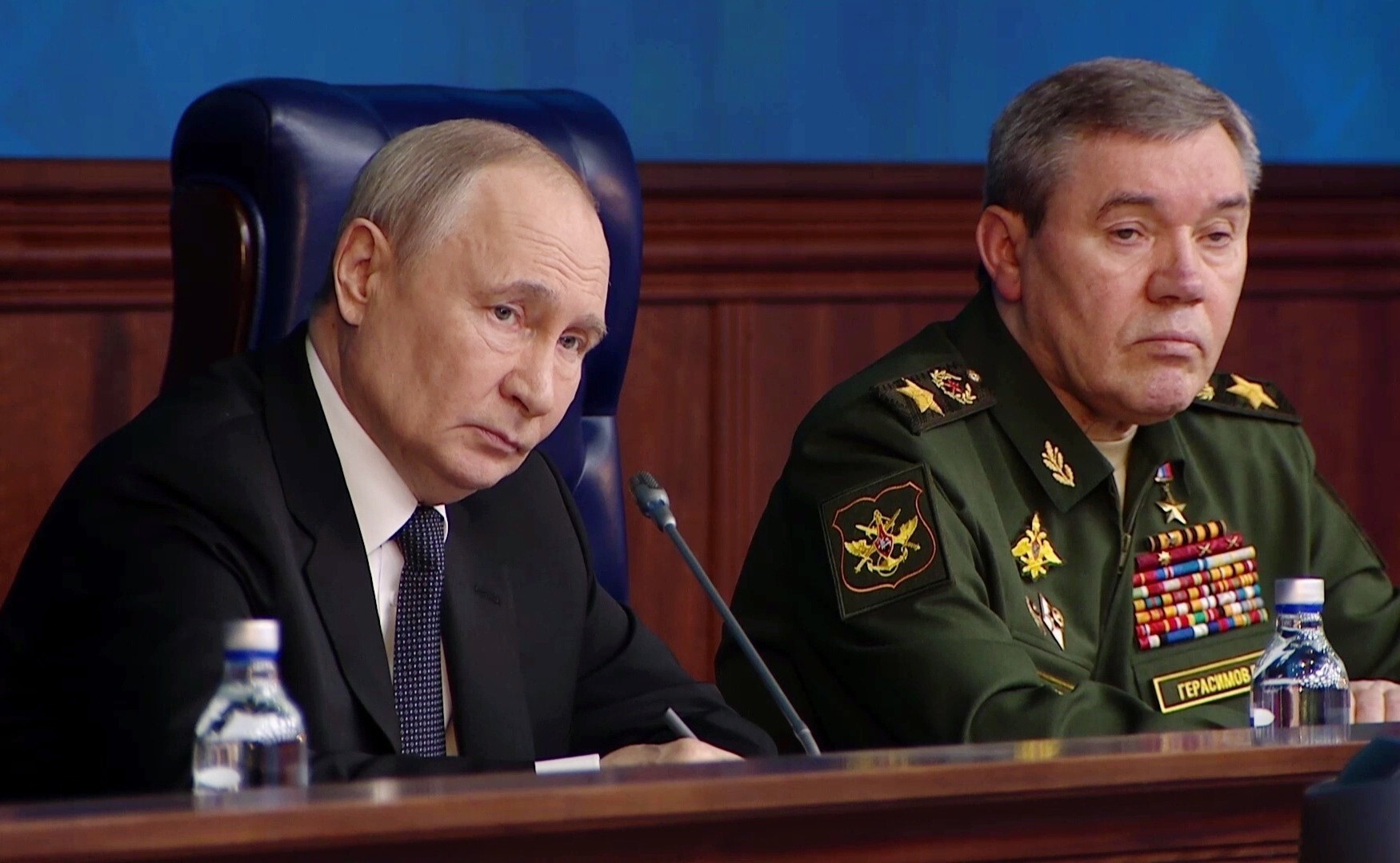
President of Russia Vladimir Putin and Deputy Minister of Defense General Valery Gerasimov (stock photo)Kremlin Press Office/Anadolu via Getty Images/Getty Images
“Either way, it's worth a try”
Of course, EUCOM is not the best forum for planning military dialogue regarding the Pacific region or strategic nuclear weapons. However, the February 5 announcement does not rule out expanding or changing the main direction of the US-Russia military dialogue.
It's also worth remembering that although formal military relations between the US and Russia were severed in 2021, communication channels never completely disappeared. Contacts—although rare—still occurred. Therefore, “re-establishing dialogue” means more than just occasional telephone conversations between senior officers.
According to an EUCOM statement, the dialogue is intended to ensure “continuous military contact between the parties as they work towards a lasting peace,” which suggests a focus on the military aspects of Russia's war with Ukraine.
At the same time, the document points to a broader mission, defining dialogue as “an important factor of global stability and peace.”
Whether these two key goals complement or conflict with each other will largely determine whether the renewed dialogue will be a success.
Either way, it's worth a try.


