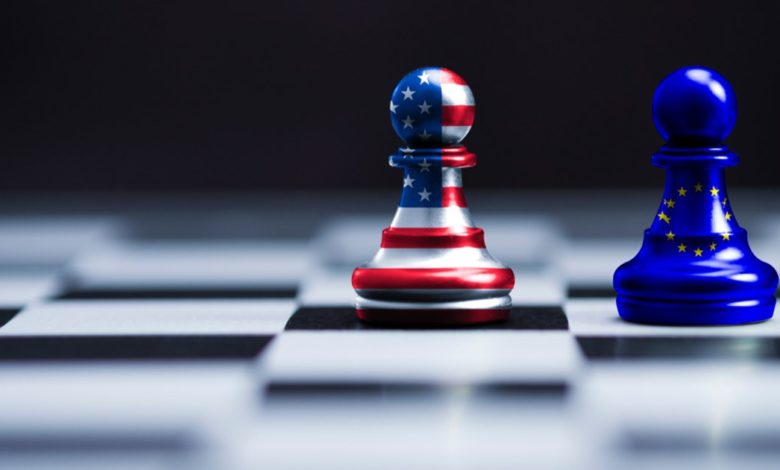
While the US, under the Trump administration, is trying to change the rules of global trade, the EU seeks to reposition itself as a central actor of any change, reports New York Times.
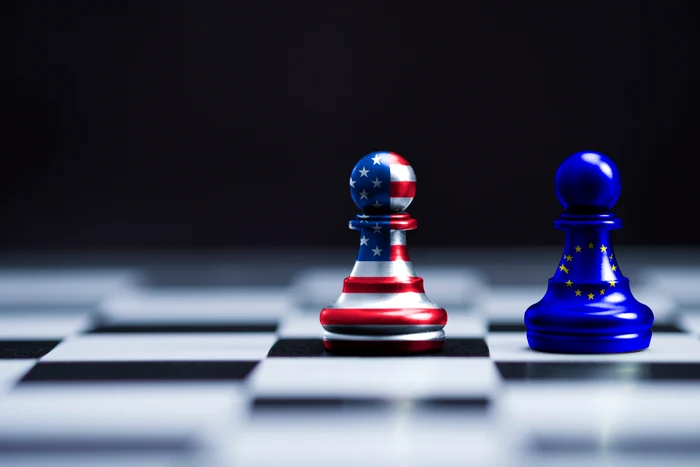
President Trump has great ambitions in terms of global commercial system and uses the rates to try to tear it down and then rebuild it. But the European Union does not stay for nothing: it takes measures according to measures to ensure that the continent is in the center of any commercial order that will be formed.
Being one of the largest and most light savings in the world, the EU has a lot in the game, as the rules of trade undergo a radical change. European companies benefit from the export of cars, pharmaceuticals and machines. Conversely, European consumers benefit from American search engines and imported fuels.
Europe is aware that in the game there are big stakes for her.
Ursula von der Leyen, the president of the European Commission, the EU executive arm, spent the last weeks having telephone discussions and meetings with global leaders. She and her colleagues strive to deepen the existing commercial agreements and to conclude new ones. There is discussed how they can reduce commercial barriers between European countries.
At the same time, I take a tough position against Dure China, trying to make sure it does not flood with cheap metals and chemicals, while losing access to US customers because of Trump's high rates.
It is an explicit strategy, meant to make the economic superpower and less dependent on an increasingly unstable America. As Von Der Leyen regularly emphasizes, the US consumption market is large – but everything does not stop.
“The US represents 13% of the global trade of goods”, said Maros Sefcovic, the EU trade commissioner, in a recent speech. The purpose of “It is to protect the remaining 87% and to ensure that the global commercial system prevails for us. ”
Success is far from being guaranteed. America is the world's largest economy and an essential supplier of military technology and leadership for Europe. There is no real possibility to replace it in these roles overnight. In this sense, Trump's direction is unlikely to be smooth.
But his own change becomes inevitable, as von der Leyen acknowledged in an interview with the Financial Times this week.
“I mean, never waste a good crisis,” she said.
Europe expands its group of friends
Europe has said clearly that he has a desire to negotiate with the United States. Sefcovic has repeatedly traveled to Washington and intends to return to the United States Monday. The goal is to work to get “Results win-win ”said Olof Gill on Friday, spokesman for the European Commission.
The community block puts offers such as reducing tariffs for cars and other industrial products and increasing American liquefied natural gas purchases. It also prepares reprisals if negotiations fail.
But the effort for an agreement is only the first part of the EU strategy. The second part is to make new friends.
Europe has spent time since Trump's re -election working to establish or improve commercial links with various partners. Officials have been discussing Mexico, India, South Korea, South Africa and Central Asia, to name only a few. At the same time, the EU announced on Thursday that discussions on free trade in the United Arab Emirates will begin.
Von Der Leyen spoke this week with Mark Carry, the new Canadian prime minister.
“She reaffirmed the powerful EU commitment to the open and predictable trade and expressed her decision to work closely with Canada to reform the global commercial system.”the community block said in a statement.
The relationship with China
The EU and the US agree that the existing commercial system has failed to prevent China from subsidizing production, allowing them to sell cheap products on other markets in a way that brings out the local producers.
In this regard, Von Der Leyen said as clearly as possible that the changes of commercial rules are now inevitable.
She explained for the FT that regarding the World Trade Organization – the deputy of order based on rules so important for Europe – the purpose was to “modernize, reform and stabilize”.
Von Der Leyen stressed that Europe will be guard while the US and China are engaged in a total commercial battle. China announced on Friday that it will increase tariffs for US goods to 125% from 84%, the third round of reprisals in a rapid escalation of the commercial war between the two superpowers.
European officials are worried that Chinese companies will direct their metals, chemicals and other products to the continent, with American customers inaccessible. This is why the EU has set up an “operative group of imports surveillance” that can detect and respond to a potential influx of goods.
On the occasion of the conversation that Von Der Leyen had with the Chinese prime minister earlier this week, she urged Beijing to negotiate with the United States and stressed that China has to work on long-term structural solutions to rebalance commercial relations, the EU said.
Some European leaders-including Spanish Prime Minister Pedro Sánchez-have put pressure on improving the relations between China and the EU due to the commercial overturn. However, experts appreciated that it is just as likely, if not even more likely, that the commercial tensions between the two rather intensify against the background of increasing pressures.
However, the basic strategy of Europe is clear: it pressures for an agreement with the US, but it also recognizes that the world is about to change and hopes to cross this period so that it comes out.
The question that arises is whether these new alliances will anger Trump. The US president has already cried on social media about the fact that Europe is trying to conclude agreements.
“If the European Union works with Canada to hurt the US economy, large -scale rates will be imposed, much larger than those currently planned.” he wrote on Social Truth at the end of March.
So far, this threat seems to have not had the effect of discouraging conversations.
No one can ignore the reality that Europe is based on American cooperation for much more things than trade. Even though the EU could replace American customers and raw materials with other markets, US military support remains essential in both the Ukraine and NATO war.
But for now, the EU seems to accept that the rules are about to be rewritten. In view of this, his leaders seem to do their best to make sure that when they happen, they will have a say.