NATO adopts Turkish technology to detect Russian drones. The Mrops system, implemented priority in Poland and Romania


NATO will implement a Turkish air surveillance system to identify early Russian military drones, in response to the more frequent violations of the air space in the east and southeast of the Allied territory. Before operationalization, however, a training period is required.
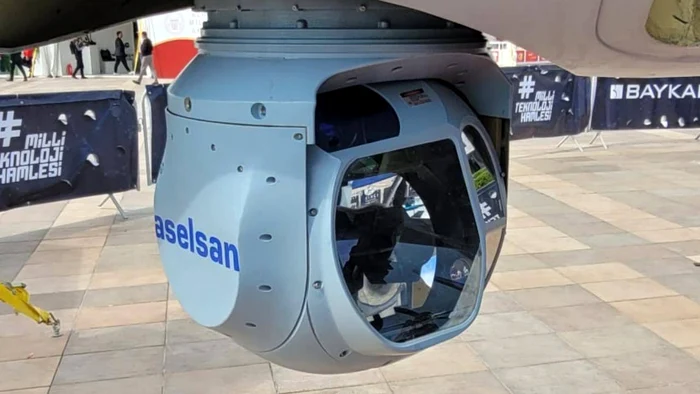
Mops was publicly presented for the first time in 2022/ Photo: X
According to the information obtained by the DPA agency, the training of the staff is to be coordinated with the support of Ukraine, and the first stages are scheduled to start next week.
The countries targeted in a priority way are Poland and Romania, where in the last months there have been more and more penetrations of Russian drones in the airspace. The system targeted is Mrops – a technology developed by the Turkish company Aselsan – which allows high precision air surveillance and can be mounted on both helicopters and drones. Mrops was publicly presented for the first time in 2022 and is able to detect objects even through clouds or dust.
Technology adapted to difficult conditions
A central element of the system is the use of infrared on medium and short wavelengths, which allows it to function efficiently under low brightness, such as those in dawn or twilight. This makes it useful in difficult operational environments. In addition, the system is equipped with modern image processing technologies, combining classic methods with advanced artificial intelligence solutions.
Mrops also integrates operational support functionalities, including moving targets, displaying isotherms and images in false colors, as well as automatic acknowledgment of threats. According to the manufacturer, these capabilities greatly extend the area of use of drones and helicopters.
The new generation software allows the automatic tracking of several targets, their recapture after temporary loss, classification of threats by and automatically identifying the background objects. The system is designed to operate under extreme conditions, with temperatures between -40 ° C and +70 ° C.