The longest and shortest conclave in the history of the Vatican. What happened to the cardinals who have taken a new pope to choose for years

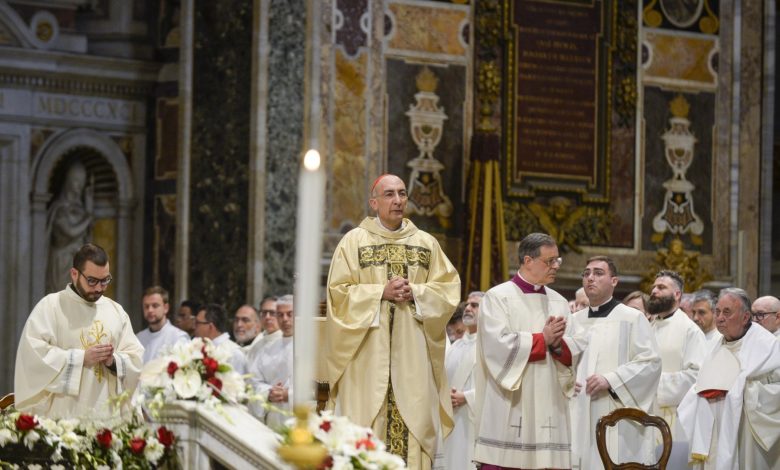
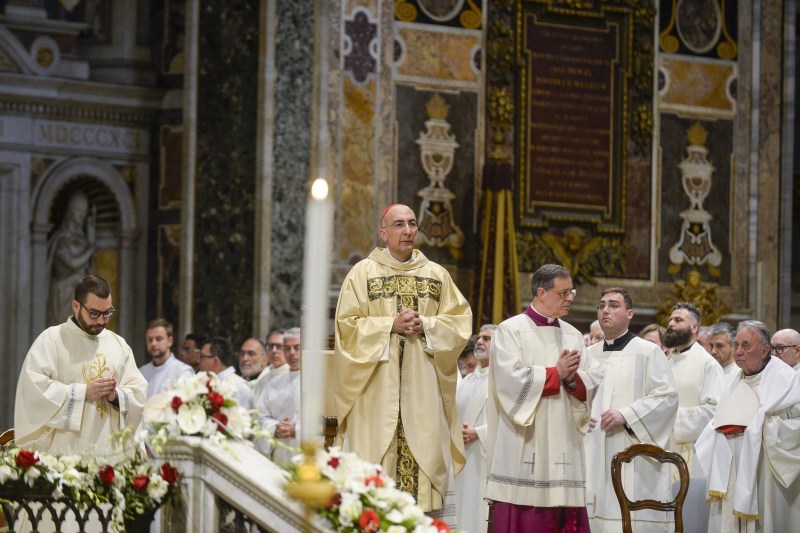
Pope Francis's commemoration service, at Saint John's Basilica in Lateran, Rome, Italy, April 21, 2025. Photo: Backgrid / Backgrid USA / Profimedia
The conclave for choosing the new Pope, following the death of Francis, should start at the earliest on May 5, after a nine -day mourning period that starts on the day of the funeral, writes Sky News on Tuesday.
This is the process of choosing a new pope, certain cardinals are charged with choosing the future pontiff. While they decide, no contact with the outside world is allowed.
It is a tradition that dates back to centuries and has not always proceeded as well as the Vatican would like.
Three years to choose a pope
This was never more evident than in the middle of the 13th century, when a conclave lasted almost three years, more precisely 33 months.
The respective conclave began in 1268 and ended in 1271, when he was finally chosen Gregory X.
But in order to determine the conclave to reach a decision faster, the inhabitants ripped the roof of the building in which the cardinals were deliberating and limited their meals to bread and water.
In an attempt to avoid repeating the situation, Grigore decreed in 1274 that only one meal a day will receive the cardinals if the conclave extends more than three days.
Bread, water and wine were to be included in the menu and if the conclavs exceeded eight days.
Although the meals served these days at the Vatican Hotel are not copious at all, the cardinals will not remain hungry – no matter how long the conclave lasts.
The shortest conclave
Before 1274, there were times when a pontiff was chosen on the same day as the death of his predecessor.
But after that, the church decided to wait at least 10 days before the first vote. This period was later extended to 15 days to give the cardinal time to reach Rome.
The fastest conclave who followed the rule of the 10 days seems to have been the choice of Iulius II in 1503.
He was chosen in just a few hours, according to Ambrogio Piazzoni, a Vatican historian.
What changes did Francis bring to the conclave
The name of the “papabils”, or the favorite cardinals to climb the Holy See after the death of Pope Francis, circulates in the press for a long time, and the choice of a new pontiff will be categorically influenced by the changes made by Francis to the geography of the conscelors of the electors, which has changed radically during its 12-year-old pontifier, where it is in the area, Stronger, the ANSA reported on Thursday.
According to the Italian press agency, the main “papable” of this moment are the Secretary of State of the Vatican Pietro Parolin, the Archbishop of Bologna and the president of the Conference of the Italian bishops Matteo Zuppi, the Patriarch of Jerusalem Pierbattista Pizzaballa, the Hungarian Peter Erdo, the French Jean-Marc, The Philippine Luis Tagle representing the expansion Catholicism in Asia, the Congolese Fridolin Ambongo Besung who represents Africa Fervent Catholic and Brazilian Leonardo Ulrich Steiner, Archbishop of Manaus, which represents the Latin American area that gave it to Francisc, the first Argentine Pope in history.
About 135 cardinals will participate in the Conclav, of which 108 were appointed by Francis, 22 by his German Benedict XVI and 5 by Pope Polish John Paul II, notes Agerpres.
One of the cardinals appointed by Francis is also one of his most vehement critics, German cardinal Gerhard Ludwig Mueller.
From the group of cardinal that opposes the more liberal direction taken by the Catholic Church during Francis's pontificate, there are even several African bishops, for whom even the discussion about homosexuality is taboo, but also the US conservative.
Under the leadership of Francis, the Cardinal College became less Eurocentric, the number and influence of the Italian and Western cardinals decreasing considerably, in the context in which the Vatican focused on the borders of the Catholic world, where missionary actions are being carried out and where new expansive Catholic communities are formed.
Thus, about 59 cardinals come from Europe (19 from Italy), 37 from America (16 from North America, 4 from Central America and 17 from South America), 20 Cardinals from Asia, 16 from Africa and 3 in Oceania.