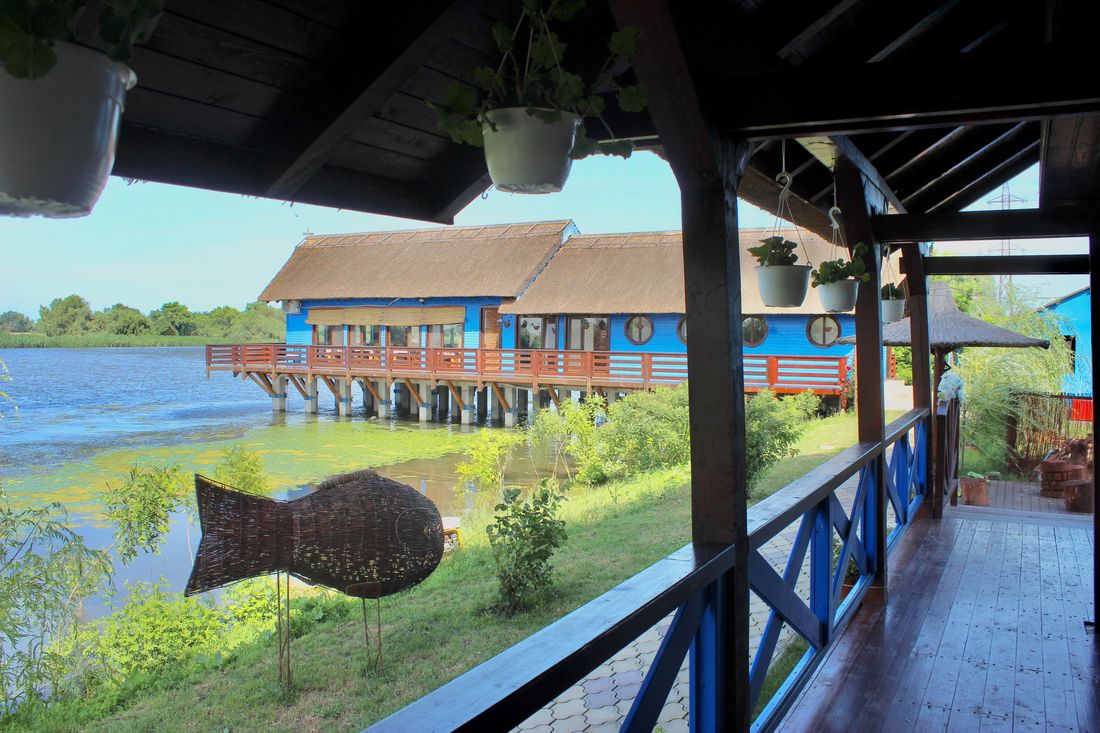
Photo source: Pension Obretin
The Danube Delta, listed as a UNESCO World Heritage Site, is an exceptional area both from an ecological and tourist point of view. Located mostly in Romania, it covers a vast area, harboring an amazing biodiversity, essential for the global ecological balance. Its unique landscapes, combining marshes, canals and forests, constitute a veritable paradise for nature lovers.
The Danube Delta is one of the few destinations where you can feel nature in its purest form. A stay in the Danube Delta offers you peace, fresh air, spectacular landscapes and memories that last forever.
The Danube Delta covers an impressive area of over 4,000 km²
It is one of the largest and best preserved in Europe. This area is equivalent to roughly twice that of Île-de-France, making it an impressive region to explore for nature lovers. As a comparison, the Nile Delta, although more famous, is largely urbanized, while the Mekong Delta is heavily exploited for agriculture. Instead, the Danube delta remains a largely wild area, ideal for a Danube Delta vacation.
What are the main ecosystems present in the Danube Delta?
The Danube Delta is a mosaic of interconnected ecosystems that make it a unique natural site. This diversity provides an ideal habitat for thousands of animal and plant species, attracting travelers from all over the world in search of stay in the Danube Delta.
The Danube Delta is home to a wide variety of ecosystems, each contributing to its natural richness:
Swamps and reed beds: These wetlands cover much of the delta, with some of the largest expanses of reeds in the world. They serve as a refuge for exceptional fauna, especially birds such as white pelicans, ibis and herons. These marshes are accessible by boat, an activity popular with travelers.
Alluvial forests: Flooded forests, such as those of Letea and Caraorman, harbor rare species and are popular for their mysterious appearance. They are composed of willows, poplars and oaks, forming a unique ecosystem that can be explored on foot or on an organized circuit.
Canals and lagoons: the numerous arms of the Danube form a complex network of natural and artificial canals, bordered by lagoons. These areas are rich in fish such as catfish and sturgeon, attracting fishing and water-watching enthusiasts.
The Danube Delta represents an ecological and cultural treasure that must be preserved, as this site is a sanctuary for biodiversity. Its marshes, canals, lagoons and alluvial forests harbor exceptional fauna and flora, attracting every year enthusiasts and nature lovers in search of discoveries, interested in a Danube Delta holiday. However, this natural paradise is threatened by environmental challenges such as pollution, overfishing and the effects of climate change. Thanks to conservation efforts, local initiatives and the development of sustainable tourism, the delta can continue to play an essential role for global biodiversity and the local communities that depend on it. Visit the Danube Delta by boat, take part in organized tours or stay in a traditional guest house – these are all ways to appreciate this natural wonder while contributing to its conservation. Whether you're exploring mystical forests, spotting animals or discovering Sulina, every day spent here is an immersion in the beauty and richness of a unique ecosystem. The Danube Delta is an invitation to escape, discovery and commitment to the preservation of one of the most precious natural sites in the world.
Choose a Danube Delta vacation when you feel the need to slow down, take a deep breath and enjoy the simple things. A stay in the Danube Delta is not just a destination, it is a state of well-being.
Article supported by Pensiunea Obretin