Romania is in an “advanced” stage of the OECD accession process. Bolojan: “We must gradually increase the retirement age”

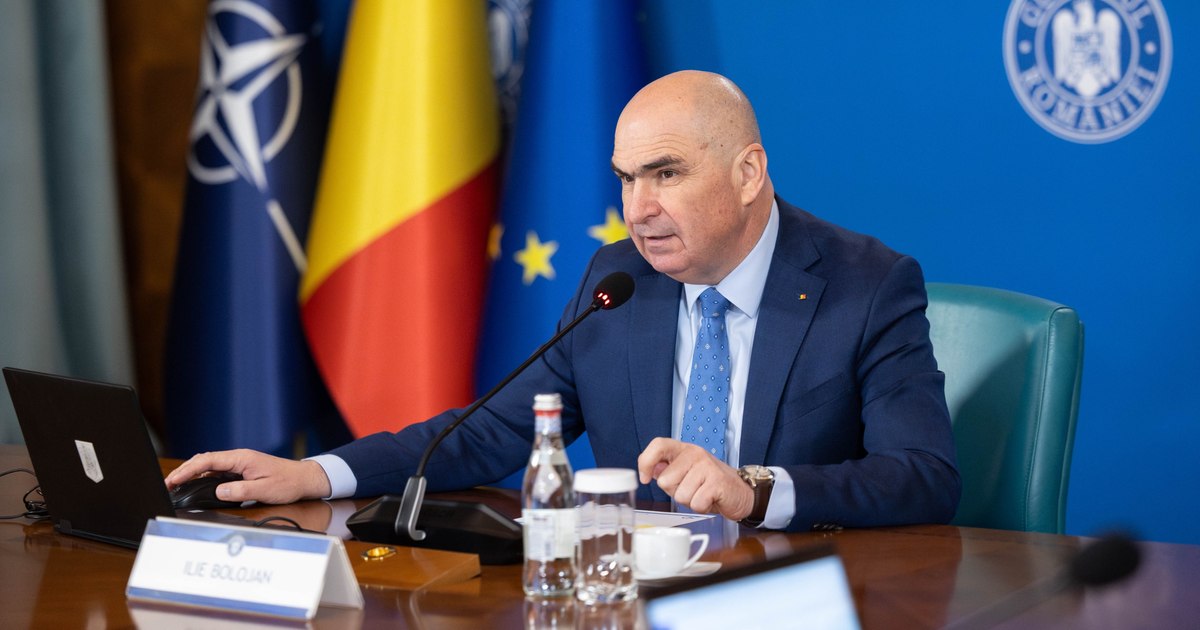
Prime Minister Ilie Bolojan announced on Monday, March 16, that Romania is at an “advanced” stage of the process of joining the Organization for Economic Cooperation and Development (OECD), after receiving 23 of the 25 necessary approvals.
Ilie Bolojan/PHOTO: Gov.ro
“I am happy to participate today, together with the Secretary General of the Organization for Economic Cooperation and Development, Mr. Mathias Cormann, at the launch the new edition of the OECD Economic Study for Romania.
Since the opening of accession negotiations, in January 2022, Romania has entered into a process of evaluating its policies and practices, compared to OECD standards in almost all areas of public policy. Thanks to the joint effort of the institutions involved, our country has taken important steps in this accession process.
The economic study that we are launching today offers important recommendations for fiscal and budgetary reforms, for the labor market and for increasing the competitiveness of the economy. It is a reference point for economic stability and for the modernization of the state”said Ilie Bolojan, at the Victoria Palace, at the launch event of the Economic Study 2026 for Romania developed by the OECD.
Ilie Bolojan stated that Romania is going through a difficult economic period and that the growth model must be based more on competitiveness and productivity, emphasizing that steps have been taken to consolidate the fiscal and reduce the budget deficit.
“After a deficit of around 8.7% of GDP in 2024, 2025 ended with a deficit of 7.7%, below the 8.4% level estimated by the European Commission. We are continuing the reforms started last year, and the budget project for 2026 is a realistic one, so that we reach the deficit target of 6.2% at the end of this year”Bolojan detailed.
He mentioned that, at the economic level, the study shows that Romania has withstood the shocks of recent years and the effects of the war in Ukraine.
“Economic growth slowed temporarily in 2025 due to fiscal adjustments and the economic situation in Europe. However, the outlook remains positive. Estimates show growth of around 0.7% in 2025 and around 1% in 2026, supported mainly by public investment and European funds”said Bolojan.
“Romania must respond to demographic pressures and labor shortage”
In fiscal terms, the objective is to gradually reduce the deficit, to use public money more efficiently and to have a better absorption of European funds, he added.
“As far as the labor market is concerned, Romania must respond to demographic pressures and labor shortages through policies in education, health and through measures to bring more active people to the labor market.
That is why we need to gradually increase the retirement age in fields where today people retire very early, sometimes even at 48-49 years old, in order to have more active people and a sustainable pension system in the long term”Bolojan transmitted.
Ilie Bolojan stated that to increase the competitiveness of the economy, competitive costs, an efficient administration and clear rules are necessary.
He emphasized that the reforms and investments supported by PNRR aim to reduce bureaucracy, digitize public services and simplify procedures for companies, and Romania is simultaneously accelerating European investments in transport infrastructure and in the modernization of electricity networks.
“Romania aims to reach a new goal in 2026: joining the OECD”
He also highlighted the fact that the OECD study shows both the progress our country has made in recent years, as well as the areas in which we still have work to do, and is an important benchmark for the reforms that must be implemented.
“Romania is going through a process of changing the way public finances and economic policies are managed. We need to reduce the deficit, improve collection and use public money more efficiently.
At the same time, monetary policy must remain cautious until inflation is fully stabilized and structural reforms must continue. If we apply these reforms consistently, we can build a more stable, competitive and resilient economy,” argued Bolojan.
The Prime Minister pointed out the importance for Romania of the objective of joining the OECD.
“Almost two decades after two defining moments, joining the European Union and NATO, Romania aims to reach a new goal in 2026: joining the OECD”, said Bolojan.
At the end of the speech, the Prime Minister thanked the Secretary General of the OECD and the representatives of the organization for the collaboration with the Romanian authorities and emphasized the progress achieved by Romania in the accession process.
“We are at an advanced stage, we have 23 committees that have been completed, we still have two more committees. And I hope that together, in the coming months, we will manage to complete these stages as well”, said Bolojan.
He emphasized that in the matter of joining the OECD there was an agreement on the part of all political forces.