Sam Altman compared the energy consumption of all humans who have ever lived to that of AI, to make a demonstration

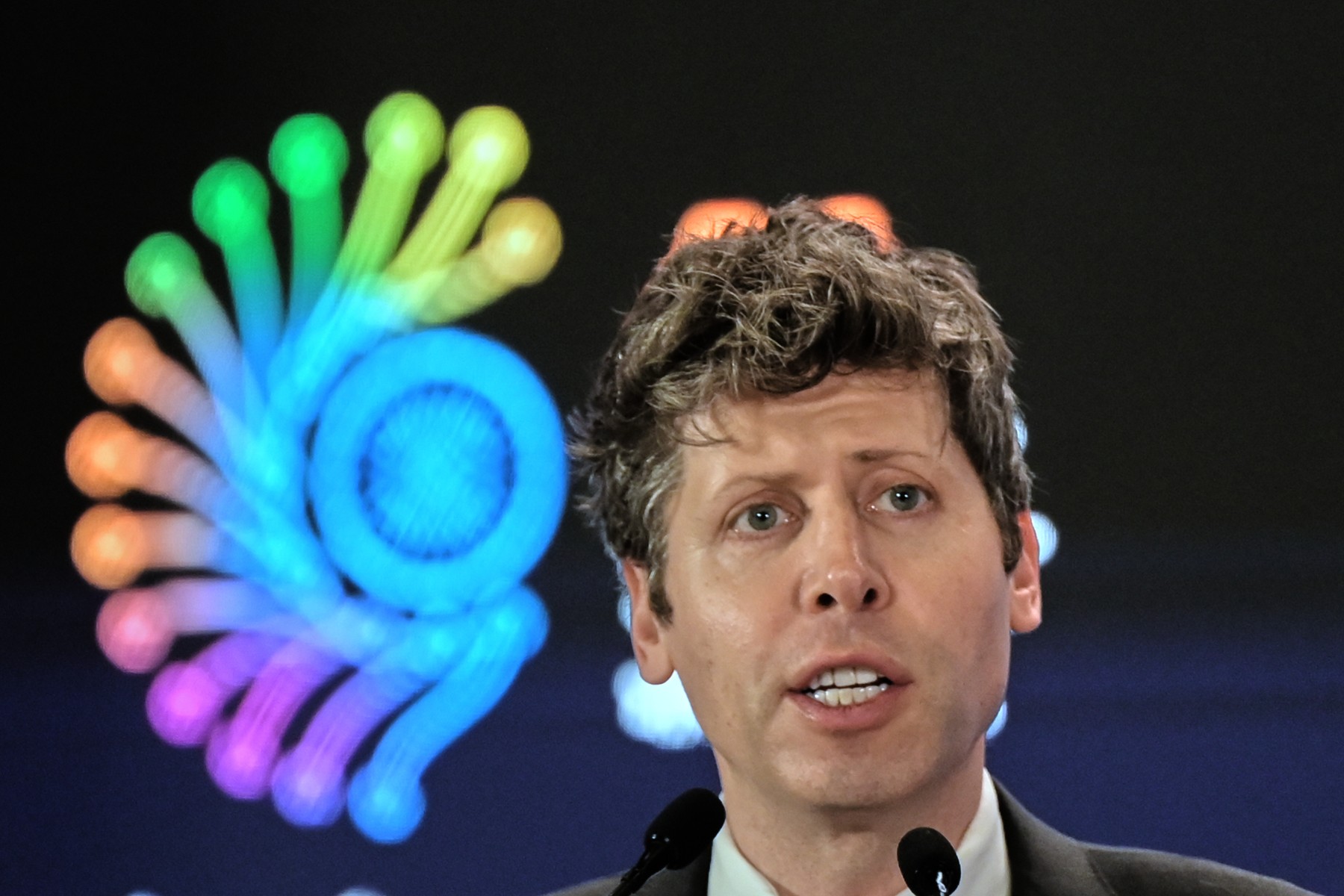
Sam Altman, photographed on February 19, 2026 at the “India AI Summit”, PHOTO: / AP / Profimedia Images
Sam Altman, head of OpenAI, claims artificial intelligence (AI) technology is being unfairly targeted for its energy consumption as critics ignore the huge amount of resources humans have consumed over the millennia, including to avoid being eaten by predators, The Register reports.
Speaking in an interview at the AI Summit in India, the 40-year-old CEO of the company that created ChatGPT said it's reasonable to have concerns about AI's resource consumption and that “we need to move very quickly to nuclear or wind and solar.”
But he suggested that some fears are overblown. “The water is completely bogus,” he said, referring to the water consumption needed to cool the data centers that are the “backbone” of AI technology. In this regard, Altman pointed out that data centers for AI often rely on liquid cooling in closed systems, rather than traditional cooling that leads to losses due to evaporation.
The interviewer recalled claims by Bill Gates that a single ChatGPT query consumes the equivalent of 1.5 iPhone battery charges. Altman dismissed those numbers, saying, “There's no way it's even close to that.”
Altman pointed out that such comparisons would not be fair
Furthermore, Sam Altman has argued that such complaints ignore the sheer amount of energy required to create and “train” a real human.
He said it's unreasonable to focus on “how much energy it takes to train an AI model, relative to what it costs a human to do a single inference query.”
“You need about 20 years of life and all the food you eat in that interval before you become intelligent,” he said. “And not only that: it took the very large-scale evolution of the 100 billion people who have ever lived and learned not to be eaten by predators and learned how to figure out science and stuff to produce you,” he continued.
He pointed out that most of the AI's energy consumption occurs during the training phase.
The head of OpenAI doesn't think we'll have data centers in space anytime soon
Altman touched on other topics during the interview, downplaying, for example, AI's impact on jobs and suggesting that it will create many more things for people to do. Altman instead said that previous waves of innovation have yet to deliver the “free time” people were hoping for, something Elon Musk promises for the future. Like Musk, Altman is a “techno-optimist”, evidenced by his 2024 manifesto about the future of humanity in the “Age of AI”.
“I think the future will be so bright that no one can do it justice by writing about it now; a defining feature of the Age of Artificial Intelligence will be massive prosperity,” Altman promises in the manifesto.
One thing he's not so confident about, however, is the existence of data centers in space, or at least not until the end of this decade. In this regard, he recalled the still prohibitive costs of space launches and also emphasized that, once in orbit, the processing units used by AI are difficult to replace.
“And it still breaks quite often,” lamented Sam Altman.
 The world's largest privately held company will work on a 'conscious sun', but what does that mean?