New Magazine “Christmas Premieres”Source: Onet / Onet
Christmas is the most popular holiday in the world – it is celebrated even in countries where there are virtually no Christians. What's even more surprising is how few people know his story. What we associate Christmas with today – twinkling Christmas trees, atmospheric carols, beautiful poems and colorful gifts – are surprisingly young phenomena. Our modern holidays are a product of the 19th century. It was then that almost everything that we consider today as the most beautiful time of the year was created. Advent calendar, wreaths, numerous carols and the figure of Saint. Santa…
What were holidays like before the 19th century? Before we think about it, let's turn off the lights on the Christmas tree, turn off the oven and take off the Santa hat. Nicholas. Because the truth is that before, Christmas was a truly troublesome holiday.
Let's start with the fact that in the first centuries after the birth of Jesus (which constitute the foundation of this holiday), it was not celebrated at all. It was only from the 4th century that this gradually began to change and Christianity slowly became accustomed to this holiday. However, with today the magic of Christmas it had nothing to do with it. No one in the Middle Ages treated holidays as a family event. After mass, you returned from church to a dark house where no one was baking cookies and just fighting for survival in the frosty winter conditions.
No celebrating!
Christmas wasn't particularly liked, but at least it was tolerated. Until in the 16th century a catastrophe occurred: The Reformation began and Christmas was banned in some places. However, not at all because of Martin Luther, who, in fact, replaced St. Nicholas on the Child as a figure distributing gifts, but he did not touch the holidays themselves.
The article continues below the video
It was completely different in Calvinist Switzerland, where the holiday was banned because it does not appear as a celebration in the Bible. The Scots liked this fundamentalism so much that the Presbyterian Church adopted it and maintained it for so long that Christmas was not recognized as a public holiday again until 1958. In England, Puritans were equally radical. All these communities banned holidays for ideological reasonsalthough they could also be practical. Christmas was sometimes an excuse for indecent behavior.
In Berlin, King Frederick I already in 1711 warned against “too much tumult” and moved the midnight mass to early afternoon. In 1739, Frederick the Great even ordered all churches to be closed on Christmas Day in the afternoon and do not celebrate masses or midnight masses. In 1784, attempts were made again to move the Midnight Mass to another time – with poor results.
They also arrived from other regions of Germany news about drunken brawlers who scared children on the streets, broke into houses, fought or did other “damage”. It was so bad that the forced closure of inns and beer halls was repeatedly ordered during the holiday season.
Protestant Christmas tree versus Catholic nativity scene
But let's get back to the Reformation. This one was a breakthrough, but at the same time it was she who laid the foundations for the later global success of the holiday. It turned out that Protestants became zealous architects of our “modern Christmas”.
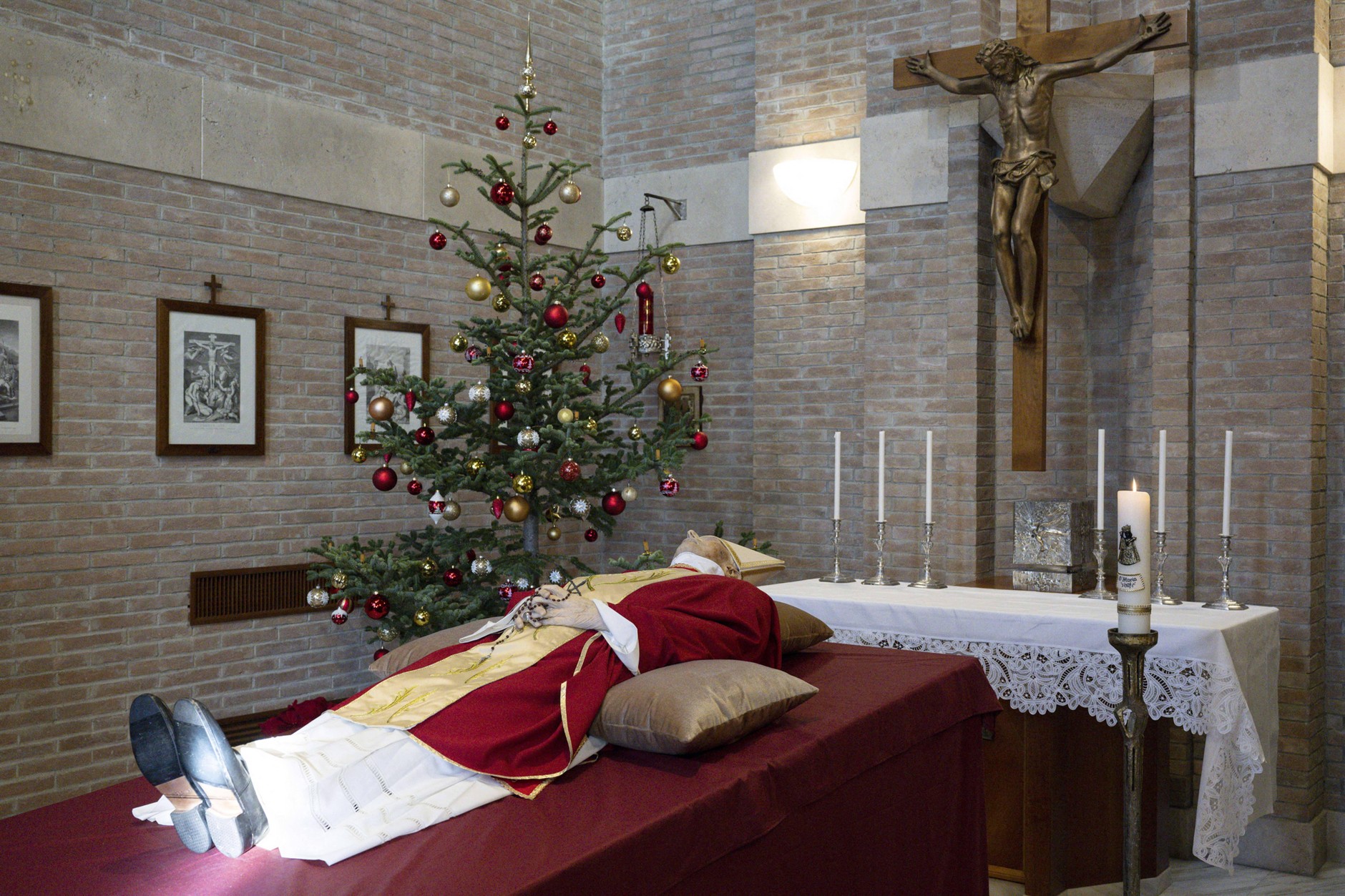
Their most famous contribution is the Christmas tree, which is also a symbol of ancient tensions between religions. Catholics liked to call it “Luther's tree” and preferred to cultivate the tradition of the nativity scene. At the beginning of the 19th century, the matter was clear: where the Christmas tree was lit, we dealt with Protestants, and where the nativity scene stood, we dealt with Catholics. The fact that the tree and the nativity scene were once used to distinguish each other seems incomprehensible today, since even at the deathbed of Pope Benedict XVI there was a Christmas tree. For the generations of his predecessors in the See of Peter, this would have been unthinkable.
The body of Pope Benedict XVI in the chapel of the Mater Ecclesiae monastery. Vatican, January 1, 2023Vatican Media/ABACAPRESS.COM / PAP
But how did this reconciliation of holiday traditions come about? The answer lies in the 19th century. The rise of the middle class meant that more and more importance was attached to celebrating Christmas at home. This trend began especially among Protestants, who celebrated holidays in private rather than in church anyway.
In this process of transforming holidays from a church celebration to a family celebration, more and more stories and carols appeared, traditions such as decorating the Christmas tree were created, and St. Santa Claus became the main giver of gifts. The example of Nicholas perfectly demonstrates the compromising nature of this character: he was neither a (Catholic) saint. Nicholas, nor the (Protestant) Baby Jesus. Thanks to this, everyone could identify with him.
It was only in the 19th century that Christmas was transformed from a purely religious holiday into a family holiday in which… giving gifts to each other played an increasingly important role, not the Christian message. It was the 19th century bourgeoisie who created modern holidays.
However, amidst the glow, the smell of gingerbread and the joyful cry of “Ho, Ho, Ho!” it's easy to forget that for most of its history, Christmas has had a difficult reputation.
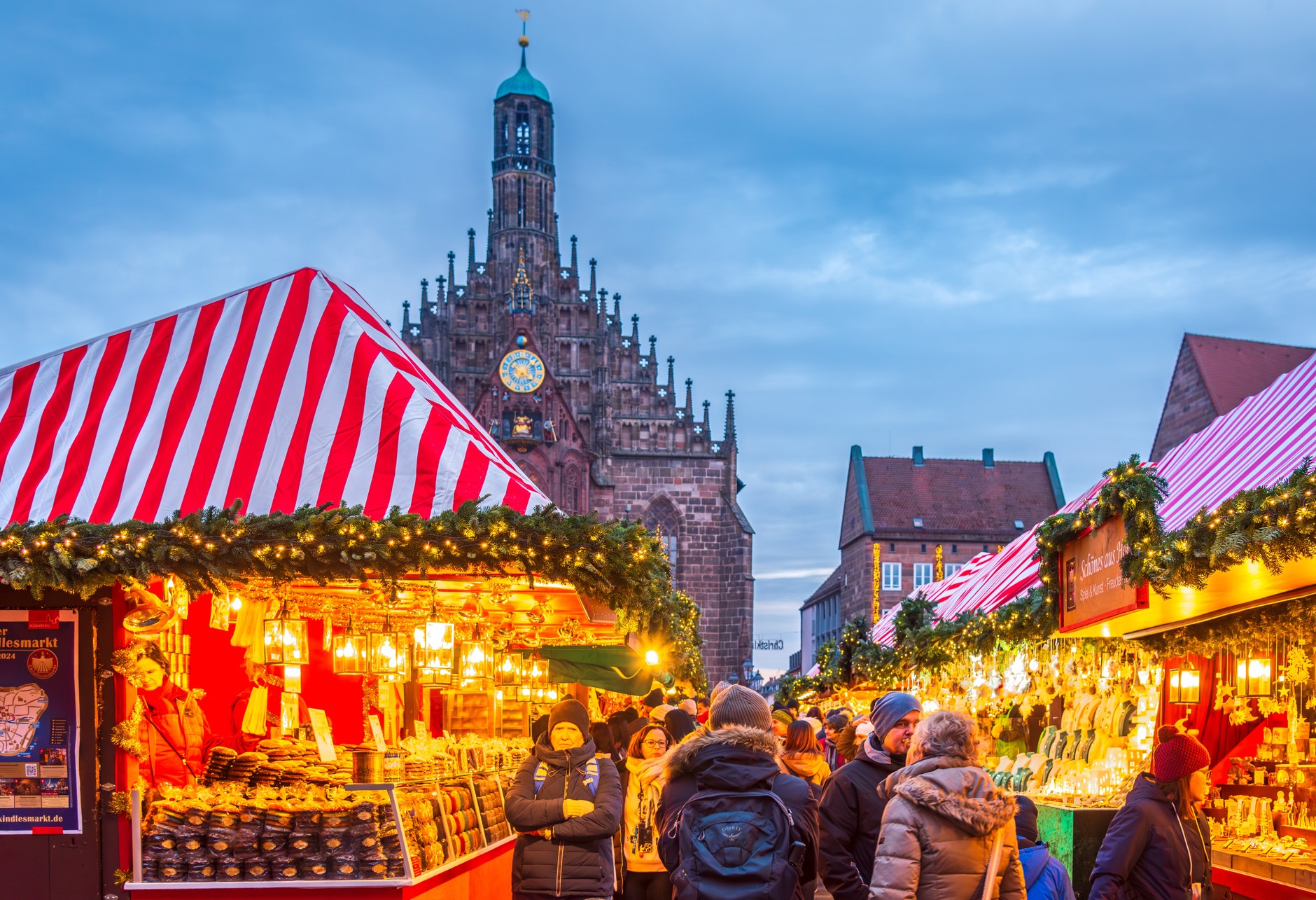
Christkindlesmarkt, the traditional Christmas market in Nuremberg. Illustrative photoecstk22 / Shutterstock
Before the development of the bourgeoisie, no one would have imagined that this problematic holiday would one day become a global phenomenon – celebrated by Christians as a religious celebration, and by many others only as a global holiday of giftsdetached from religious roots. In this sense, Christmas itself is the greatest of all holiday miracles.
I’m Ashley Davis as an editor, I’m committed to upholding the highest standards of integrity and accuracy in every piece we publish. My work is driven by curiosity, a passion for truth, and a belief that journalism plays a crucial role in shaping public discourse. I strive to tell stories that not only inform but also inspire action and conversation.