The day after the presentation of the coalition agreement, many scientists met in Berlin to discuss the urgent issue: Will the promises of migration policy be kept? And will people appreciate it so much that they will trust the ruling parties again? The topic could not be more current, because the Christian Democrats described it as the purpose of the future government policy before the election.
The coalition agreement is now available from the CDU/CSU point of view, promises to be returned: more border controls, more deportations, more refusalsincluding people applying for asylum. Hard resources follow the hard announcements, so far on paper.
– I believe that the coalition agreement finds the right answers and manages to maintain balance, urgently needed immigration of qualified employees and workforce, while effectively limiting illegal migration – says Dirk Wiese, SDP deputy. Is this enough to restore voters who have passed away and become disappointed? In the coming days it may not be easy.
The initial conclusions presented by scientists on Thursday at Mercator Forum for Migration and Democracy are positive. However, the point is that politicians not only speak but also act. Two experts checked whether the parties kept the promises of migration they made during the election campaigns. It turned out that in the past it was, at least partly. 58 percent promises regarding migration policy from the time of Merkel were realizeddespite the necessary coalition compromises.
The assumption that the hard announcements are not going on, is wrong, says one of the authors of the study. But as in this case you can explain the “increase in populist right”, another expert wonders. It is A problem that the previous coalition also felt.
Continuation of the material under the video
From 2023, the authorities have implemented several funds tightening migration policy, which previously seemed unthinkable for CDU/CSU and SPD – such as controls on all borders. Recently, the Syrians have even been turned back on a large scale, and the number of arrivals has fallen significantly.
SPD did nothing, from which Nancy Faeser, the current interior minister, came from. According to Infratest Dimap, only 14 percent It stated after universal elections that in their opinion this party would most likely conduct a good asylum and refugee policy, and 22 percent said about AFD. Will the same thing about Merz?
Citizens would like a more restrictive approach
One of the explanations of the lack of trust in the party from the previous coalition is their poor communication. Who knows that many Syrians are prevented from entering the country? Although the previous government adopted more stringent regulations, it introduced at the same time liberalizations that many voters do not accept. Many people reject, for example, double citizenship, which a three -party coalition promised to everyone who wanted to naturalize – or further rights of residence for migrants who are obliged to leave the country.
The future coalition has a different approach. Although it will quietly continue some liberal resources, will emphasize restrictive elements. The language of strength can impress with skeptical voters – as Donald Trump's election successes show.
However, there are two problems related to the so -called Black and red coalition and they are not easy to solve. One applies to implementation. Not everything that changes the new regulations leads to noticeable changes in practice. For example, it is still unclear whether in the future many more migrants will be returned in time, i.e. whether in the end there will be much less to Germany.
The second problem will probably be particularly difficult for most parties. What if significant Some voters want much sharper fundsthan is possible in a liberal constitutional state? If you look at the preferences of public opinion, one should say that many people want “less immigration, and maybe even its complete lack,” says Christian Joppke, a retired professor of sociology at the University of Bern. However, “this cannot be achieved” through the liberal immigration policy.
Patrick Pleul / DPA / PAP
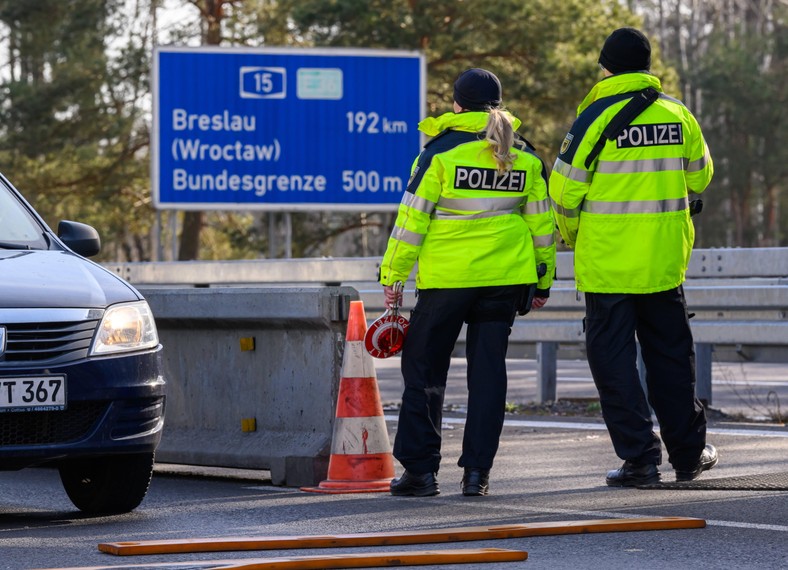
Police patrol near the Polish-German border, March 4, 2025.
The professor explains that asylum migration cannot be set to zero, because international law, and in Germany also a constitution, guarantee rights to persons actually persecutedwhose main parties do not want to undermine.
The question remains whether the risk of attacks can be eliminated in a country that respects freedom. Disappointment and anger seem inevitable among those who are particularly frustrated. – The next coalition wants to make a realistic phrase in migration policy – says Hans Vorlander, director of Mercator Forum for Migration and Democracy. – It will initially alleviate the situation. But what happens when [rząd] Will it be under pressure again? If the next attack comes, what will Mierz do then?
Then the debate would focus again on the defeat of the authorities. – They are Problems that should be dealt with in the coalition agreementespecially after Merz awakened the expectations in the election campaign. But nothing comes of it – criticizes Vorlander.
Johannes Mueller-Salo, a researcher from the University of Hanover, also mentions “ineffectiveness of the authorities” as the main problem behind the loss of trust. Although acts such as racist terror in Hanau, neo -Nazis' murders or an attack in Magdeburg differ from each other, they are very similar in one important respect: A defeat from the authorities played a key role. – Politicians observe how the responsibility is repeated in the administrative, especially federal, a thicket of competence.
Matthias Bein / DPA / PAP
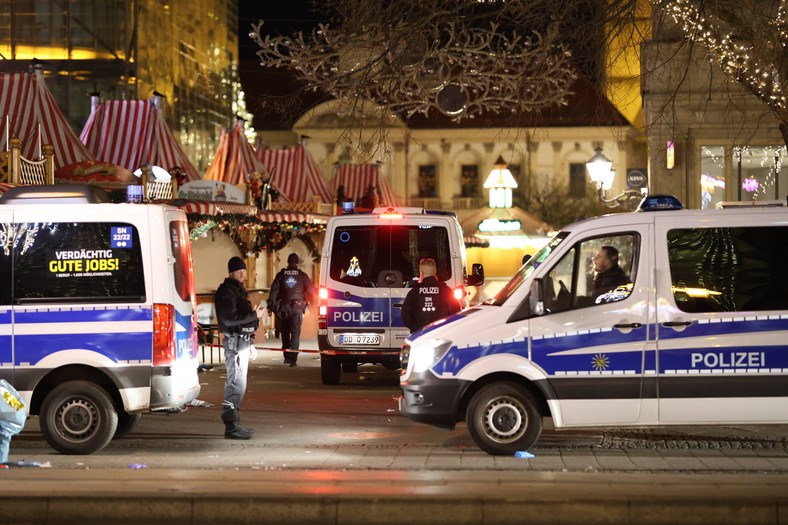
Police at the Magdeburg attack site, December 21, 2024.
Wiese from SPD ultimately calls for a closer listening to local authorities to check if the change of the course brings results. – one of the indicators for us should be Whether accommodation and integration of newly arrived in municipalities are successful – says. For this purpose, emphasis is placed on integration courses and migration consulting, and refugees are easier to find a job.
Mueller-Salo thinks more. In his opinion, a large -scale attempt to regain confidence must start “in the heart of the state”. The creation of the new Ministry of Digitization and Modernization of the State indicates that coalition partners have at least partly noticed this problem.
I’m Ashley Davis as an editor, I’m committed to upholding the highest standards of integrity and accuracy in every piece we publish. My work is driven by curiosity, a passion for truth, and a belief that journalism plays a crucial role in shaping public discourse. I strive to tell stories that not only inform but also inspire action and conversation.