The National Bank of Romania inaugurated on Friday a new section on the institution's website, dedicated to the history of the Treasury evacuated to the Russians in the period 1916-1917 and the ongoing efforts to repatriate it. The initiative comes in the context of an international campaign to raise awareness of a problem that has remained unresolved for more than a century.
The story of 91.5 tons of gold
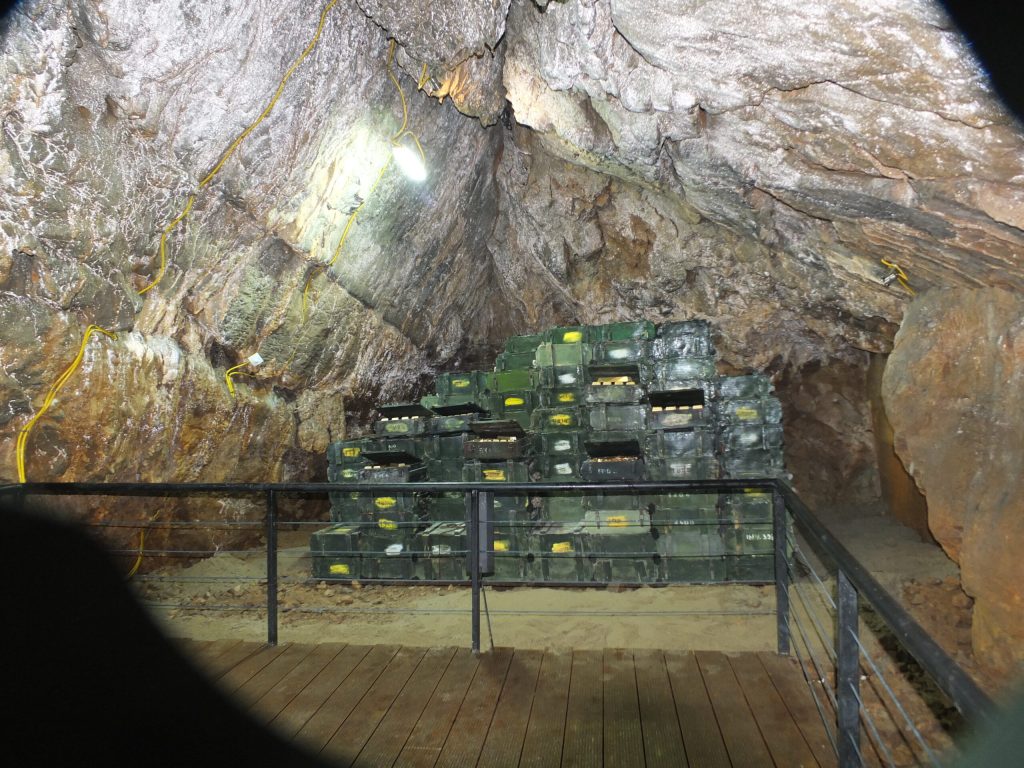
In December 1916, amid the advance of the troops of the Central Powers towards Bucharest, the Romanian authorities took the decision to evacuate the national treasury to the territory of Russia, the only allied state with which Romania bordered at the time. The first shipment included 1,738 boxes with the gold of the National Bank of Romania and two boxes with Queen Maria's jewels, with a total value of over 321 million lei at the time.
The convention signed with the representative of the Russian Empire in Iași explicitly stated that the Romanian values were “under the guarantee of the Russian government regarding the security of the transport, the security of the deposit, as well as the return to Romania”. Stored in the Kremlin, in the Hall of Arms, the tapes were inventoried in January-February 1917, when full agreement with the NBR declarations was confirmed.
Confiscation and Consequences
In October 1917, the Bolshevik revolution radically changed the situation. In January 1918, the Council of People's Commissars announced the severance of diplomatic relations with Romania and the confiscation of the treasure, declaring that “the Soviet power assumes the responsibility of preserving this treasure which it will hand over into the hands of the Romanian people”. The promise remained unfulfilled.
The confiscation seriously affected Romania's monetary balance. Gold represented the legal metallic reserve, the basis of the bank note issue. According to the BNR Statutes, the bank had to maintain a metallic gold reserve of at least 40% of the amount of issued notes, thus ensuring the convertibility of the leu.
The file kept for a century in the vault
Governor Mugur Isărescu recounts an emblematic moment from September 1990, when he took over the leadership of the National Bank of Romania. His predecessor, Decebal Urdea, led him to the governor's office, opened a safe and took out an old file, which he handed to him with trembling hands. It contained the original bilateral protocols of 1916 and 1917, signed by the governments of Imperial Russia and Romania.
“This file is still kept in the vaults of the National Bank as a sign and under the commitment that every governor will do everything in his power to bring back this precious Treasure”, testified Isărescu. The document had been drawn up especially for the Genoa conference of 1922, where Soviet Russia was strongly demanded to return all valuables deposited in Moscow.
Partial refunds and vain hopes
Although two restitutions took place in 1935 and 1956, they did not concern the NBR gold stored in Moscow. The treasury problem has constantly marked Romanian-Soviet and then Romanian-Russian relations in the last century. Gold was kept in the assets of the NBR's balance sheets until 1929, when, in the context of monetary stabilization, “litigious foreign claims” were eliminated. However, the account continued to be entered “for memory” until 1943, disappearing completely from the balance sheet in 1944, with the presence of the Red Army on Romanian territory.
International awareness campaign
The treaty on friendly and collaborative relations between Romania and the Russian Federation, signed in 2003, provided the opportunity to reintroduce the Treasury issue into official discussions. A Romanian-Russian Joint Commission was established and held five meetings, the last one in Moscow in November 2019.
The conflict in Ukraine has blocked any form of dialogue on this topic. As a result, the BNR started a new strategy: raising the awareness of the European public and international decision-makers. In March 2024, the European Parliament debated and adopted with a significant number of votes a Resolution on the restitution of the National Treasure of Romania illegally appropriated by Russia.
The exhibition dedicated to the Treasury was presented at the European Parliament, then in New York, hosted by the Romanian Cultural Institute, marking the expansion of the awareness campaign on the American continent.
A promise passed down from generation to generation
Jacques de Larosière, former president of the European Bank for Reconstruction and Development, managing director of the IMF and governor of the Banque de France, offered Governor Isărescu a piece of advice that he strictly followed: “We will have to promote, as often as we can, our claims regarding the Treasury.”
The new section launched on the BNR website contains systematized information, archival documents, relevant images from the era and original materials about the activities for the promotion of the issue, the inventory of the Treasury, partial restitutions and documents in support of repatriation. The materials are available in Romanian, English and, soon, French.
The section dedicated to the Treasury can be accessed on the BNR website, here.