“Political speech can include terms that shock, offend or disturb” / Former ECHR judge, reaction after the CSM's accusations against Oana Gheorghiu


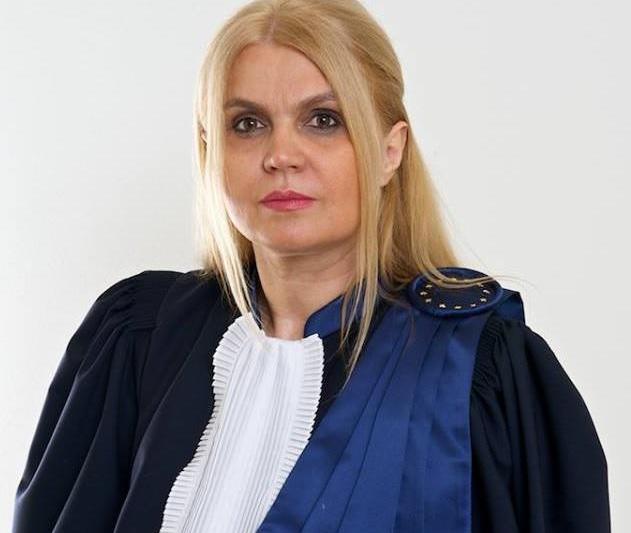
Iulia Motoc, Photo: Personal archive
“Political expression can include terms that shock, offend or disturb,” Iulia Motoc, a judge at the International Criminal Court, wrote Monday evening in a post explaining the ECHR's principles on politicians' freedom of expression. The post comes after the CSM accused Deputy Prime Minister Oana Gheorghiu of committing an “attack” on the judiciary.
“Because I was an ECHR judge for almost ten years, I have the duty to clarify certain aspects related to the freedom of expression of politicians, considering that all cases can potentially reach the ECHR,” Iulia Motoc wrote in a Facebook post.
According to the judge, “the constant jurisprudence of the Court states that political discourse is the foundation of a democratic society”, and the margin of acceptable criticism is much wider in the case of politicians than in the case of private citizens.
“Wide margin of acceptable criticism: Politicians, by the nature of their public office, implicitly accept to be subject to a higher level of scrutiny and criticism. The limits of acceptable criticism are considerably wider for public figures than for private citizens,” Motoc wrote, adding that political expression can include “terms that shock, offend or disturb.”
“A hyperbolic, polemical or satirical language, even the one perceived as exaggerated or immoderate, benefits from the protection of Article 10, provided it does not degenerate into illicit speech,” Motoc noted.
“The Importance of Public Interest Debate: Protection is greatest when speech concerns matters of general interest, governance, transparency, or potential conflicts of interest,” the quoted post also reads.
However, she specified that this protection “is not absolute”, hate speech being excluded, according to ECtHR jurisprudence in the Féret and Le Pen cases.
“Exceptional protection is not absolute. Restrictions are justified when the speech goes beyond the scope of legitimate democratic debate and affects the fundamental values of the Convention: Exclusion of hate speech: According to the jurisprudence (Féret and Le Pen cases), speech that incites racial hatred, discrimination, xenophobia does not enjoy protection”, concluded Iulia Motoc.
Deputy Prime Minister Oana Gheorghiu, complained by the CSM to the Prosecutor's Office after the statements regarding magistrates' pensions
On Monday, the Superior Council of the Magistracy accused the Deputy Prime Minister Oana Gheorghiu of committing an “attack on the judicial power” through the statements made about the magistrates' pensions. The CSM announced that it will notify the competent bodies “in terms of committing the crime of incitement to violence, hatred or discrimination”.
“Such allegations represent attacks on a constitutional power, which fuels a dangerous discourse that incites hatred and discrimination, intended to antagonize society against the professional body of magistrates,” the institution notes.
In a show broadcast on Saturday by Digi24, Oana Gheorghiu compared the magistrates' pension system to “a kind of Caritas” and stated that “if that money has to go to them because they give sentences, they take it from somewhere and can take it from the mouth of a child who goes to bed hungry”.