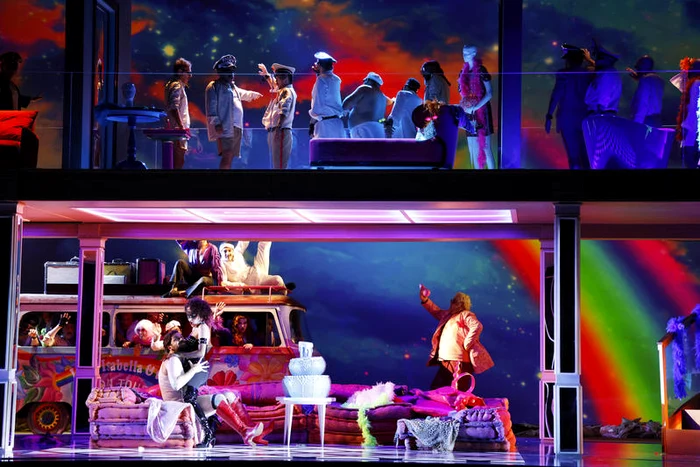
The show directed by the Italian Rosetta Cucchi started on the street, in Piazza Lazzarini in front of the Rossini theater. Too bad that the public did not know that the heroes of the evening, migrants from Italy in Algeria were to arrive in that place and to be arrested, abrupt by the carabinieri of Beiului Mustafà, being forced into the theater, crossing the foyer, the room, to the backstage, so only part of the spectators attended Pantomima. There was also a fire car there, a Volkswagen minibus with which the shipwrecks had arrived according to Angelo Anelli's libre, lots of foam, much smoke, does not matter. Finds. Important was what happened on stage.
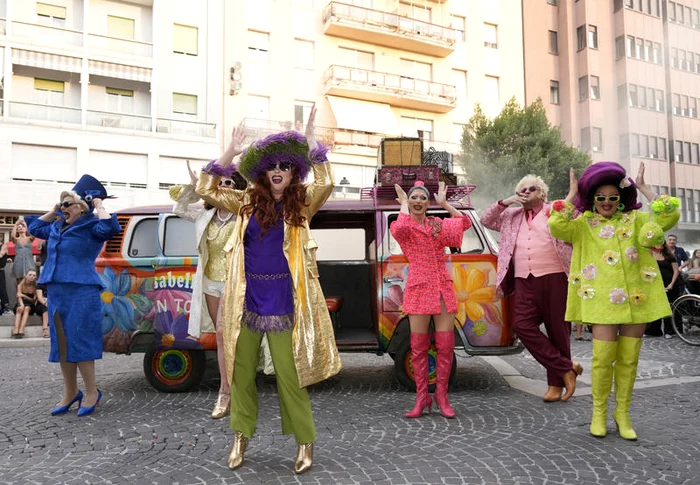
Daniela Barcellona and friends, arriving at the Rossini Theater in Pesaro. Photo amati Bacciardi
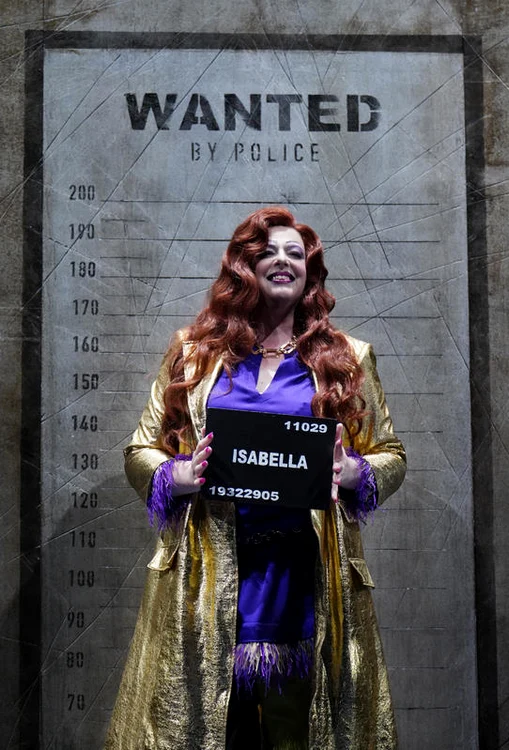
And there, however, the director innovated, if you can say so, imagining the main heroine Isabella playing the role of a transvestite man (Drag Queen
It is the term used in the Cuckoo Program-Program), which in the end manages to pervert the Mustafà Beeul itself Macho with his wife and harem. Let's say everything was a farce for Isabella to be able to return to Italy with her lover Lindoro, a slave to the Alger Palace and her friends on the failed ship. But the question marks remain, looking at what will be chosen by the new proselyte Mustafà and his official consort, Elvira. Plus … the harem. The ideas of the director were, I am convinced, many, but even she failed to reach a logical purpose.
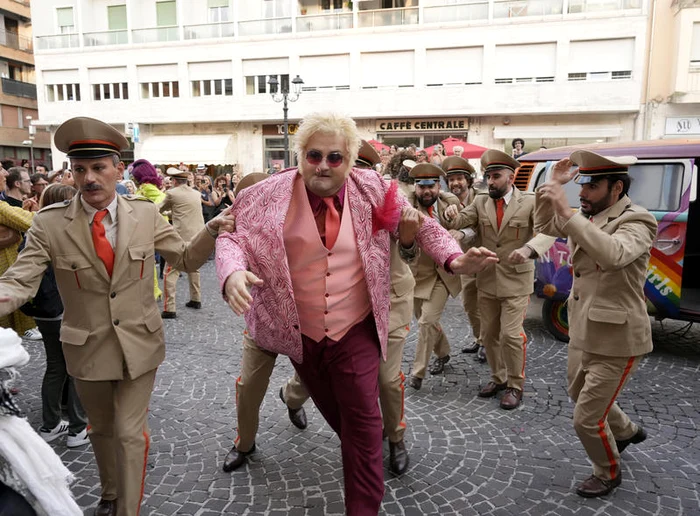
Misha Kiria brought by Carabinieri. Photo amati Bacciardi
The merits of the scenic production signed by Cucchi together with Tiziano Santi (over-stretched decorations, memory of Jean-Pierre Ponnelle in an old Rossinian “Cinderella” at Scala), Claudia Pilligotti (costumes), Nicolás Boni (Video Designer), Daniele Naldi (Lumini), I come from Vivacity from Vivacity. DRAMMA GIOCOSO PER MUSICA, produced by the theatrical play and the general coach of soloists, figures, choir, from the chromatic fantasy of the costumes, from their lavish drawings, from sophisticated makeup (Isabella – Drag Queen And the four all -like companions) plus the extravagant wigs, from the often enchanting lights. I come back to colors, of course those that constitute the LGBTQ+ banner are not missing and distinguished. With all characteristic or current innovations Pridethe show can be defined mostly classic but the pantomime in the street remains an TROUVAILLE forced.
Giorgi Manoshvili and Misha Kiria. Photo amati Bacciardi
I do not want to extend the lines about the directorial gaze too much to the detriment of the musical one, as has often happened in the chronicles since Director
And his authors dominate the vast majority of the shows dictatorially, but it must be said that the animation of the new pesarian production is due to overwhelming measure and the musical interpretation.
Daniela Barcellona. Photo amati Bacciardi
Mezzosoprana Trietin Daniela Barcellona has, at 56, an important role panel, including Rossini Serio and Buffooccupy main places. Here, the accounting vocality of the score served it wonderfully, emphasizing the serious register, highlighting it by roundness than the acute one, sometimes tightened. But the agility of the exposure is present from the first area “cruel sorts”, the mobility of the voice has no reproach, the meaning of the recitatives, impeccable. The romantic cavatina “per lui cheero” from the second act had a typical Belcantist performance of one Canto Spiananato di Graziafluent and nuanced. The great area of the end, “Pensa Alla Patria”, crowned the benefit of Daniel Barcellona and although some high notes in the recitative resonated or too vibrant, the subsequent coloring, the endless rolls ran in spectacular avalanches.
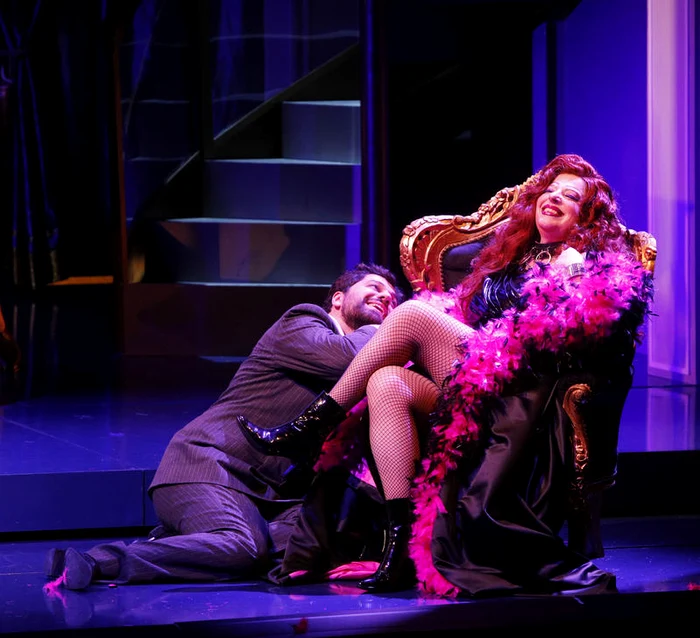
Giorgi Manoshvili and Daniela Barcellona. Photo amati Bacciardi
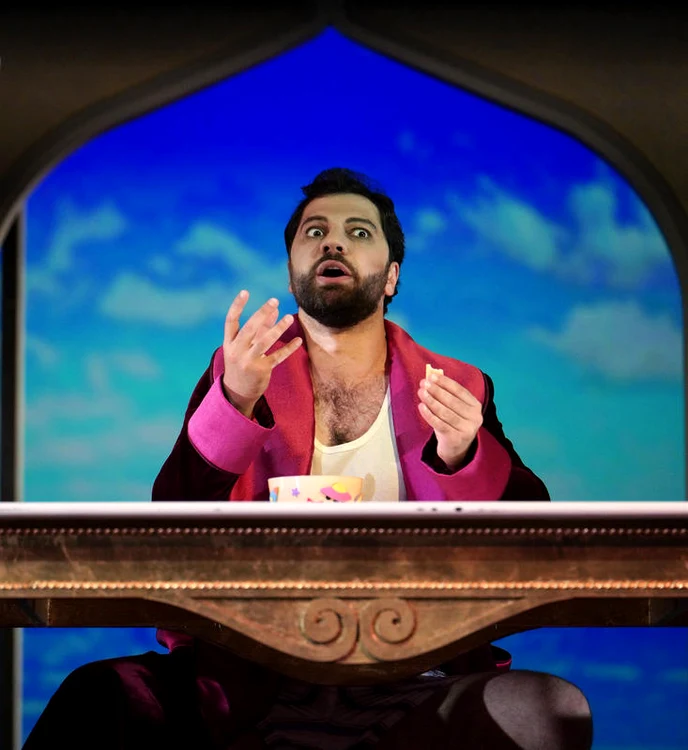
I noticed the Opera Festival last year on Rossini on Georgian Giorgi Manoshvili at the time of the third pesarian. He has now returned, at 35, in the role of Mustafà, which he served flawlessly vocal and scenic. With a deep voice of noble basswith round stamp and dressed in precious resonant harmonics, having a complete ambitus with passages that go through the unintended registers, from the deep graves to the acute tuned, with unexpected capabilities of malleable takeover of the role of the sound volume, the manoshvili is on the threshold of a great singer of Ross. It is only a transition of vocal massage.
Giorgi Manoshvili. Photo amati Bacciardi
Excellent was also the Misha Kiria Misha Baritone, an interpreter of the role of Taddeo, Chevalier servant
of Isabella, the possessor of a massive voice with dramatic directions, firmness in accents, in addition to some more cumbersome vocals. By a juicy comic (the area “Ho a Gran Peso Sulla Test”, the second act), with acute explosive, Kiria sometimes dominated her partner Isabella in Duette.
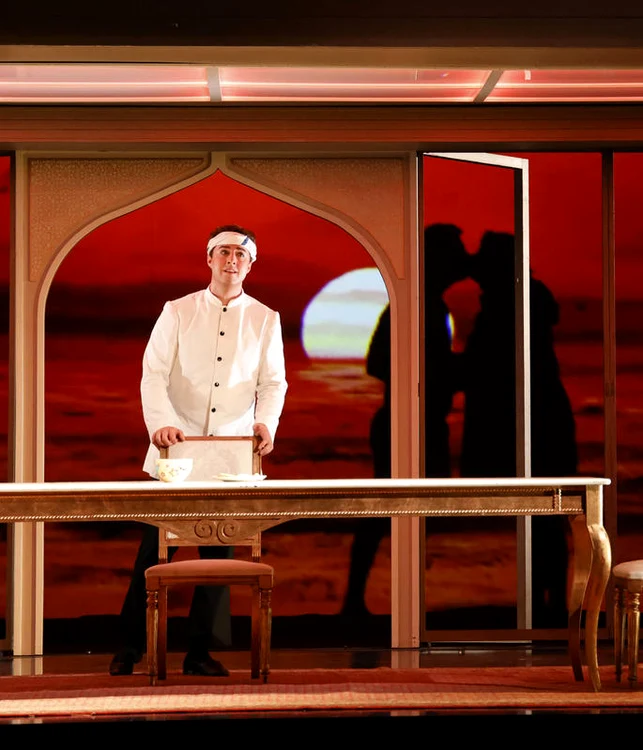
Josh Lovell. Photo amati Bacciardi
The character of the eternal in love, Lindoro, returned to the 34 -year -old Josh Lovell, one Tenore di Grazia With a pleasant stamp, ductile voice, fine phrase, acute reliable and vocalizes at times slightly nasal (the “Languir per Bella” input area). A rather experienced character. The area “Ah Come Il Mi Giubilo” from act II again highlighted his easily modeling voice, fluid phrase but also slight distonations in the acute register.
In the role of Hany, the captain of the Gărzilor Beiului, sang the Armenian baritone Gurgen Baveyan, displaying a pleasant vocal line in the “Le Femmine d'Italia” area, also from the last act.
Elvira and her friend, Zulma, were Vittoriana de Amicis soprano (with a discreet and harsh voice) and mezzo -soprano Andrea Niño, a pleasant voice.
The important orchestra from the Teatro Comunale di Bologna returned to the Rossini Theater after nine years, continuing the 29 uninterrupted presence started in 1987. A band whose folding of the master from Pesaro was ideal as tempi, assembly of themes and parties, suppleness and homogeneity of the sounds. In the same parameters, the excellent choir of the Ventidio Basso Theater, prepared by Pasquale Velen, was located. For the second time in the history of Rossini Opera Festival, the wand belonged to the reputed tenor Moscow Dmitry Korchak, a specialist in the Rossinian melodic drawings and beyond. He managed to translate the experience of the 11 previous vocal presence on the Pesaro stage to the Bolognese instrumentalists and, together, to draw a valid “Italian in Alger” show.
The new pesarian production has run on the senses as a scenic madness, supported by remarkable voices and valid accompaniment.
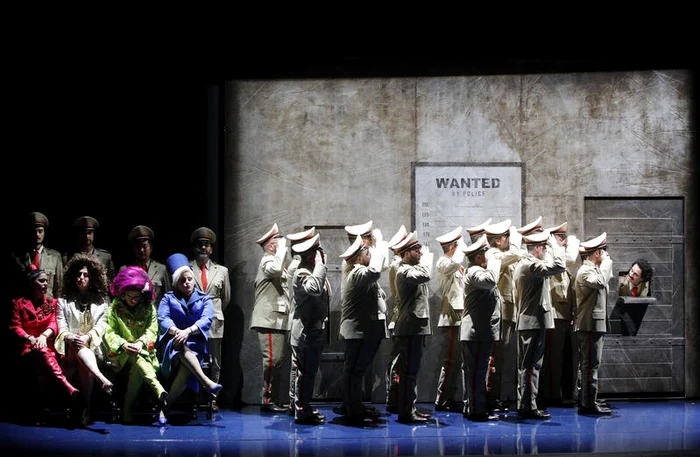
Scene. Photo amati Bacciardi