The stake of power in Sofia: Radev's risky bet takes him from the presidency to the front line of the parliamentary front

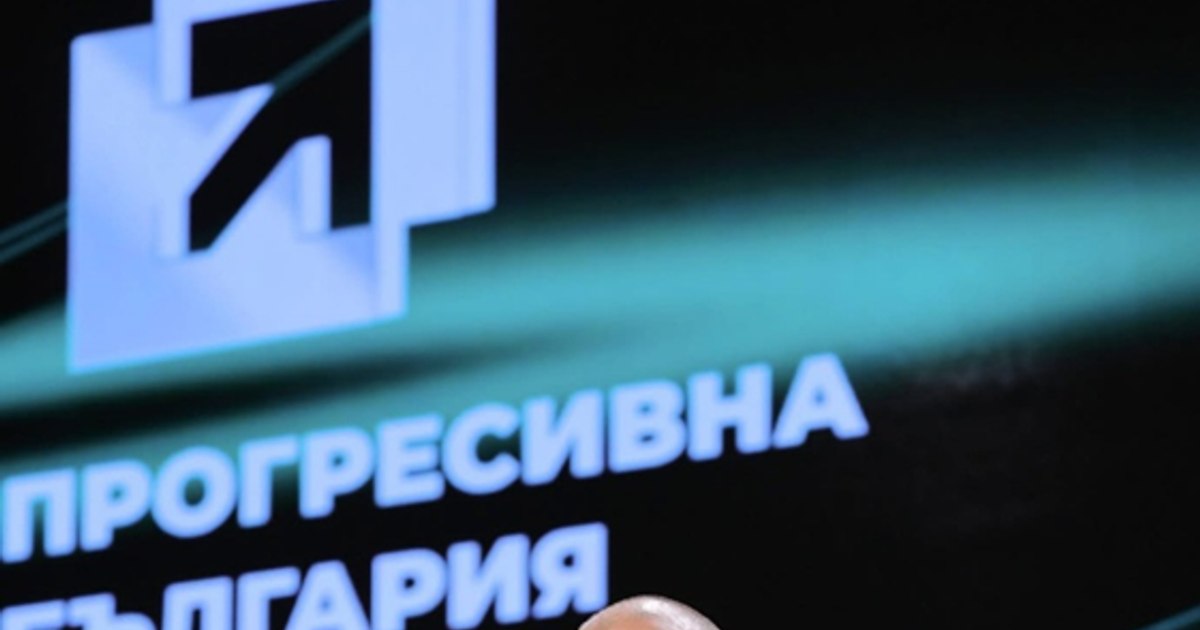
Bulgaria is preparing for a new round of early elections that will take place on Sunday, April 19, elections that can bring big changes to the Bulgarian political scene. The main character, who has staked everything on these elections, is none other than Rumen Radev, the one who until recently held the position of president of Bulgaria.
Photo: Radev giving a speech. Source: Facebook
News of Bulgaria's upcoming snap election came after Rumen Radev, then still president, tasked the centrist APS (Alliance for Rights and Freedoms), which had just 19 seats in parliament, to form a government and it refused, the third refusal by a party in less than a week. The mandate was initially refused by GERB-SDS (Citizens for the European Development of Bulgaria – Union of Democratic Forces), the conservative and described as populist coalition, formed by the two parties that give it its name, and later by PP-DB (Continuam Chymbalae – Democratic Bulgaria), a liberal alliance described as anti-corruption and pro-European.
Radev's candidacy
In January this year, President Rumen Radev became the first president in Bulgaria's history to resign from office. The decision was due to his desire to run for the parliamentary elections and was motivated by the accusations he brought to the current political class. In a Facebook post dated March 2 this year, he describes the coalition as the answer to the expectations of the Bulgarian people to dismantle oligarchic corruption. Also in the same post, Radev declares that the only guarantor of the change that “Progressive Bulgaria” can bring is a decisive victory, which depends on all citizens, and declares that by forming this alliance the first steps towards victory have been taken, but also that he is ready for the fight and sure of success. The “Progressive Bulgaria” coalition, informally led by Radev while his allies Galab Donev and Dimitar Stoyanov occupy the position of its leaders, is currently placed first in the polls with percentages varying between 30% and 33%. The alliance consists of 3 centre-left parties: the Political Movement “Social Democrats”, the Social Democratic Party of Bulgaria and the Movement of Our People.
The elections will take place on April 19 and will represent the eighth row of early elections since 2021, being the result of the political crisis that has been going on since then until today. The political crisis began in 2021 amid massive anti-corruption protests and a loss of public confidence in the traditional political class, especially former Prime Minister Boyko Borisov. Repeated parliamentary elections in 2021 failed to produce stable majorities, leading to a succession of caretaker governments and institutional gridlock. Political fragmentation, the rise of new anti-establishment parties and tensions between forces with a pro-European pedigree and those seen as close to Russia have added to the instability. The crisis reflects the difficulties of reforming the state, the fight against corruption and syncope in accepting the redefinition of Bulgaria's geopolitical orientation. Although there have been attempts to form coalitions, these have proven to be fragile and the political scene remains volatile, impacting both governance and the country's position in the European Union.
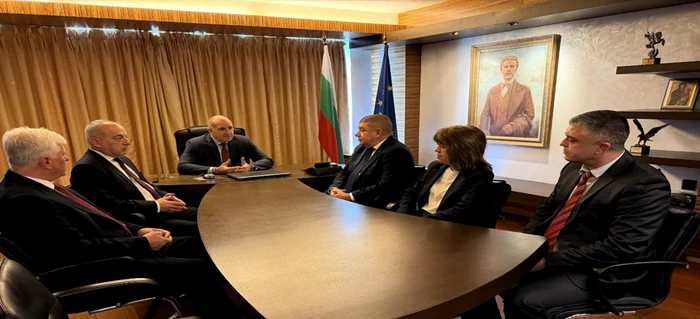
Photo: Radev and his allies laying the foundations of the Progressive Bulgaria coalition. Source: Facebook
The political situation in Bulgaria
Currently, the GERB-SDS coalition holds the most seats in parliament, namely 66 out of 240. It is followed by PP-DB with 36 seats, Renastrea with 33, DPS with 29, BSP with 19, tied with APS, ITN with 16, MECh with 11, and VEL with 10. The electoral threshold in Bulgaria is 4%, and according to polls, the parties expected to will enter parliament, based on a poll by Politico, are:
Progressive Bulgaria (New, unaffiliated) – 30%
GERB-SDS (EPP) – 21% (-5%)
PP+DB (RENEW-EPP) – 12% (-2%)
DPS-NN (NI) – 10% (-2%)
Renaissance (ESN) – 7% (-6%)
BSP (S&D) – 4% (-4%)
The parties currently represented in parliament that fall below the 4% threshold based on the survey are:
MECh (unaffiliated)
VEL (unaffiliated)
APS (Renew)
ITN (ECR)
Foreign interference in Bulgaria
Politico also presents in an article the fact that Bulgaria officially asked the European Union for support in combating foreign interference a few weeks before this election. The government in Sofia is particularly concerned about “disinformation campaigns attributed to Russia, carried out on social networks and propaganda websites”, which could influence public opinion and the integrity of the electoral process. In this context, the Bulgarian authorities created a special coordination unit and co-opted investigative journalist Christo Grozev, known for his previous work in the online investigative group Bellingcat, as an expert for advice and coordination. Bulgaria's move is considered unusual for an EU member state, as such mechanisms are more commonly used for countries that still aspire to European integration, such as Moldova and Ukraine. Sofia called for the activation of European tools such as early warning systems and cooperation with major digital platforms to identify and stop disinformation campaigns in real time.
The article is about one Georgi Angelov, a senior analyst at Sensika Technology, a research firm that monitors online content. He draws a series of parallels between the problem of disinformation and foreign interference in Bulgaria on the one hand and the surprise victory of Călin Georgescu in the first round of the 2024 presidential elections on the other. It is worth noting that Radev has also been accused on several occasions of Russophile attitudes, positions against Ukraine, and even Eurosceptic attitudes and positions, and with these things in mind, the similarities and parallels seem to strengthen and become much more interesting. Thus, it seems that a fear inspired and caused by this surprise victory mentioned above has taken root in the ranks of the political elite in Sofia. However, we cannot know exactly who it is the big scarecrow which caused this strange request of Bulgaria to the European Union, considering the fact that neither the expert Angelov nor the author of the Politico article mentions who would be the concrete personification of the danger of foreign interference, who would be this agent of the Kremlin infiltrated into the Bulgarian political world and who is being blamed. However, one thing is certain: if the polls reflect the truth, Rumen Radev's political career seems to be just beginning, and he is on his way to becoming one of the most important political actors of the neighboring state, at least in the near future.
Analyzing this political moment of the neighboring country, the question arises, as in Romania for that matter, to what extent these mechanisms will not transform from tools for maintaining democracy into tools for limiting it, under the pharisaical pretext of defending it.
Christian-Andrei Palaghia he holds a Master's degree from the University of Bucharest and is an expert within the “Titu Maiorescu” Foreign Policy Group.