
40,000 pilgrims arrived at Prislop Monastery. Images of the “assault” of the Romanians at the eternal place of Arsenie Boca

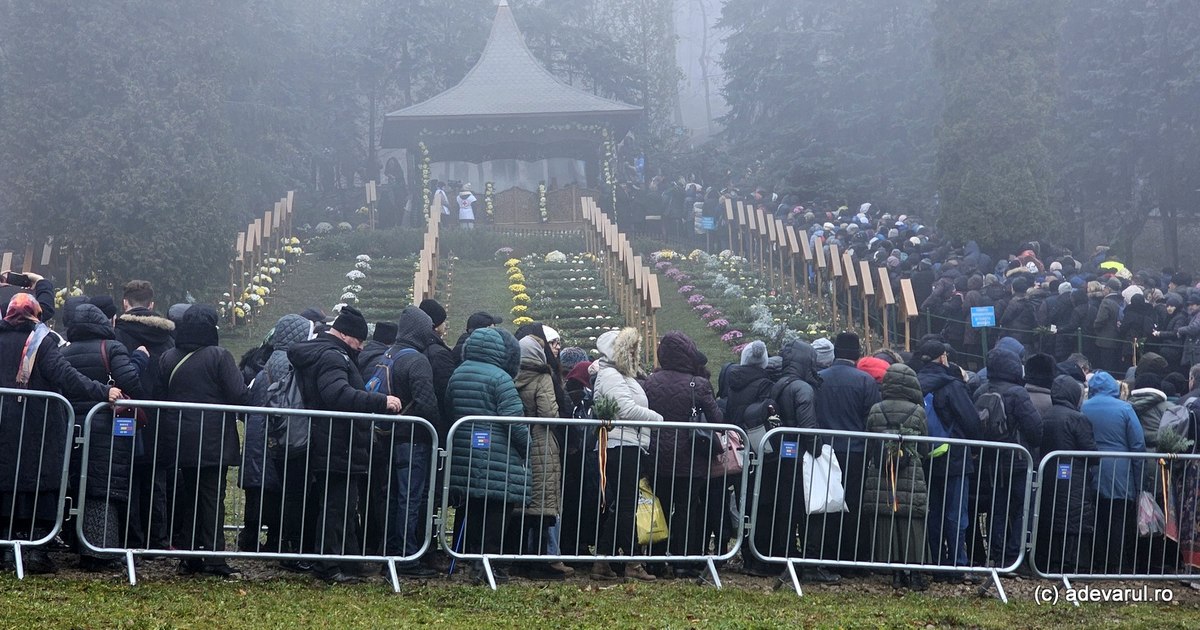
Prislop Monastery recorded, on Friday, the largest number of pilgrims in its history of more than five centuries. Almost 40,000 people came to the canonization service of the monk Arsenie Boca, celebrated on the 36th anniversary of his death, on November 28, 1989.
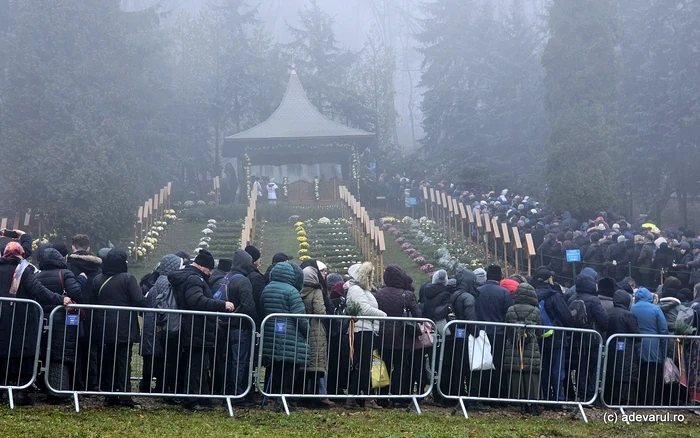
Pilgrimage to Prislop Monastery. Photo: Daniel Guță. TRUTH
The Prislop Monastery was founded at the end of the 14th century, its stone church being built in the same era in which several stone churches were built in Șara Hategului, the founders of the princes who ruled these lands in the medieval era.
Prislop Monastery, record number of pilgrims throughout its history
Historians mention Nicodim as the founder, a monk originally from the Balkans, refugee in Wallachia, in Tismana, founder of several monastic settlements.
Over time, the monastery was the site of several disturbing events, and in 1762 it was burned to the ground, the monks being driven away. In the 20th century, the man who most connected his name to its history was Arsenie Boca, one of the personalities of Romanian Orthodoxy. After 1990, his tomb at the Prislop Monastery became a place of pilgrimage for many Romanians, some confident in the gifts attributed to him (of healing, cleansing or prophecy), or out of a desire to pay homage to him.
At the end of the 2000s, the phenomenon of pilgrimages took off, and on feast days, thousands of Romanians arrived at the Prislop Monastery to pray at the grave of its former priest. The monastery has regained its vitality after the “numbness” of the last decades of communism, its buildings have been expanded, and business around it has become increasingly prosperous. However, in recent years, the “Arsenie Boca phenomenon” has diminished.
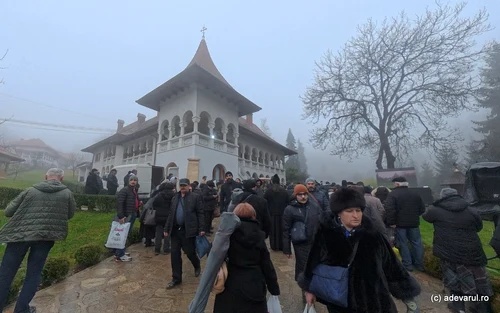
Image 1/15:
Pilgrimage to Prislop monastery. Photo by Daniel Guță. TRUTH
However, on Friday, at the religious service of the local proclamation of the canonization of the priest, who will be celebrated on November 28 as Saint Arsenius the Confessor from Prislop, the monastery received a record number of pilgrims: around 40,000, according to the authorities' estimates. Many of them arrived here by coach, on authorized pilgrimages.
“There were about 400 coaches”, law enforcement estimated.
Several parking lots were set up around the monastery, but they proved to be empty from the early hours of the morning; thus, some of those who arrived at Prislop Monastery had to leave their cars more than six kilometers from the settlement and continue their journey on foot, round trip. The rain and fog did not prevent people from arriving at the service or waiting tens of minutes in line to get to the grave of the monk Arsenie Boca.
“I walked five kilometers to the monastery, but I felt good. Maybe it will be harder for me on the way back, but I'm glad I made this pilgrimage.” claims Paraschiva, an elderly woman from Focșani, at the Prislop Monastery.
Arsenie Boca, the priest from Prislop
Born on September 29, 1910, in the village of Vața de Sus, Hunedoara county, Arsenie Boca served at the Sâmbăta de Sus Monastery, in Tara Făgăraşului, between 1939 and 1948, and then at the Prislop Monastery, in Tara Hațegului, until 1959.
From his youth, the monk Arsenie Boca was extremely popular, appreciated both for his sermons and for his artistic talent. After the Second World War, he became abbot of Prislop Monastery. The authorities of the communist regime established in Romania, however, put him under surveillance, trying to stop the influx of believers who continued to look for him.
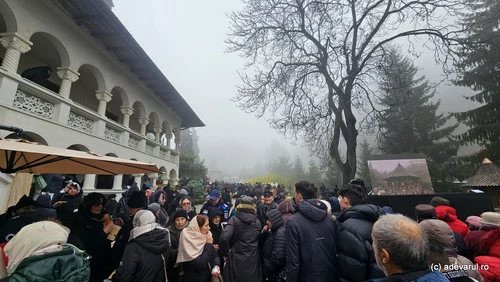
Image 1/15:
Arsenie Boca was commemorated at the Prislop Monastery Photo Daniel Guță THE TRUTH (20) jpg
He was arrested for several months in 1948, during the time he was at Brâncoveanu Monastery in Sâmbăta de Sus (Brașov). In 1949 he was moved to Prislop Monastery, where he served as abbot until 1951, when he was arrested again and sent for a year to the Danube-Black Sea Canal.
“His fame as a rigorous monk, as a man of God, had gone to the edge of the country. The world came madly towards him. He cultivated this cult of personality and the monk Arsenie – that's what he was called in the monastery – became a great man, famous throughout the country. It was during the war. There was a lot of pain, trouble and suffering. Peasants and intellectuals came by the hundreds, by the thousands, from everywhere to see him to see, to hear him, to talk with the 'saint' from Sâmbăta. He passed in front of the crowds as a knower of the mysteries of man and a worker of miracles”. a former close friend described him, in a document of the former Security.
After returning to the Prislop Monastery, Arsenie Boca remained priest of the monastery, transformed into a nunnery, until its abolition at the end of the 50s, following Decree 410 from 1959. T
then, the monk was forced to give up the monastic life, but he continued his artistic activity, painting several churches. He lived in Sinaia starting from 1977, where he reorganized a part of the community of the Prislop Monastery, taken out on the roads. He died on 28 November 1989 in Sinaia at the age of 79 and, according to his wishes, was buried at Prislop Monastery on 4 December 1989.
Since the 90s, Arsenie Boca has been called by many Romanians the “Saint of Transylvania”, although his canonization by the Romanian Orthodox Church was only approved in July 2024.


