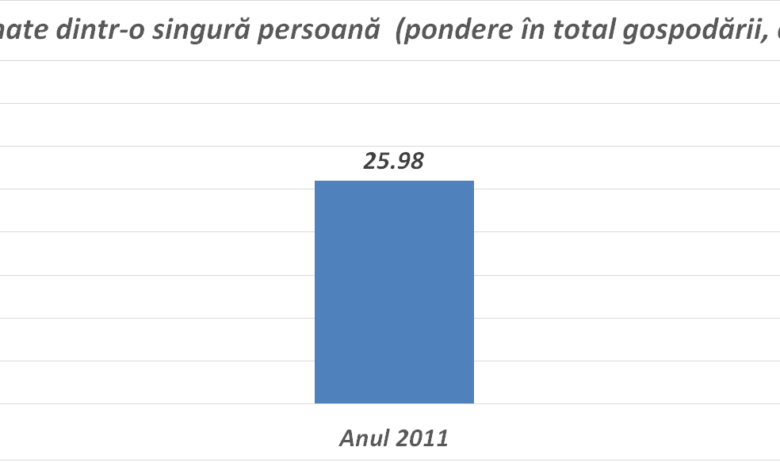
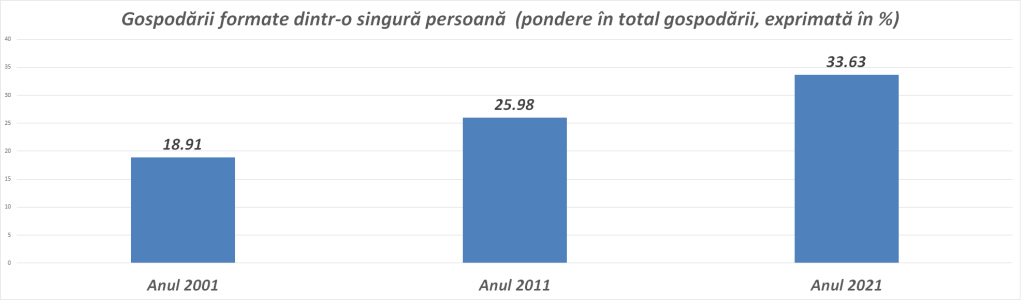
As the number of people who live alone increases, the real estate market is forced to adapt to a new reality – smaller homes. In Romania, the share of households formed by a single person increased from 18% to over 33%, according to INS data.
Housing for a single person are not only a social tendency, but a slow macroeconomic transformation that redefines real estate, explains Market Watch in an analysis quoted by Naftemporiki.
In 1940, only 7.7% of American households were made up of a single person. In 2023, their share rose to almost 30%, according to the US Census. In cities such as New York, San Francisco and Washington, DC, a single person living.
The trend is global. Sweden, Norway, Finland and Germany report rates of over 40% in single person households. In metropolitan areas such as Tokyo and Paris, almost half of the inhabitants live alone. Even in China, urbanization, older marriages and low birth rates increase the number of households formed by a single person.
And yet, the real estate ecosystem continues to be built for the traditional four people. This must change.
The real estate market has not yet adjusted
The real estate market is still emphasizing on large homes, with several rooms, oriented to the family. For those who live alone, these homes are either too big, too expensive or simply inappropriate.
They do not need schools or playgrounds next to them, but they need connectivity, autonomy and cost management. However, I often pay more by taxes, utilities and maintenance – an “invisible fee for lonely inhabitants”.
Explosion of rents with facilities
Many people who live alone do not want to buy a house, writes Naftemporiki. He prefers to rent in buildings that offer services, experiences and safety. It is not a luxury, but a necessity: sports halls, pet care services, social activities. Everything you need when you live at home is the office, the living room and the “safety net”.
These buildings offer high yields for investors, especially in densely populated or “urbanized” suburban areas. The demand is now for an experience – not just for a roof.
Old age alone brings opportunities
Perhaps the most important change refers to the care centers for the elderly. The old image of the elderly couple that moves together fades. Now, the typical occupant is an elderly woman who lives alone.
Staying home is not always an option. They do not have a partner or children to help them. The needs of maintenance, care and social contact make these structures necessary are not a choice imposed by necessity, but an obvious transition.
Investors who design housing for lonely residents, promote autonomy and cultivate a sense of community will conquer the new generation of active and independent seniors.