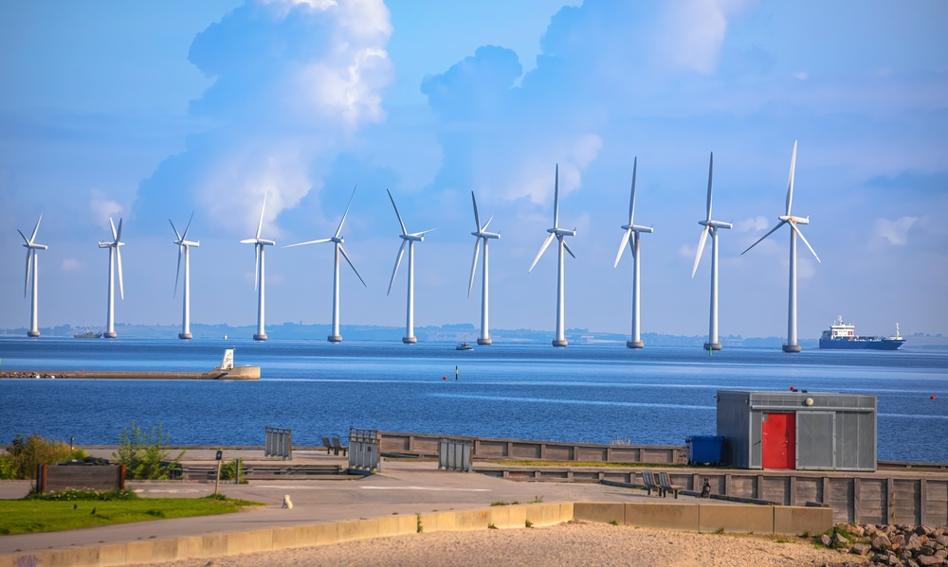
The Polish Wind Energy Association and the Wind Industry Hub Foundation, in cooperation with the CEE Energy Group, presented the “Polish strategy of the industry of marine wind farms”. This several hundred -page study contains solutions thanks to which wind farms can become a driving force for the development of the Polish economy.
Presenting the assumptions of the strategy, the authors of the study referred to the last words of Prime Minister Donald Tusk spoken during the EFNI conference in Warsaw. The head of government said at the time that “if we want to achieve economic successes, build a safe state, we must say and clearly say that Poland – in this increasingly ruthless egoist competition in world markets, fronts of war – will not be a naive partner. Polish companies will not stand in a lost position in competition with international behemoths”
Janusz Gajowiecki, president of PSW, reminded that the investment campaign in sea wind farms is not comparable to any other development undertaking in contemporary Poland. – We are talking about the scale of PLN 300 billion in investment outlays in the 2040 perspective. This program is proof of Polish ambition and courage in the pursuit of modernity. It is an investment that also requires boldness, vision and long -term commitment. If we add another billion investments in land wind energy, we get a picture of the largest energy transformation project in the history of the country – a development impulse that can not only modernize the Polish economy, but also ensure its competitiveness for decades and create thousands of jobs in the future industries – said Gajowiecki.
According to Dominika Taranko, vice president of Wind Industry Hub, the potential of the national supply chain will not be fully used without a solid, strategic industrial policy of the country. – The lack of a government document defining key technologies and investment areas for the Polish economy is already seen as one of the greatest threats to the development of the national supply chain. We have developed a document that defines the contribution of the wind industry to the Polish industrial policy – says Taranko.
The authors of the strategy specified 10 implementation packages that should be launched first, i.e. until the end of 2026:
- The program package assumes the adoption of the Polish Strategy for the Development of the Wind Farmes.
- The market package postulates the adoption of the state's updated energy policy until 2050, taking into account the total goal of 33 GW for wind farms.
- The European package assumes that the assumptions of the strategy are to be a contribution to the presidency of Poland and after it.
- The production financing package is to increase the availability of warranty for the implementation of the largest contracts in IMF projects in Poland.
- The innovation financing package proposes to create a central Offshore Wind laboratory in Poland and competitions for research and development activities for companies.
- The Education and Work Package assumes the adoption and implementation of the Wind Energy Competence Development Program.
- The investment financing package postulates the announcement of dedicated subsidy and/or loan programs.
- The security package proposes to collect guidelines in the field of safety and physical protection of key production nodes.
- The institutional package assumes the creation of an executive council chaired by the Offshore representative, thanks to which there is to be better coordination of the development of marine wind farms.
- Priority implementation programs are to launch the development of key industrial and service segments.
Dominika Taranko, Vice President of Wind Industry Hub, presenting the strategy, pointed out that the wind farms are a pillar of transformation plans both in EU and Europe. – In the years 2040 – 2050, the Wind Energy will be responsible for half of the energy in the mix of the European Union – said Taranko.
Maciej Mierzwiński, president of the CEE Energy Group and co -author of the report indicated a new gondola factory for marine wind farms in Szczecin as a positive example of sector development in our country. At the same time, he emphasized that the construction of a foundation factory for wind turbines is a market opportunity for shipyard assets. In his opinion, the construction of installation and service vessels in Europe may contribute to the reconstruction of the shipbuilding industry on our continent. – For now, Asian shipyards in China or Korea are building offshor ships used on sea wind farms in the EU – said Mierzwiński.
Bartosz Fedurek, president of PGE Baltica assured during the meeting that subsequent designs of sea wind farms in the Baltic will be implemented with greater commitment of Local Content. In his opinion, public procurement law (PZP) is a great burden for investors. – We see it on the example of the Baltica 2 farm. The entire sea energy should be removed from the PZP regime. These are great investments in energy security. PZP orders everyone to treat everyone evenly, and yet it is impossible here, because for some reasons we cannot decide to cooperate with certain entities – Fedurek pointed out.
“Polish Strategy for the Development of the Wind Farmes” is the result of analyzes carried out in the years 2023 – 2024 by the Wind Industry Hub expert team, the Polish Wind Energy Association and CEE Energy Group. The base document consists of four parts included on 400 pages of the study.
The first part discusses the importance of marine wind energy in increasing the supply of cheaper and clean energy in Poland. The second part summarizes the context of the strategic position of the Offshore Wind industry in the European Union. Part three focuses on drawing conclusions from the first national experience in the construction of wind farms. The fourth part defines the detailed solutions necessary to implement so that the wind farms become the driving force of the development of the Polish economy. The central point of the document includes priority implementation programs:
- Modern FW planning, design and monitoring services,
- Full supply chain for the sea wind turbine,
- National project of the sea transformer station,
- Land and sea cables,
- The new European Installation Company of the IMF with its registered office in Poland,
- Fleet production for IMF projects,
- Installation of foundations to the IMF,
- Innovative maintenance and operation services,
- Security.
As we read in the report – this is a set of key segments of the sea wind farms, which, due to economics, experience, synergies with other economy departments and security issues, should be developed in Poland. The solutions apply to specific business models, as well as activities necessary for undertaking implementation leaders.
The main purpose of the study is to provide the Council of Ministers of the Republic of Poland of comprehensive material enabling the adoption of the National Development Strategy of the Wind Farms Development, recognizing it as one of the most important investment programs in the country. The full version of the report can be found on PSW.PL.