2025-10-17 21:43, updated 2025-10-18 15:54
publication
2025-10-17 21:43
update
2025-10-18 15:54
When an aggressor bombs your country, you can strike back, sabotaging its ability to finance the war. This is called self-defense – this is how Foreign Minister Radosław Sikorski responded on Friday to the head of the Hungarian Ministry of Foreign Affairs, who accused Poland of “releasing a terrorist” by refusing to extradite Volodymyr Zhuravlov to Germany.
On Friday, the District Court in Warsaw refused to extradite Volodymyr Zhuravlov to the German authorities, and also revoked his arrest and ordered his immediate release. The man was wanted on a European arrest warrant as a suspect in blowing up the Nord Stream gas pipeline.
The decision in the Żurawlów case was announced on Friday by judge Dariusz Łubowski. – In other words, Ukraine, if Ukraine, special forces and the person being prosecuted, which the court does not decide, organized an armed mission to destroy enemy pipelines, these actions were not illegal. On the contrary, they were justified, rational and fair, the judge said.
He added that Ukrainian soldiers and all those operating within the Ukrainian armed forces, including special forces or on behalf of special forces, cannot be considered terrorists or saboteurs, because by all means pursuing the goal of defending their homeland, they weaken the enemy.
The head of the Hungarian Ministry of Foreign Affairs, Peter Szijjarto, in a post on X, sharply criticized the decision of the Polish court and politicians' comments.
“Scandalous: according to Poland, if you don't like some infrastructure in Europe, you can blow it up. In this way, they gave preliminary consent to terrorist attacks in Europe. Poland not only released the terrorist, but even celebrates him – this is where the European rule of law is,” wrote Minister Szijjarto.
Hungary maintains a strong energy dependence on Russia and rejects EU and US pressure to break these ties – in Moscow, Foreign Minister Peter Szijjarto emphasized that Hungary would not agree to externally imposed restrictions, defending the priority of energy security, while Prime Minister Orban argued that leaving Russian supplies would “ruin” the Hungarian economy. Since the beginning of the full-scale war in Ukraine, Hungary has questioned the EU's support for Kiev and has threatened to veto further sanctions packages.
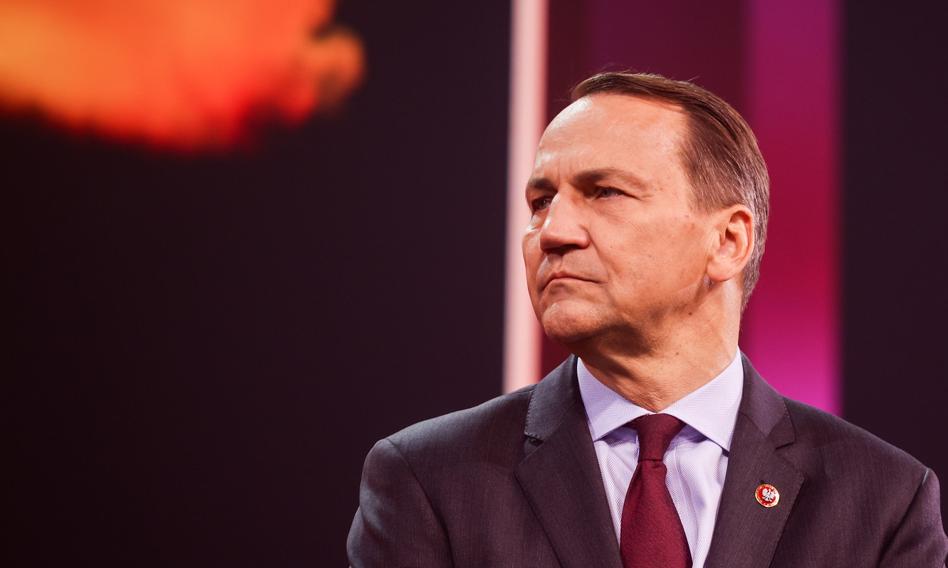
Deputy Prime Minister and head of Polish diplomacy Radosław Sikorski addressed Szijjarto directly on Platform X. “No, Peter. When a foreign aggressor bombs your country, you can legitimately strike back, sabotaging its ability to finance the war. That's called self-defense,” Sikorski wrote.
Szijjarto commented on the entry of Prime Minister Donald Tusk, who described the decision of the Warsaw court as “right” and noted that “the case has been closed.”
Zhuravlov was wanted on a European Arrest Warrant (EAW) issued by the German Federal Court of Justice in Karlsruhe on suspicion of sabotage and destruction of the Nord Stream pipeline. He was arrested in Poland at the end of September.
In his oral justification, Judge Dariusz Łubowski recalled, among other things, that Żurawlow's defense extensively raised allegations against the German justice system, pointing out that there was an absolute obstacle to the execution of the EAW.
Prime Minister Tusk emphasized last Tuesday that it is not in Poland's interest to accuse or hand over the person suspected of blowing up Nord Stream to another country. He added that the only ones who should be ashamed of Nord Stream 2 are those who decided to build it.
The destruction of three of the four lines of Nord Stream 1 and Nord Stream 2, intended to transport natural gas from Russia to Germany, occurred on September 26, 2022 (more than seven months after the outbreak of Russia's full-scale war against Ukraine) at a depth of approximately 80 meters, at the bottom of the Baltic Sea. Zhuravlov, 49, claims he had nothing to do with the attack and was in Ukraine at the time it occurred. (PAP)
mro/ jpn/