India turns from America under Donald Trump. Putin is already rubbing his hands


While traveling around India, I met young people who wanted to study at American universities and build a better future for themselves and their families. Business leaders were one step away from the expansion of exports to the largest consumer market of the world and building a stronger industrial base after they received the promise of a quick trade agreement. In turn, diplomats and military believed that mutual reluctance to China It will lead the United States and India to a new strategic partnership.
After 25 years of constant bilateral efforts to expand America's relations with India, Trump's return to power was widely seen as the beginning of a bright future for everyone.
What could go wrong? It turns out that many things.
Disputes
Despite the optimism related to the rapid conclusion of a trade agreement and strengthening bilateral relations, after Modi's return from Washington The situation quickly deteriorated. At the end of February, Hindus watched their compatriots deported by the United States. Then, a month later, Trump announced duties on the occasion of the “Liberation Day”-by applying 26 % tariffs to all goods imported to the United States.
However, the biggest blow to relations between the two countries was the May reaction of India to a terrorist attack in the Kashmir controlled by them, in which 26 tourists were killed. The fights between India and Pakistan quickly intensified, and on the third day India attacked the military base of the Division supervising the Pakistani nuclear arsenal.
Continued article under video material
This was not the first serious conflict between these two countries – in 75 years they fought four wars. In the meantime, however, both countries have expanded their nuclear arsenals, which means that every military confrontation is much more dangerous.
Initially, the United States did not show much interest in conflict, and vice president JD Vance said Fox News: – We do not intend to engage in a war, which is essentially not our case. However, when the fights intensified, both Vance and Secretary of State Marco Rubio contacted by phone with both countries and a truce was quickly concluded.
Trump immediately assigned his merits for the end of the fighting, suggesting that he used trade to make both sides to obey. We stopped the nuclear conflict – said the American leader. – I think it could be a terrible nuclear war in which millions of people would die, so I'm very proud of it. However, while Pakistan quickly granted the White House the merits of which he sought, India claimed that the agreement was achieved on both sides.
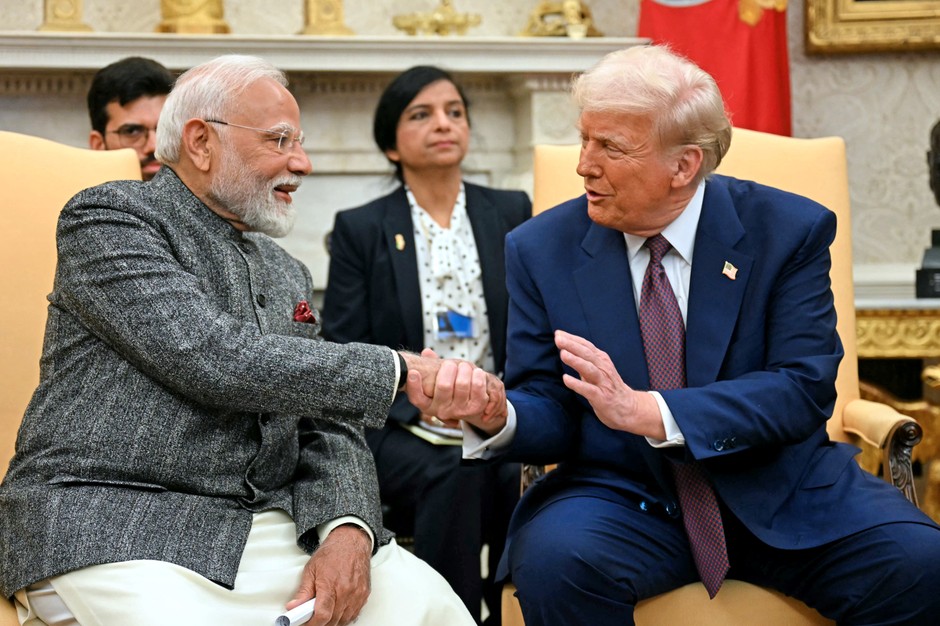
US President Donald Trump and the Prime Minister of India Narendra Modi in the Oval Office of the White House in Washington, February 13, 2025.Jim Watson / AFP / AFP
Ultimately, when commercial talks between India and the United States were still stalled in the matter of agriculture and other matters, Trump and Modi talked by phone in June. During this conversation, the US president was to insist that Modi would publicly grant him merit for the end of the fighting in May, and invited the Indian prime minister to the White House, when the Chief of Staff of the Pakistani Army asim Munir was also there.
Modi did not intend to consider any of these proposals. India has always claimed that the conflict with Pakistan is a purely bilateral matter, citing earlier agreements between the two countries that reject external mediation. As the prime minister, Modi could not accept the idea of meeting with the head of the Pakistani army on the principles of equivalence.
More and more tense relations
It was the last conversation between these two leaders. After Modi's rejection of Trump's requests Washington's position in commercial negotiations has been tightenedwhich reduced the likelihood of an agreement. Trump insisted that the final agreement be reached directly between him and Modim. However, the Indian leader knows what the US president really wants – his public support for the idea that Trump prevented a nuclear confrontation.
This background helps to partially explain why Trump decided to punish India for buying Russian oil shortly after.
At the beginning of August, when the US President expressed his growing dissatisfaction with Russia in connection with the war in Ukraine, he called India a “dead economy” and announced an additional 25 % duty for the import of oil from Russia to this country. Many countries buy Russian oil and other energy products – including the United States, which they buy from Russia enriched uranium to their nuclear reactors – But only India was punished.
It was an incomprehensible decision: the United States has long encouraged India to buy Russian oil, provided that its purchases did not exceed the $ 60 limit. (PLN 218) for a barrel agreed by Western countries. Without supplies from Russia, oil prices would increase rapidly, driving inflation. In addition China is a much larger buyer of oil and gas than India, and yet no duties or sanctions have been imposed on Beijing.
India strengthens relationships with Russia
So why after a quarter of a century of building a strategic partnership with the most populated world economy – the second largest democracy and soon the third largest economy – the US was distinguished by India? As quickly noticed commentators around the world, It made no sense from the economic, political or strategic point of view.
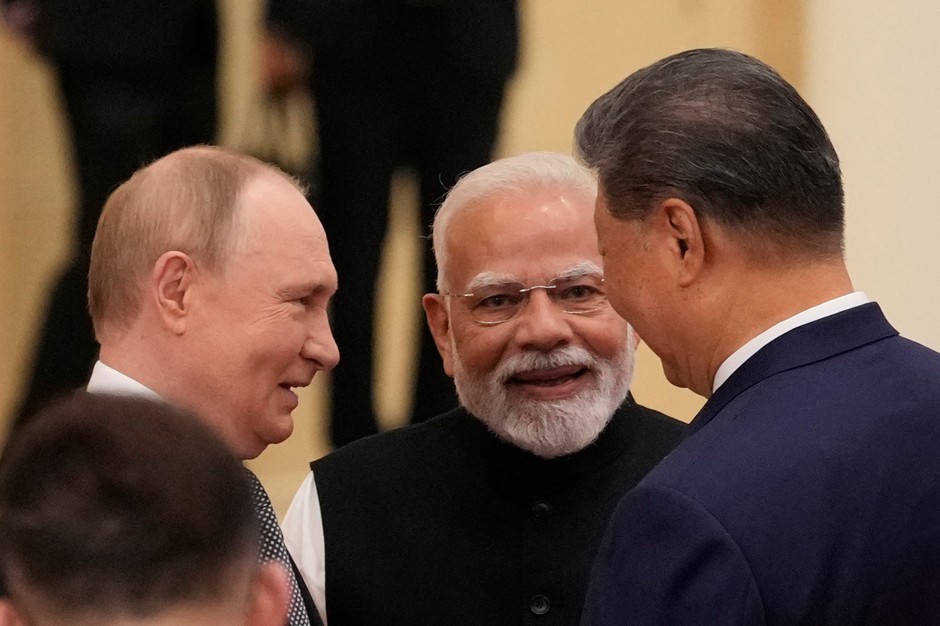
The Prime Minister of India Narendra Modi talks to Russian President Vladimir Putin and the leader of China XI Jinping before the Shanghai Cooperation Organization in Tiencin, September 1, 2025.Suo TakuMuma / Pool / AFP / AFP
But the pity has already been done. The number of Indian students enrolled in American universities dropped by 40-50 percent. Compared to a record level of 300,000 last year. Enterprises are looking for other export markets, using new trade agreements with Great Britain, and soon also with the EU. Indian officials strengthen relations with Moscow, and Modi went to China for the first time in seven years.
Those who have long warned against engaging in alliances now have use, and Modi himself talks about the key meaning of self -sufficiency. Meanwhile, the United States lose their strategic partner in an important part of the world.