All inclusive vs. a la carte. What is more advantageous for tourists and what can be profitable for business analysis

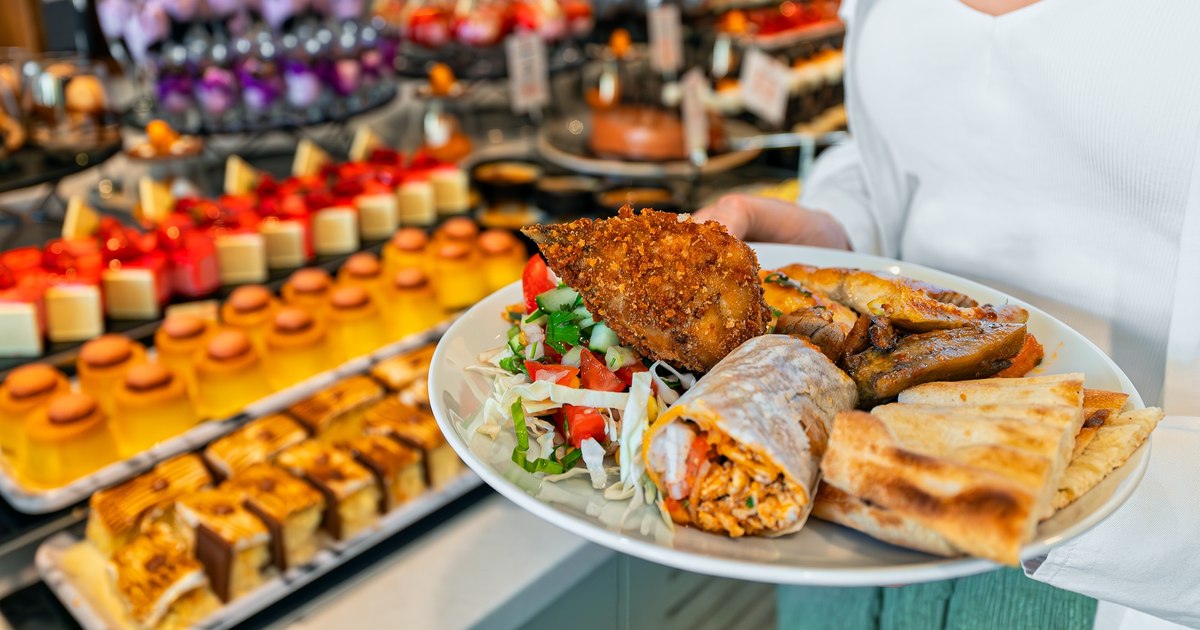
Most of the Romanian tourists prefer the All Inclusive stays, both in the country and abroad, while others opt for a la carte menus, considering that the latter offer more flexibility. In the following we will analyze, with the help of experts in the field, what are the main advantages, including financial, of each style of meal service.
Many Romanians want all inclusive stays. Photo shutterstock
First of all, it is important to present the differences between two table serving styles:
The A la book menu involves the individual choice of menu preparations, each preparation being cooked to order, at a separate cost for each kind.
The all inclusive concept means a package that includes all the main meals (breakfast, lunch, dinner), snacks between meals, drinks (alcoholic and non-alcoholic) and often access to the hotel facilities and entertainment activities, all included in a single price, which is higher than the cost of a la carte.
The advantages of the La cart menu are: flexibility, the possibility of choosing exactly what you want to eat and discover specific preparations, control over expenses.
The advantages of the All Inclusive menu are: comfort, predictable budgets, access to a variety of dishes and drinks, access to the hotel facilities and activities.
Valentin Soneriu, beach 33: Both businesses can be profitable
Asked which of the two businesses is more advantageous to the entrepreneur, Valentin Soneriu, who recently took over the Victory hotel in Vama Veche and rebranding are the name Beach 33 told “Adevărul” that both ASA and All Inclusive can be very profitable businesses, but they are fundamentally different.
“It is very important what negotiation power you have, as an entrepreneur, with the suppliers. It is very important to compensate for certain losses that you have to improve the quality of services or preparations with high negotiation power on 1, 2, 3 key products. Whether we are talking about drinks or raw materials, I think it is very important to balance the balance this way“, Said the Şoneriu for” Adevărul “.
He added that the restaurants he operates operate in a la carte system, but Carmolimp is a supplier for many All Inclusive hotels, as well as for many fast -cooked food lines.
“Currently, for me the strategy of A la carte remains more advantageous, so that I do not block the location when I would have the largest flow of customers, lunch being the peak in the Vama Veche restaurant. In the future we are thinking of creating a breakfast system included for beach 33, but I do not think that the location and the typology of the clients would not. Generally, it is true that from the point of view of food restaurants A la carte are much better and do not have as much waste as an all inclusive restaurant.the Şoneriu explained.
Alex Bodea, shrimp: for the customer, all-inclusive is more advantageous on vacation
Asked what is more advantageous for the Horeca, All inclusive or book, Alex Bodea, Casa Pogor owner said that businesses are very different and depends on the segments that the entrepreneur wants to activate: strictly restaurant or accommodation and restaurant.
“It is a colossal work for the all-inclusive restaurants within a hotel, because the consumption per preparation, respectively beverages are constantly studied and the menu must be thought so that there is little food waste, practically a menu that is as suitable for the target of the premises. Tourist or not, whether more addressed to local public etc“, Bodea told” Adevărul “.
In terms of food waste it is clear that the A la carte restaurant is much more advantageous, he added, explaining that, when the client sees the price of each preparation, choose much more conscious, depending on how much he can eat, and what he does not eat has the option to take the package. “At all-inclusive, on the other hand, the customer pays a price for all-inclusive, which is fixed and higher than the average accommodation price. For this reason, the instinctive client puts more than he can eat – he is psychologically and practical – and the remaining food can not be taken in the pack or reused, so he is scattered.
On the other hand, for the client, the All-inclusive option is more advantageous on a vacation, being easier to manage its finances and how willing to spend for a holiday.
At the same time, for the entrepreneur, the work behind this type of business is much more demanding and involves constant changes, but it can ensure a greater flow of customers and predictability if it creates an advantageous offer for both its customer typology and for it. Instead, an A la carte restaurant has a much more personal approach and innovation has no limit”, Explained Bodea.
Cătălin Mahu, “La Mom”: big hotels should have both of them
Asked what is more advantageous in terms of business, Cătălin Mahu, at the mother, told “Adevărul” that the two are different businesses, but the big hotels should have them both.
“It depends, because they are different businesses. The big holiday hotels can have a good yield at all inclusive but they must have a la carte.
For a normal restaurant there can be only A la carte, except for “pushing the tray” or unpopular restaurants like “all you can”.
Only a high -performance management can reduce food waste, do not take into account the reuse of non -consumed foods and other so -called “shortcuts and optimizations” that are not in my business concept
To provide quality services and products. The atmosphere and interaction with the customer are also related to the service area“said Cătălin Mahu for “Adevărul”.