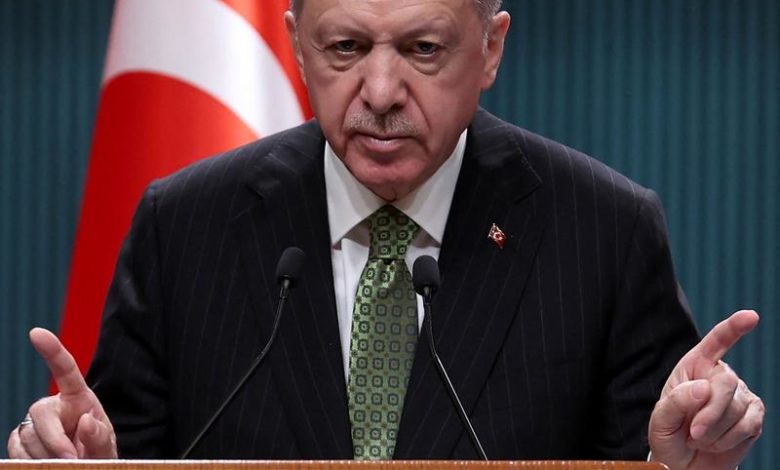
Turkish President Recep Tayyip Erdogan said on Saturday that the Kurdish peace process will be able to go on only when the PKK armed organization, considered terrorist by Ankara, will begin to deposit the weapons, as it has been employed, reports France Presse.
“The process will accelerate a little longer when the terrorist organization will begin to implement the promise to submit the weapons,” Erdogan told the Press, according to Anadolu State Agency, when returning from an economic summit in Azerbaijan.
His comments intervene before a ceremony provided by PKK in Iraqi Kurdistan to begin the destruction of his weapons, which could take place between July 10 and 12.
PKK announced on May 12, its dissolution and, at the same time, the end of more than four decades of guerrilla battle, which made more than 40,000 dead, responding to calls launched at the end of February by his historical leader Abdullah Oclan, incarcerated in a 1999 island near Istanbul.
“As a sign of goodwill, a certain number of PKK fighters, who have taken part in struggles against Turkish forces in recent years, will destroy or burn their weapons in a ceremony,” a PKK commander told AFP, as anonymous.
One of the founders of the group, Mustafa Karasu, said that the Government “did not take the necessary measures”, accusing the Turkish army of “continuing the attacks” on PKK positions in northern Iraq and emphasizing an improvement in the conditions of detention of the founder of PKK, Abdullah Ocalan.
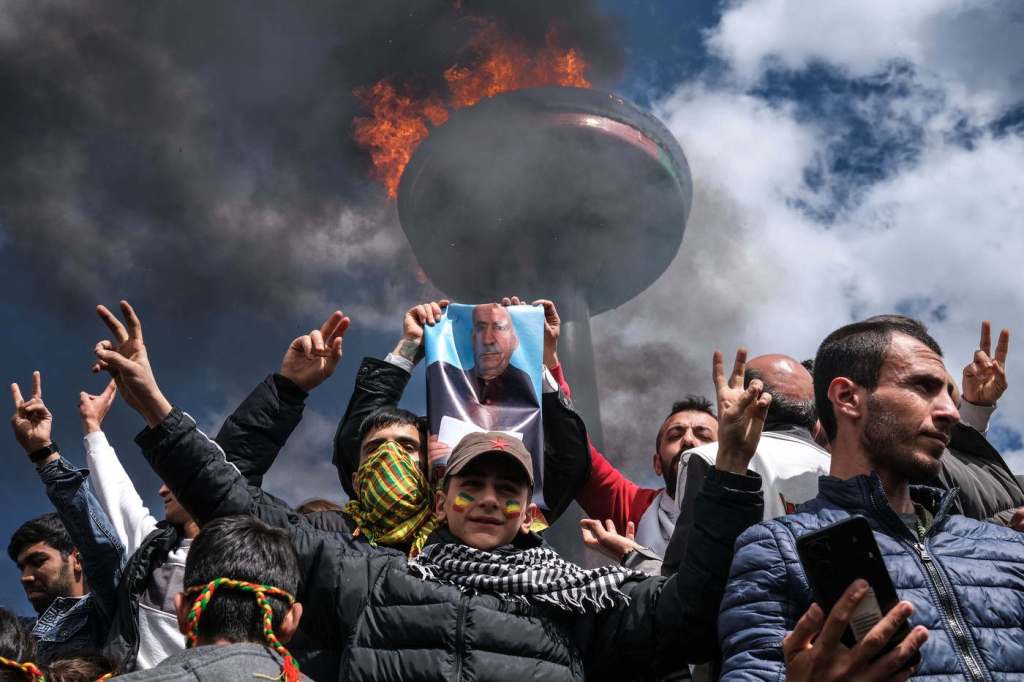 Historical decision: The Kurdistan Workers' Party (PKK) announced its dissolution and decision to end the 40-year-old armed struggle with the Turkish state.
Pkk fight
PKK was founded in 1978 in order to establish an independent Kurd state, with socialist orientation in the Middle East. Subsequently, PKK attenuated this goal and instead requested the recognition of the Kurde identity, as well as the political and cultural autonomy in the areas predominantly inhabited.
About 30 million Kurds live around the world, which makes them the largest ethnic group without their own state. The Kurde minorities live mainly in southeast of Turkey, northern Iraq, Iran and northern Syria.
As a militant organization, PKK launched an armed campaign against Turkey in 1984, northern Iraq. Turkey, the European Union and the United States consider PKK as a terrorist organization.
It is estimated that the armed conflict between PKK and the Turkish state killed over 40,000 people, many of them civilians. In the last 10 years, most PKK fighters have retired from Turkey, but have continued to launch attacks on Turkish territory from Iraq and Syria positions.
Last phases of conflict
In recent years, the conflict has moved to northern neighboring Iraq, where PKK has mountain bases, and Turkey has dozens of outposts. Ankara has launched operations against the militants there, including air attacks with war aircraft and battle drones, which Baghdad said to violate his sovereignty.
However, Iraq and Turkey have agreed to intensify cooperation against PKK, and Baghdad labeled it for the first time as a forbidden organization.
Turkey also targets the YPG militia in Syria, considering it PKK affiliated, and has performed cross-border operations with the allied Syrian forces to remove it from its border. However, YPG is the spearhead of the SDF, the main ally of the US coalition against the Islamic state.
Washington's support for FDS has been a source of tension between the US and Turkey for several years.
In December, the removal of former Syrian president Bashar al-Assad-to whom Ankara I opposed a long time, supporting the Syrian rebels-strengthened Turkey's position and influence in this region. Turkey demanded the dissolution of YPG and the expulsion of its leaders in Syria and threatened with a Turkish military operation for the “crushing” of the group if its applications will not be fulfilled.
Turkish, American, Syrian and Kurdi officials have tried to reach an agreement on the future of the Syrian Kurds.
Previous negotiations failed
The first steps towards peace between PKK and the Turkish government began in 2009. In the coming years, Hakan Fidan, at that time director of national intelligence services, had discussions with PKK representatives in the capital of Norway, Oslo. The negotiations failed.
However, these were followed a few years later a second negotiation attempt in which Ocalan and the People's Democrat (HDP)-the predecessor of the current pro-Kurd Dem party-played a central role.
During this period, the HDP won followers and supported the peace process, while asking the then prime minister, Recep Tayyip Erdogan, strengthening the fundamental rights of Kurds and opponents.
At the 2015 parliamentary elections, the HDP obtained over 13% of the popular vote, thus missing the Party of Justice and Development (AKP) of Erdogan by its absolute majority. Erdogan put an end to the peace process shortly afterwards.
Who is Abdullah Ocalan
Abdullah Ocalan, also known as Apo, has contributed to the establishment of PKK and so far is recognized as the head of the group. In 1979, he fled to Syria, where he began to prepare the Kurd war for independence.
He set the first headquarters of PKK in the Lebanese Valley Bekaa, then under Syrian control. After the 1980 military coup in Turkey, many activists joined him there.
In 1998, Ocalan was pressed to leave Syria and spent the next few months requesting political asylum in several countries. Finally, in 1999, Turkish secret services kidnapped him in Nairobi, Kenya.
Extracted in Turkey, Occaan was accused of betrayal, setting up an armed organization and separatism and sentenced to death. His sentence was later switched to life prison. Since then, it is kept in isolation in the Imral prison, off the coast of Istanbul.
Even his family and lawyers have restricted access to him.
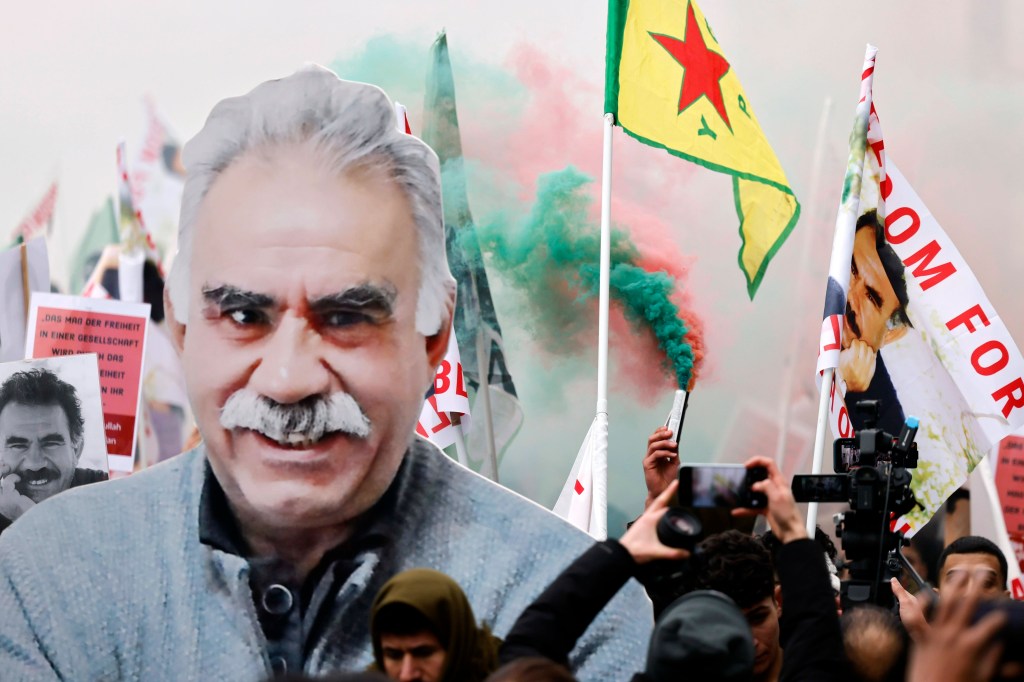 “PKK must be dissolved.” Abdullah Ocalan, the leader of the Kurdish separatists in Turkey, appeals to the submission of weapons after 40 years of conflict