“Tasks that most people perform can be completely replaced by OpenClaw.” China's strategy in adopting AI

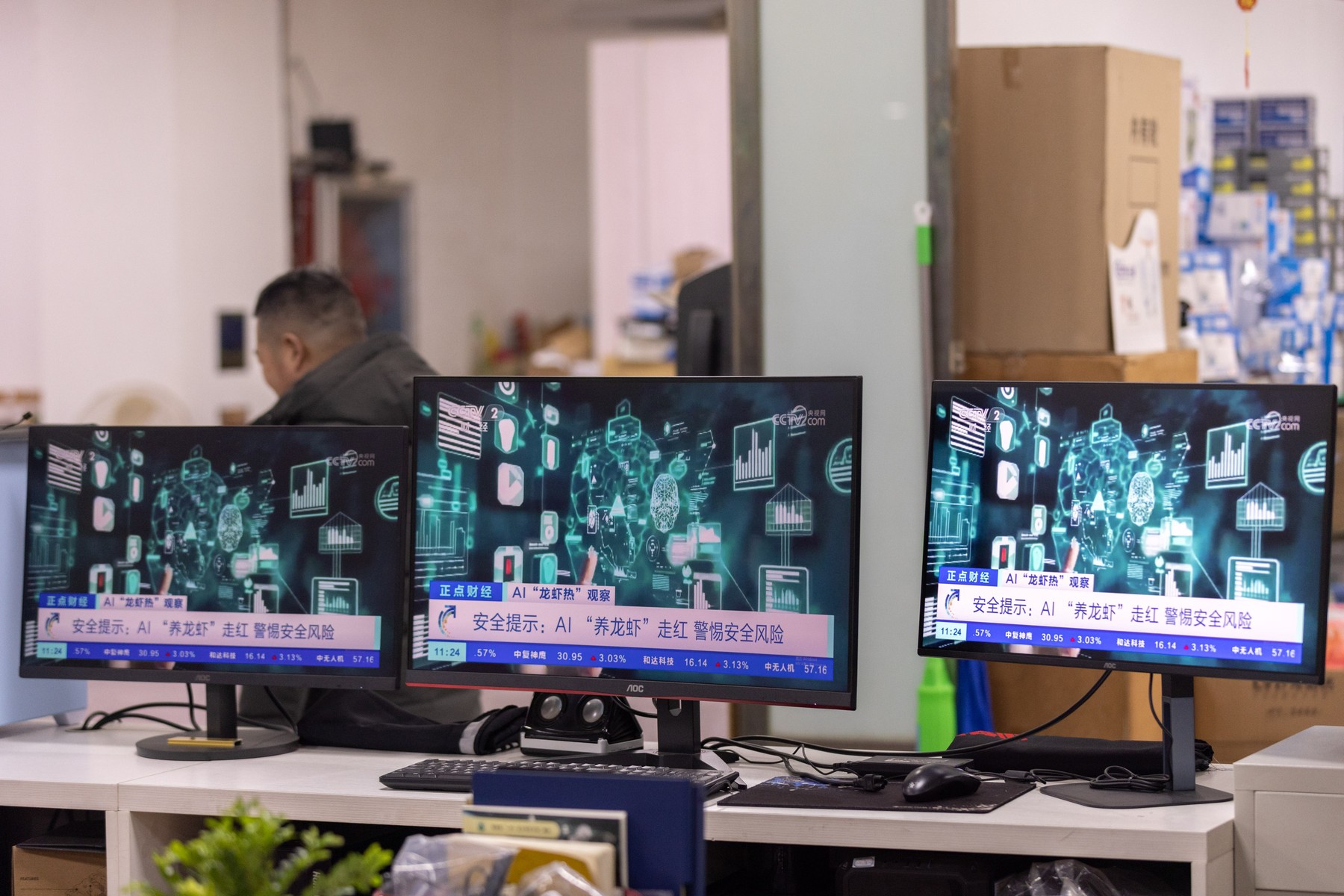
Liu, who works on a contract basis in Hangzhou for a large Chinese internet company, says her employer began quietly firing co-workers in March after requiring employees to use artificial intelligence tools, Reuters writes.
- Liu's company is just one of a number of Chinese companies quietly implementing small-scale layoffs as they pursue productivity gains associated with artificial intelligence without attracting the attention of authorities.
- The strategy is diametrically opposed to that of the large multinational companies in the West, which not only publicly announce reductions of thousands of positions, but also blame them directly on the implementation of artificial intelligence systems.
- China's strategy is diametrically opposed to that of the large multinational companies in the West.
- He Shujing, senior analyst at consulting firm Plenum, says big Chinese tech companies are still in a phase of “total commitment” to artificial intelligence.
While he does not know the full extent of the layoffs, Liu says his employer has also started to reduce the number of graduates it hires as Chinese companies rush to deploy artificial intelligence systems.
“Tasks that most people perform can be completely replaced by OpenClaw. After a person enters all their workflows (into OpenClaw) … they can basically be fired,” said the 26-year-old, who asked that her full name and company name not be published because of the sensitivity of the subject. OpenClaw, an AI tool launched earlier this year, has seen rapid adoption in China, the world's second-largest economy.
Touted as “AI that actually does things,” OpenClaw runs directly on users' operating systems and applications. It can automate tasks such as managing email and calendars, browsing the web, and interacting with online services. The first integrations were mainly done on messaging platforms like WhatsApp, Telegram and Discord, allowing users to control the agent through text commands.
Even as companies around the world face the challenge of adopting artificial intelligence, Chinese companies are in a unique situation.
Beijing wants them to adopt AI, and they want implementation to be fast enough to transform productivity. But at the same time, Chinese authorities do not want adoption to be so rapid or so visible that layoffs threaten social stability, writes Reuters.
Nine Chinese employees from industries including technology, entertainment and advertising told Reuters that Liu's firm is just one of a number of Chinese companies quietly implementing small-scale layoffs as they pursue productivity gains associated with artificial intelligence without attracting the attention of authorities.
The strategy is diametrically opposed to that of the large multinational companies in the West, which not only publicly announce reductions of thousands of positions, but also blame them directly on the implementation of artificial intelligence systems.
Chinese companies are trying to avoid mass layoffs
Under Chinese labor law, companies must get approval from authorities for layoffs that exceed 10 percent of their workforce, and Chinese courts have ruled in at least three cases against companies that fired employees to replace them with artificial intelligence systems.
“Private companies will have to accept a certain level of inefficiency to avoid mass layoffs that would cause 'social instability' and potentially have political consequences,” a senior executive at a major fintech company based in China told Reuters.
Restructuring has already begun at all of China's major tech firms, the person said, and many jobs in marketing and end-user operations have largely been replaced by AI.
An engineer at Alibaba's cloud computing division also said AI-driven layoffs have begun in parts of the company and are likely to continue through gradual cuts and natural employee departures, rather than one massive wave of layoffs.
Alibaba did not respond to Reuters' request for comment on the information.
He Shujing, senior analyst at consulting firm Plenum, said major Chinese tech companies are still in a phase of “total commitment” to artificial intelligence.
“Productivity gains from AI will likely reduce the need to recruit, but large companies are expected to be cautious about outright downsizing,” he points out.

“I still can't shake the feeling that I'm getting closer to being replaced”
Some companies are not only using AI to replace tasks and functions, but also to measure whether employees are adopting it quickly enough.
In some workplaces, the use of tokens – a unit of measure for the consumption of AI computing resources – is monitored to estimate the efficiency of employees, even though this indicator does not directly translate into productivity gains, nor does it reflect the quality of the work done with the help of AI.
A big data engineer at a Chinese tech giant said his manager had started ranking employees based on token use since March, adding that the metric would be included in performance reviews and promotion prospects.
“It's a relatively forced practice. You shouldn't use AI just for the sake of using it,” he told Reuters on condition of anonymity. “I still can't shake the feeling that I'm getting closer to being replaced,” he adds.
The entertainment industry is among the most affected by these transformations, as small studios with tight budgets switch to actors and sets generated by artificial intelligence.
“We had 30 to 40 people in our production department. After the transition to AI, each team was reduced to about 10 people, and only two people were left for filming with real actors,” says Ayase, a 22-year-old micro-drama producer who was laid off in February.
“In productions with real actors, a single actor costs thousands of yuan a day, even for a minor role with only a few lines,” explained the young graduate, quoted by Reuters.
The explosion of AI adoption and the pressures on jobs
Beijing's “AI Plus” initiative aims to achieve 70% AI adoption in key sectors by 2027 and 90% by 2030, and analysts warn there will be a difficult transition period.
They say the rate at which AI is creating new jobs is slower than the rate at which it is eliminating them, while China already faces high youth unemployment and early-career workers are disproportionately exposed to AI-based automation.
Although the number of AI job openings will increase by 74% in 2025, this explosion masks the difficulties of a wider labor market, where a record 12.7 million university graduates face declining starting salaries and fewer job opportunities.
Citibank estimated in a recent report that 9.6% of all jobs in China – about 70 million – are at high risk of being replaced by artificial intelligence. This risk increases to 13.6% for entry level positions.
“Artificial intelligence is in a special way at the heart of China's economic transition: it is both a driver of disruption and a proposed solution to it,” Selena Guo, a social policy analyst at China Policy consultancy, told Reuters.
“Widespread adoption of AI is necessary to achieve industrial efficiency and accelerate innovation… The hope is that this will generate a positive snowball effect on productivity and economic growth,” she explains.
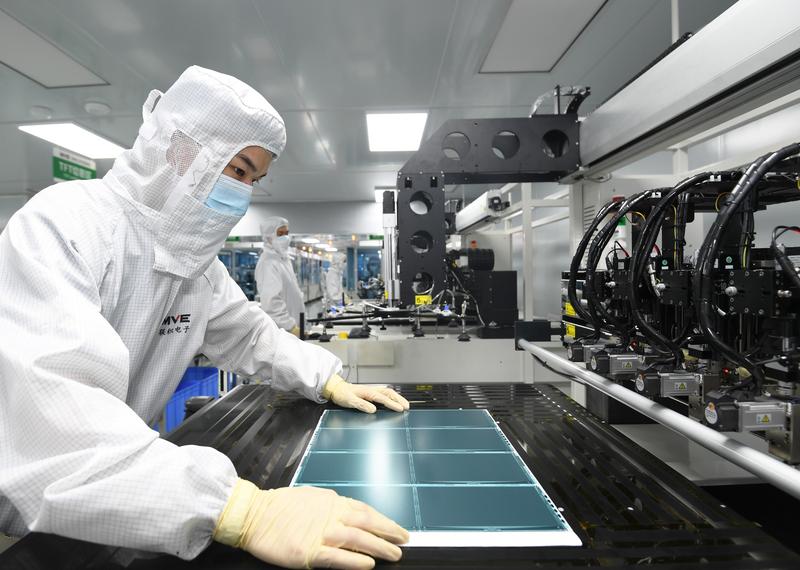
Chinese state media are trying to reassure employees
Articles published in Chinese state media tried to reassure workers, claiming that AI is not “stealing people's rice bowls” — a phrase that refers to their livelihoods. The authorities are currently studying the impact of artificial intelligence on employment and reskilling plans, but have yet to come up with a detailed policy response.
The hashtag “AI anxiety” has garnered more than 7.8 million views on Chinese social media app RedNote, where users debate whether artificial intelligence will render them useless, like 19th-century European weavers who lost their jobs to the mechanical loom wars.
Some tools based on “AI agents” are already explicitly promoted as replacements for entire departments. So-called AI agents are artificial intelligence tools designed to carry out different tasks head-to-head, as autonomously as possible and with minimal human input.
Wukong, an AI agent platform developed by Alibaba for the business environment, for example, includes preconfigured skills for a “one-person company.” These skills are designed to automate activities such as e-commerce sales, live streaming, and software development.
“Those who don't use AI will be weeded out,” says Liu, who works in content operations at the internet firm.
“It's only a matter of time before AI permeates every aspect of life… I want to go back to farming or become an artisan,” she says.