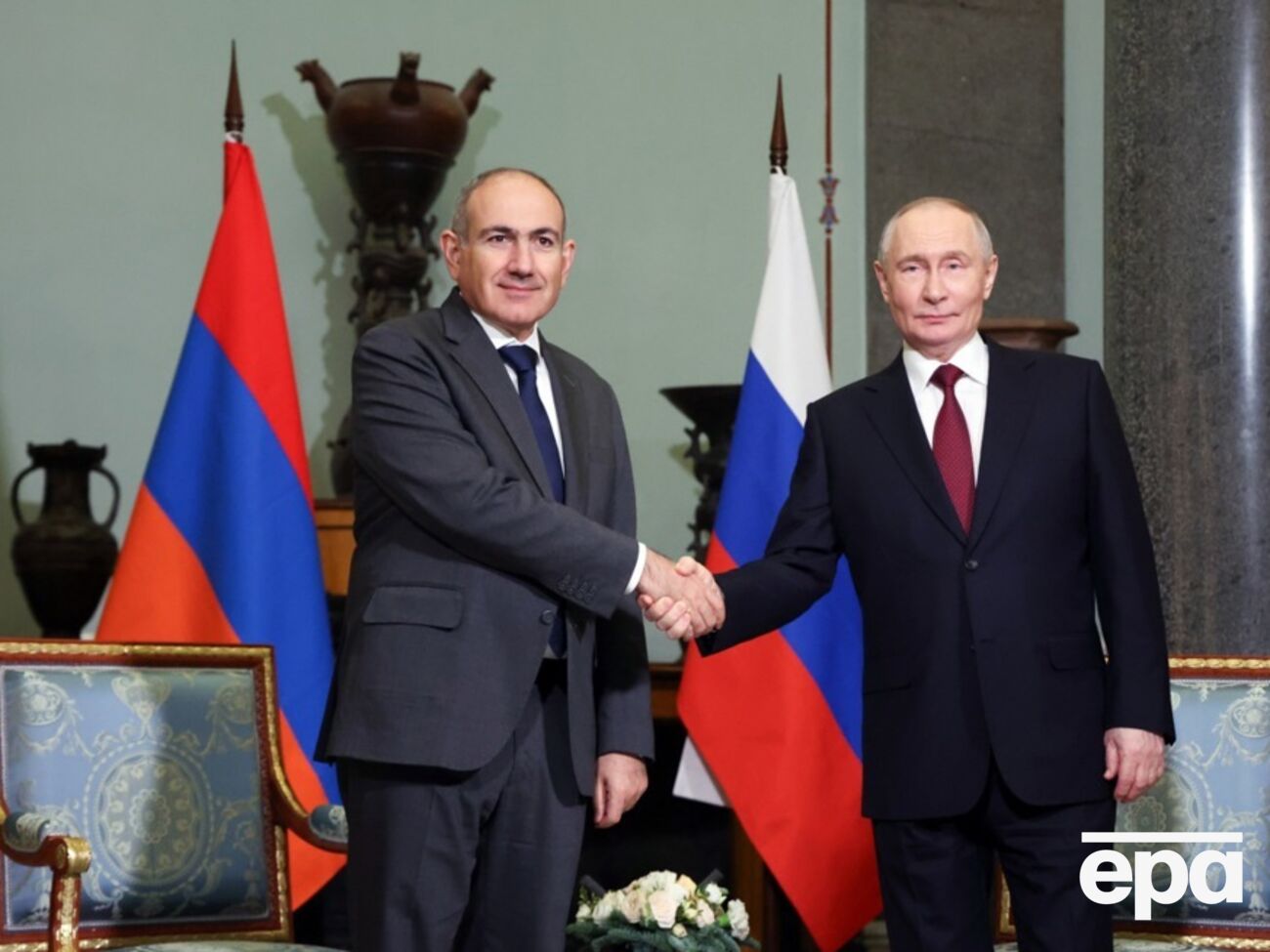
The Prime Minister of Armenia, leader of the Civil Contract party, Nikol Pashinyan, who is on vacation, began his speech at the final rally on Republic Square in Yerevan on June 5 with the 20th Psalm, writes Armenpress. This is King David's prayer of blessing before going into battle.
“Some in chariots, and others in horses, but we boast in the name of the Lord our God,” was heard over the square, which is difficult to understand otherwise than that true strength and power depend not only on military power, but also on higher patronage.
Between Moscow and Brussels
Although there will be 16 parties and two blocs on the ballot, it is clear that this is a match between pro-European and pro-Russian forces, where Brussels and Moscow have moved from the stands to the field. The European Union clearly supports Pashinyan.
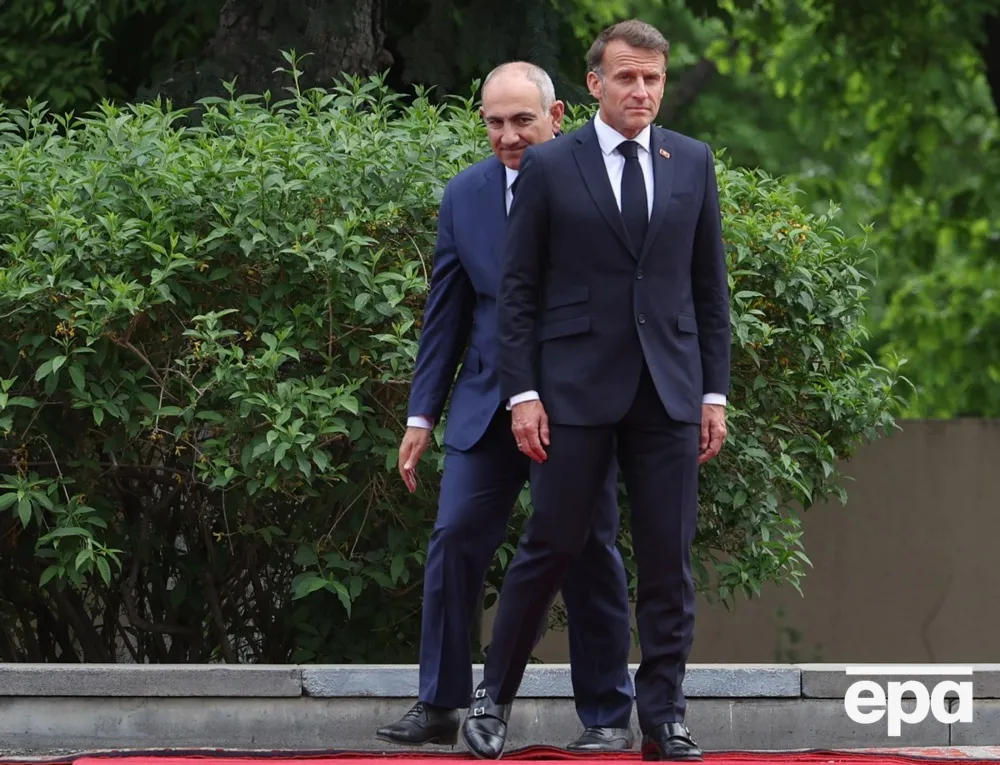
The leaders of almost 50 countries, including the main enemy of the Russian Federation, Ukrainian President Vladimir Zelensky, came to the summit of the European Political Community on May 4–5 in Yerevan. French President Emmanuel Macron became the star of Yerevan in those days, publicly demonstrating his closeness with Pashinyan and Paris's bet on him. The head of the European Commission, Ursula von der Leyen, said that they had gathered in the Armenian capital “to show one big European family.”
“United by common interests, we face the same challenges. We will work, here, on the pillars of European independence,” she said.
Moscow, in turn, is doing everything possible to remove the current team from power. The opposition is represented by four parties at once – “Strong Armenia” of billionaire Samvel Karapetyan, the “Armenia” bloc of former President Robert Kocharyan, “Prosperous Armenia” and “Wings of Unity”. Behind such fragmentation, according to Pashinyan, there is one puppet master – the Kremlin, which is not far from the truth.
Karapetyan, in addition to Armenian, has citizenship of the Russian Federation and Cyprus, lived in Moscow until last year and, according to media reports, is associated with the FSB. He is currently under house arrest in Yerevan on suspicion of calling for a violent overthrow of the government. Kocharyan does not hide the friendship and “chemistry” between him and the illegitimate President of the Russian Federation Vladimir Putin. The heads of the other two parties, according to journalists, received money from the Putin administration back in the 2017 elections and are directly connected with the deputy head of the Presidential Administration Sergei Kiriyenko.
“Based on the results of the June 7 elections, the three-headed war party should not enter parliament. Those spy networks that think they can buy the Armenian people can defame the people, these forces must be brought to their knees by the results of the vote,” the Armenian prime minister said at the rally.
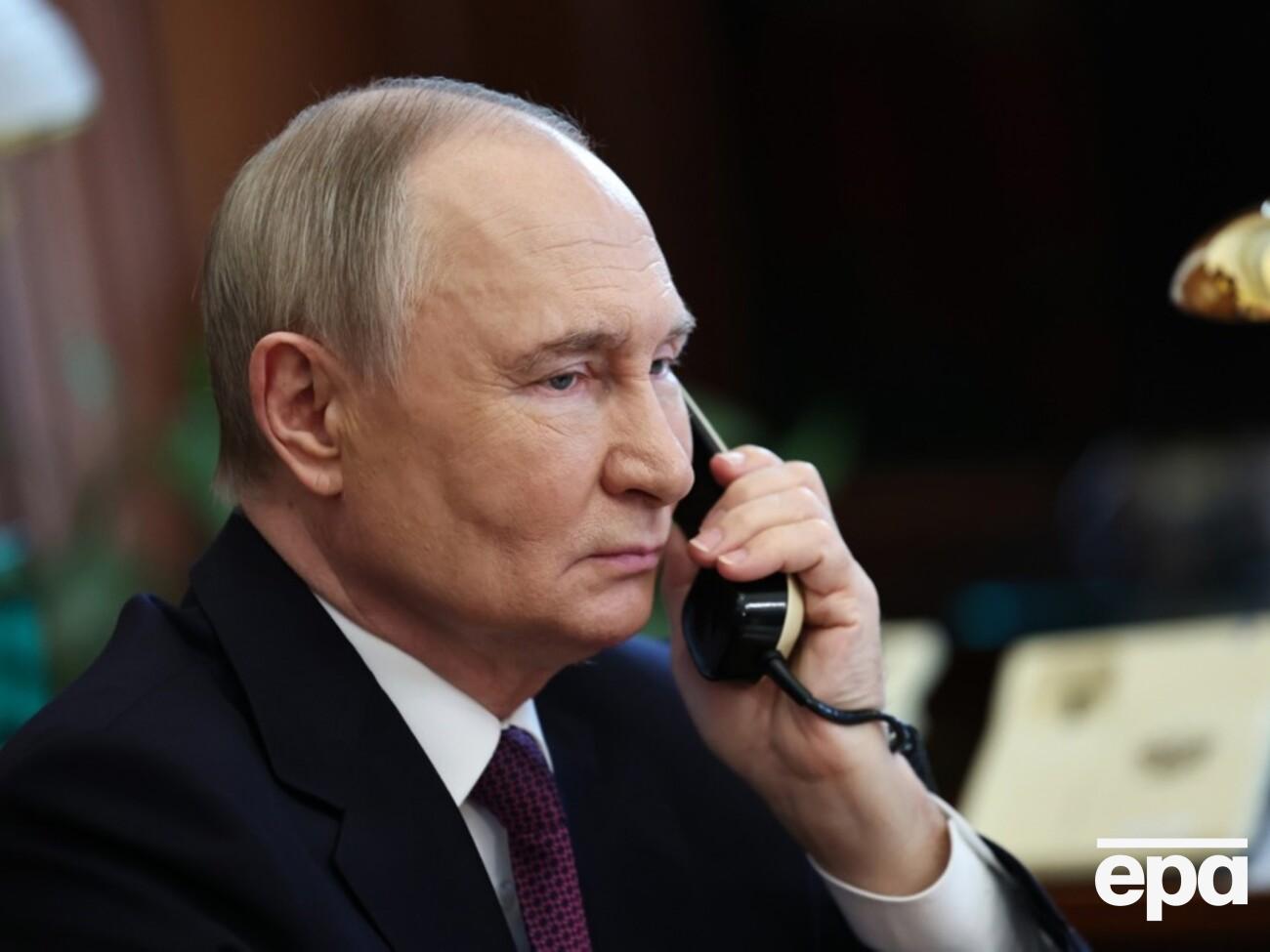
Throughout the entire campaign, the Russian Federation used a propaganda hose and direct economic pressure. During a press conference following the EAEU summit in Astana, Putin said on May 30 that Armenia could suffer a “Ukrainian scenario” because of its European integration aspirations, and before that he advised Yerevan to hold a referendum on membership in the European Union before “divorcing” from the Russian Federation. On the same day, Moscow recalled Ambassador Sergei Kopyrkin, which in diplomatic practice is considered, if not a pre-war gesture, then a sign of tough confrontation.
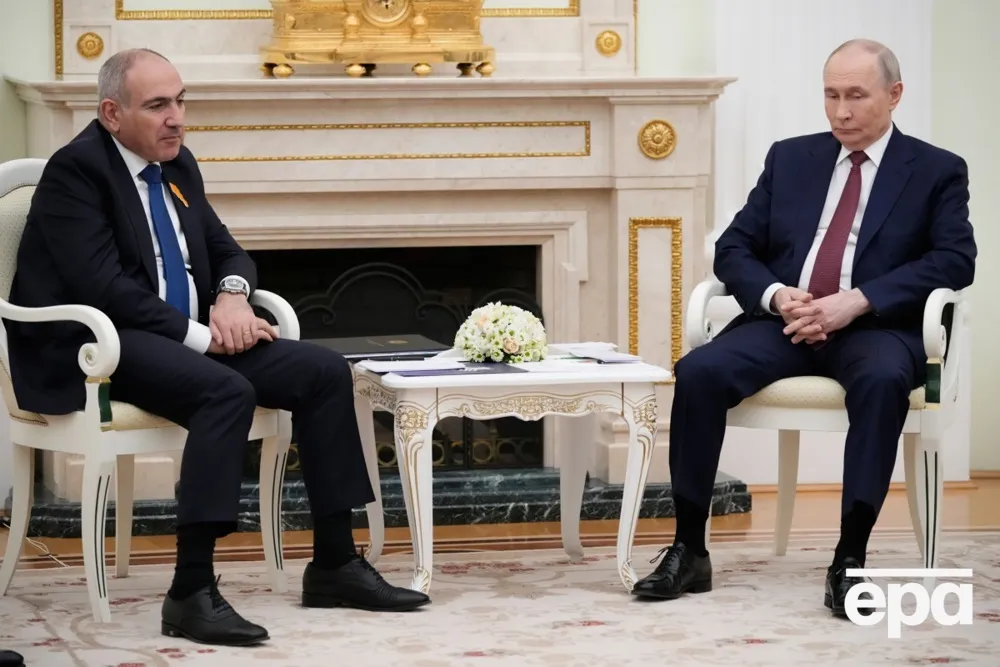
On April 1, at a meeting in the Kremlin, Putin threatened Pashinyan with the consequences of Armenia’s possible accession to the EU, and also hinted at “political” persecution of Karapetyan. Pashinyan replied that there are no political prisoners in Armenia, but there is freedom of speech and the Internet. At the same meeting, the head of the Kremlin probably announced the technology that Russia intends to use on voting day – to facilitate the maximum arrival of Armenians from abroad to the polling stations.
“We have a lot of friends in Armenia, a lot, we know that. Many Armenians live in the Russian Federation… we believe – about 2 million people (The population of all of Armenia is about 3 million. – “GORDON”)… And there are many political forces that are pro-Russian. Of course, I will tell you quite frankly, we have such a dialogue that we always speak to you honestly and directly. We would really like all these political parties and politicians to be able to take part in this internal political work during the elections,” Putin was quoted as saying by his administration’s website.
Reuters wrote on May 29, citing sources, that the Russian Federation plans to send up to 100 thousand people to Armenia to vote. Russian authorities estimated the cost of transporting them at approximately $50 million. Armenian Minister of Economy Gevorg Papoyan responded by promising to send them to military training, which runs from March 31 to June 19. “It will be very good if, out of 100 thousand people, say, 30–40 thousand stay here, we will send them to military training. They will take part in military training for two months, and then return to Kaluga. What’s wrong with that?” – he told reporters.
This turned out to be not an empty threat – the Union of Armenians of Russia announced on June 5 that summonses were handed out to arriving men directly at border checkpoints and at the airport. Armenian Defense Minister Suren Papikyan indicated that this applies to all citizens of the country liable for military service, regardless of which country they came from – the Russian Federation, France, the USA or other states.
The country's Anti-Corruption Committee has already reported numerous cases of “electoral bribery.” On the eve of the elections and on voting day, security forces promise to “use the full range of legal means,” including drones, throughout the country to prevent violations, in particular vote buying.
Time of last bets
There is no point in citing aggressive and offensive statements by Russian politicians, and especially propaganda, before the elections in Armenia – Deputy Chairman of the Security Council Dmitry Medvedev, Foreign Minister Sergei Lavrov and Speaker of Russian diplomacy Maria Zakharova spoke in a manner characteristic of each of them, as they did before the elections in Moldova, as well as Hungary. And perhaps tomorrow it will turn out that with the same effect, since both the Hungarians and the Moldovans did not appreciate Moscow’s rhetoric.
The Russian independent publication “Verstka” writes that the Kremlin has no illusions that Pashinyan will actually be removed. A source close to the Kremlin shared with journalists that now there is no talk about the victory of pro-Russian forces in the elections – rather, only about the blurring of votes. “Let’s not forget that they have a parliamentary republic. There will be no constitutional majority, and the prime minister will no longer be able to easily carry out his reforms, including rapprochement with the EU. So the question is not about Pashinyan’s personality, but that this personality does not have it easy and that it is not forgotten,” he emphasized.
The President of Georgia in 2004–2013, Mikheil Saakashvili, on the contrary, expects from Moscow a radical reaction to the victory of the prime minister’s party, including the deployment of troops. “And if the Russian Federation decides to carry out such an operation, it will inevitably occupy Georgia… In this big geopolitical game, Moscow will not even remember what “red carpet” was laid out for it [создатель пророссийской партии власти “Грузинская мечта” Бидзина] Ivanishvili. If Pashinyan wins the elections, the Kremlin will immediately move to plan B,” the imprisoned politician is confident.
What the polls say
A poll by the American International Republican Institute in May recorded a confident leadership of the “Civil Contract” with approximately 65% of the vote. A survey by the sociological center SAEAC, cited by Arminfo, gave a fundamentally different picture: the “Strong Armenia” bloc is almost 3% ahead of the “Civil Contract” (20.6% versus 17.8%).
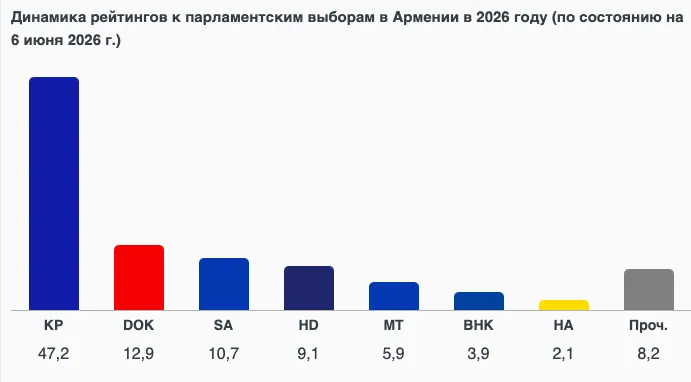
On June 6, the aggregator of electoral polls and European political statistics, PolitPro, gives a landslide victory to Pashinyan’s party – according to its data, the prime minister’s political force is supported by more than 47% of the electorate.
After the victory
A course towards Europe is the first, but not the only promise in Pashinyan’s program. The Ukrainian publication Babel believes that its implementation is not guaranteed for objective reasons. And even having received a constitutional majority, it will be difficult, if not impossible, for the “Civil Contract” to break away from Russia. In addition, it will be difficult for Armenia to fully integrate into the EU, since it is surrounded by states with which the EU has problems – Georgia, Iran, Türkiye and Azerbaijan.
It is unknown whether the peace process with Azerbaijan, initiated by the loss of Armenian settlements in Nagorno-Karabakh, will continue, the authors of the article note. To do this, it is necessary to submit a new constitution for the country to a referendum and for the people to support it. Yerevan’s European claims may become an issue in the process of a peace settlement with Turkey.
In addition, Armenia’s imports and exports also rely on the Russian Federation – last year the trade turnover between the countries amounted to $7.7 billion, followed by China with $2.6 billion, not the EU. Armenia's energy sector also depends on Russian supplies – it buys almost all its gas from Russia, and Moscow has already used this as a threat.