In their official communication, representatives of financial institutions argue that after the CJEU judgment on the free loan (SKD) sanctions of April 23 this year. nothing changes and consumers still lose the vast majority of cases.
Lawyers representing consumers believe that the CJEU has changed the game and the direction of the jurisprudence has started to change.
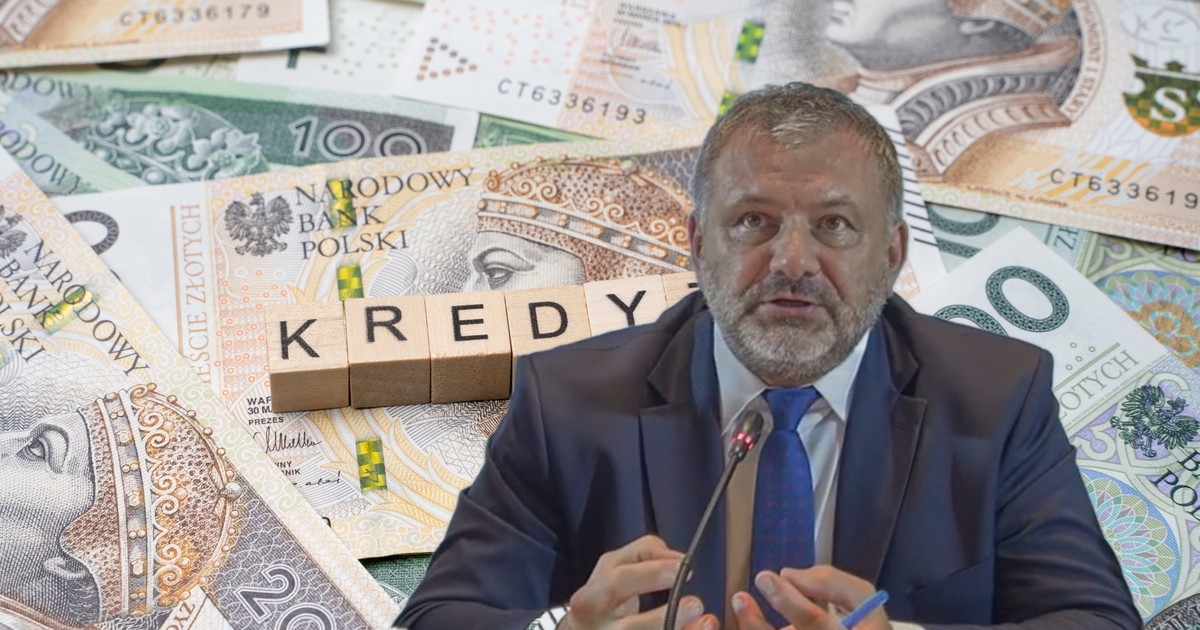
Waldemar Żurek, opening the Round Table on Legal Risks of the Financial Market during this year's European Financial Congress, suggested that the courts may be flooded with another wave of lawsuits. And he didn't mean franc disputes. Information obtained by Business Insider Polska shows that this time the Ministry of Justice wants to protect the courts against the increase in cases.
Żurek: They are storming into the courts
Waldemar Żurek was the first to speak during the round table and said that before we start talking about the legal risks of the financial market, we must first eliminate the basic risk. And it is uncertainty as to the correctness of the composition.
– One of my fundamental tasks is to restore the foundations so that we can be sure that the bodies are built correctly and that we will not constantly encounter accusations that they do not constitute a court – emphasized the minister. And he stressed that this is also very important for the financial market, because there are a number of disputes between consumers and banks, and consumers and corporations, where at the end there is a panel that does not constitute a court. “We must first eliminate this fundamental risk,” he emphasized. And he added that it is important because we have hundreds of thousands of cases involving Swiss franc borrowers, but not only that.
— Today we have a free loan sanction entering the courts with great impetus and enormous risks. These are mutual risks in my opinion, because these are not only risks of financial institutions. These are also consumer risks, because the collapse of the banking system will affect the economy and affect consumers. We must be aware of this, said Waldemar Żurek. He added that in order to stabilize this situation, we either have to act quickly and take legal action, and if it is not possible to prepare a law, we must have legal certainty.
— We will talk about the details, about how to institutionally create a sense of security for financial market entities, consumers, business entities, and powerful insurance and banking institutions. I have the impression that today, due to the weakening of basic institutions, we have no legal certainty, which is the foundation of the rule of law, said Żurek.
Does this mean, however, that the Ministry of Justice is working on a draft of a new law, modeled on the Swiss franc law recently passed by the Sejm?
Waldemar Żurek, Minister of Justice
| EKF
The Ministry of Justice is working on a special solution
As Business Insider Polska found out in sources close to the Ministry of Justice, Waldemar Żurek had in mind a special act, separate from the one on consumer credit, which was until recently worked on by the Office of Competition and Consumer Protection, headed by Tomasz Chróstny.
Recently, even though time is short (the act implementing the EU CCD2 directive is to enter into force by November 20 this year), the government has deprived the Office of Competition and Consumer Protection of its work. We would like to point out that the project processed by the Office of Competition and Consumer Protection so far included, among others: regulate SKD for the future and did not concern current disputes.
However, the solution that the Ministry of Justice is considering is to be a substantive law act, similar to the special act for Swiss franc borrowers. However, the ministry does not anticipate that the new law will see the light of day soon.
— At the moment, we are monitoring the development of the situation, looking at how the number of cases in courts is developing and how the case law is evolving. We are working on the assumptions, but nothing has been decided yet – a source close to the Ministry of Justice tells us.
Another legal challenge for banks after francs
SKD is a big problem for banks and potentially the judicial system. Currently, there are approximately 25,000 cases in courts. cases, but this number could increase quickly.
Consumers have already submitted approximately 100,000 complaints and more may appear if the case law statistics start to tilt in their favor. For now, 80-90 percent. decisions are favorable to financial institutions, but the first conclusions from the courts after the CJEU ruling of April 23 (C-744/24) – for now very cautious due to the little time that has passed so far – show that the number of judgments favorable to borrowers is increasing.
The situation around SKD was the most hotly commented topic on the sidelines of the European Financial Congress, which took place in the first days of June. Bank representatives and lawyers representing financial institutions admitted in unofficial conversations that the mentioned CJEU judgment was disturbing.
Let us recall that objections to the draft act on consumer credit, prepared by the Office of Competition and Consumer Protection and also relating to SKD, were raised by, among others, Ministry of Finance, Polish Financial Supervision Authority and Ministry of Justice. The Financial Stability Committee also presented a negative opinion twice. The banks were afraid that the solution prepared by the Office of Competition and Consumer Protection, which we described in detail in this text, would only deepen the problem and lead to massive undermining of contracts, while the ambiguity of some provisions would result in inconsistent judgments.
I’m Ashley Davis as an editor, I’m committed to upholding the highest standards of integrity and accuracy in every piece we publish. My work is driven by curiosity, a passion for truth, and a belief that journalism plays a crucial role in shaping public discourse. I strive to tell stories that not only inform but also inspire action and conversation.