The chances of populist Nigel Farage's party to win the next election are increasing, says one of Britain's most respected election analysts

The Reform UK party has an increasing chance of winning the next general election in the United Kingdom, and the support it enjoys cannot be explained only by the protest vote, says one of the best-known British experts in electoral analysis, quoted by the Daily Mail.
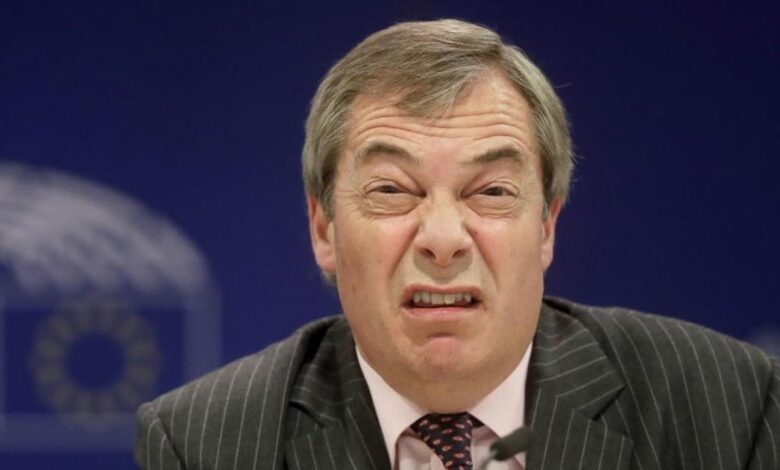
The populist Nigel Farage's party leads in the preferences of British voters. PHOTO: EPA/EFE
Professor Sir John Curtice said voters in the party led by populist Nigel Farage represent a distinct political coalition, characterized by conservative social values and concerns about national identity, immigration and cultural changes in British society.
He said a potential improvement in the economy or public services, including the NHS, could help the Labor government regain some support, but was unlikely to be enough to stop Reform UK's rise.
A more stable electoral base than a simple protest vote
Sir John Curtice's analysis is based on the latest data from the annual British Social Attitudes survey, one of the UK's leading sociological surveys.
The results suggest that Reform UK supporters are not motivated solely by dissatisfaction with traditional parties, but share a number of common political and social beliefs.
“There is undoubtedly an element of protest in the support for Reform. But it is not just a protest vote. We are talking about a group with very clear ideological views and strongly conservative social values,” explained the analyst.
Brexit and cultural themes continue to influence the electorate
According to the research, many of Reform UK's current supporters come from the Conservative electorate that supported former British Prime Minister Boris Johnson in the 2019 election, in the context of the completion of the Brexit process.
Sir John Curtice believes that themes such as national identity, immigration, pride in Britain's history, but also reactions against policies perceived as excessively progressive have contributed to strengthening support for Reform UK.
Among the topics frequently mentioned by voters are gender identity policies, Net Zero climate goals and the role of the state in promoting diversity.
Reform UK leads in some polls
Currently, Reform UK is credited in several polls with around 26-27% of voting intentions, while the Labor Party and the Conservative Party each sit around 18-19%.
Sir John Curtice reckons that while Nigel Farage's party may struggle to break the 30% threshold nationally, such a result could be enough to secure a significant electoral advantage in an increasingly fragmented political landscape.
Economic grievances, but also strong cultural differences
The survey shows that Reform UK voters are more pessimistic than the average population about the state of the country and their own living conditions.
Some 60% of party supporters said they were “very dissatisfied” with the current state of the NHS, compared to 51% of respondents in the general population.
However, the biggest differences appear in cultural and social themes.
Three quarters of Reform UK supporters believe that immigration is affecting British culture, while only 35% of Britons share this view. Also, nearly nine out of ten party voters believe that transgender equality policies have gone too far.
Who are Reform UK voters?
According to the research, Reform UK supporters are on average older, predominantly male and less likely to have attended university compared to other parties' electorates.
Sir John Curtice believes the Conservative Party has the best chance of winning back some of these voters with a message focused on the economy and the management of public finances.
“If these voters leave Reform UK, they are more likely to go back to the Tories than to support the Labor Partyhe said.
A wake-up call for traditional parties
The conclusion of the study is that the rise of Reform UK reflects the existence of an important segment of British society that no longer feels represented by the major parties and that increasingly finds its political expression in a formation with a conservative and anti-establishment message.
For the ruling Labor Party and the Conservatives, this trend represents one of the most important political challenges ahead of the next general election.