Who were the foundries in communist Romania. What causes Romanians to stab their co-workers, neighbors or family

Delaționa or, in everyday language, the foundry, was a symbol of Romanian communism. Reporting to the Security has become a way of revenge between neighbors or work colleagues, and not only that. The specialists explain the profile of the caster, but also how extensive this phenomenon was.
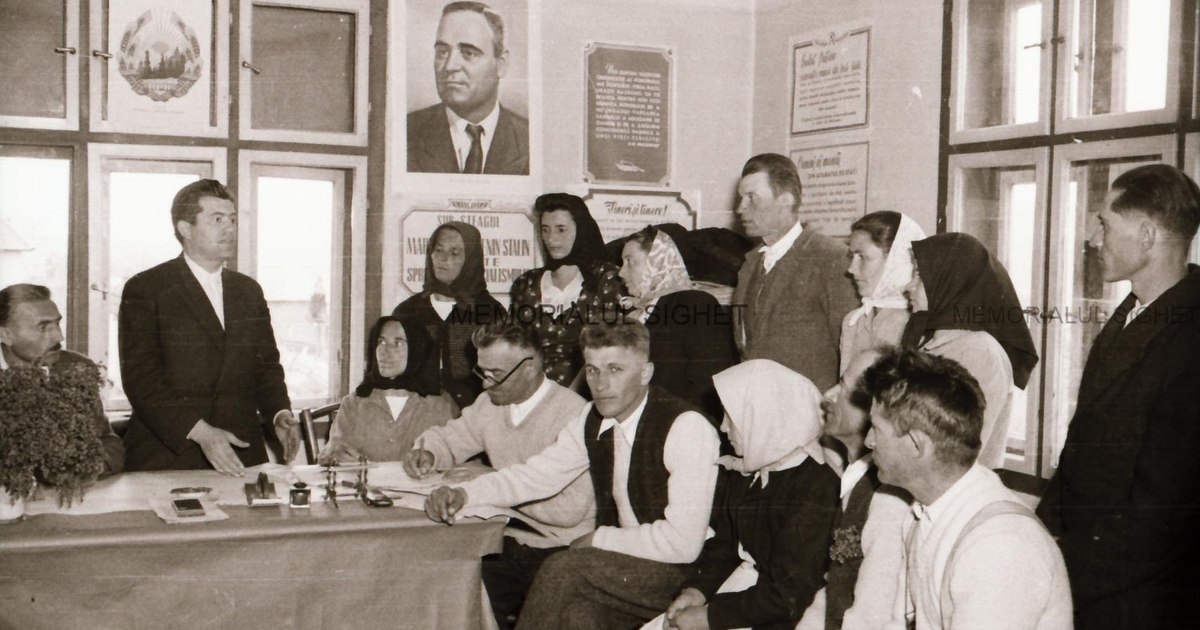
Images from communist Romania PHOTO Memorial Sighet
Denunciation, according to the Explanatory Dictionary of the Romanian language, is a form of denunciation. It is secret and directed, most often out of nefarious motives—envy, self-interest, or fear—to a person or organization who has the power and ability to punish the whistleblower.
Delusion has always existed and has played a significant and destructive role in history. Many times, this also involved confessing completely false or greatly exaggerated things about a person.
The phenomenon of denunciation was specific to totalitarian and authoritarian regimes, also representing a key tool of them. With the help of whistleblowers, these regimes could more easily control the population and spread terror. Under totalitarian regimes, treason was transformed from a reprehensible act into a civic “obligation” or an ideological “crusade.”
In Romania, denunciation was a fundamental social and discursive practice of the communist regime from 1947–1989. In addition, it was institutionalized through the Security, which turned the denunciation into a tool of terror.
It is assumed that more than 500,000 Romanians were arrested for political reasons during the first decades of the communist regime, often following the foundries. The security used a network of hundreds of thousands of informants to monitor society, turning neighbors, colleagues and even relatives into sources of information.
Moreover, the Securitate intentionally maintained a general psychosis, leaving the impression that Romanians are being watched at every step. This created an atmosphere of suspicion, fear and destruction of human trust that persists to this day.
About this phenomenon of political “foundry” among Romanians during the years of communism, about the profile of the foundry and the reasons that pushed him to harm his peers through denunciations, but also about many other aspects related to this topic, “Adevărul” discussed with the historian and professor Mădălin Hodor, who has extensive experience in studying the archives of the Security.
The typical turner: interested in material benefits but also in killing the neighbor's goat
“The truth”: How did the whistleblower system come about and how did it work during the communist period?
Madalin Hodor: It is not something that the communists in Romania invented. It is an old practice. But it is certain that the phenomenon gained momentum in Romania during the communist regime, after its installation and after the communalization of all institutions, including the Secret Police. More and more people were recruited to collaborate with the regime.
What categories of collaborators and informants existed in the Security network?
There were indeed several categories. We think, first of all, of those who were part of the information network. This information network included all the sources that the Securitate had. And the news network had several categories.
The most important category was that of informants. These people were recruited by the Security in order to follow any target of the institution. If the Security was following a person and was interested in his activity, such informants were recruited who provided details about the targeted person.
Collaborators represented another category. They were recruited for general and casual duties. If they learned or heard something, it was not directed specifically at a particular person, but at a circle of relations or a certain social category.
After that came the occasional sources or so-called support persons. They were part of the information network, but had no permanent tasks.
There were also official persons, i.e. persons who, by the position they held or by the fact that they were part of institutions or the state apparatus, provided information to the Security when they were requested to do so, without being registered as informers or collaborators. They were simply being asked for information about a colleague or employee. They could also provide information of a political nature if they considered it relevant or if Security requested it.
How were people recruited by the Securitate?
Everything depended, in fact, on the person undergoing the recruitment process. Generally, the Security officers did a study of the people they were going to recruit and usually tried to settle on people who had a high potential to work with the Security, for various reasons.
Either they were materially interested, or motivated by the possibility of advancement, or they had a special family situation, or they had personal reasons against the person for whom they were recruited, or they could be blackmailed on the basis of compromising material.
Generally, and this was a matter which every Security officer endeavored to do, there was a careful study of the source. It looked bad in front of superiors and colleagues if, for example, a Security officer tried to recruit a person and that person refused to cooperate. This could even affect the officer's career.
In the 1950s and 1960s, the Security officers mainly tried to use forceful methods and to force recruitment. Not necessarily through beatings, but also through mental coercion.
Towards the 70s, when the Security began to become more professional, in the sense that the officers entering the institution already had higher education, it switched to an operative mode based on certain norms.
How ÎPS Calinic confronted the head of the Security after he became abbot at the Sinaia Monastery
From the studies we conducted, we noticed that sources recruited on the basis of blackmail or compromising material tended not to tell the truth, to give information only out of fear, or even to make things up. Thus, their informative effectiveness was low, and the Security began to recommend officers to stop recruiting people on the basis of blackmail or compromising material. Only in extreme cases were these methods still accepted.
In a proportion of approximately 90%, the sources were recruited through co-interest, that is, by offering them material advantages or other benefits in society.
In the last years of communism, the Security officer no longer risked the same professional stigma if he was refused by sources. In the 1980s such a situation was no longer considered a tragedy, and there were quite a few cases of sources who quit being part of the news network, either for personal reasons or simply because they were no longer providing information. There was more leeway in the 1980s, and people could refuse to be drafted.
“Treason and revenge at work were encouraged”
To what extent was denunciation used as a tool of revenge?
Betrayal, during the communist period, was also a way to take revenge on another person. From this point of view, we can say that the Security was in the role of a “devil” who offered everyone the opportunity to explore the dark side of his personality.
Betrayals and revenge at work were encouraged, hubris and anything that could lead to a denunciation or obtaining information was encouraged.
Of course there were numerous cases where the “castings”, so to speak, were the result of personal escapades.
Were there cases in which family members collaborated with the Security?
In the files, real situations were encountered in which the spouses were informants for the Security and gave informative notes about life partners. Indeed, there have also been cases of relatives providing such information.
Children, however, less so. I have not come across any cases of children giving information from within their own family. Children were recruited—and we're talking about students here—most often in educational matters, to give informative notes about what was happening at school, either about teachers or peers.
They were also asked to report whether they heard various discussions in class about listening to foreign radio stations or banks with Ceaușescu.
Casters and the psychosis of the ambush that still marks our destiny
How extensive was the Security Intelligence network really?
There are no absolute figures regarding the number of those who “turned” to the Security. We still don't have a very clear picture numerically. But what I can say for sure is that in the 1980s there were no more than 450,000 people on the news network. And this in a population of approximately 23 million inhabitants.
High school dropouts. The security about “Cecilia”, a girl of only 15 years: “Voluble, sociable, accepted by the collective”
Of course, the legend launched by the Securitate itself — because it was interested in spreading such perceptions — claimed that one out of two Romanians was a molder. Which was completely false.
This does not mean that people did not believe in this legend. Many were convinced that there were casters everywhere and were constantly on the lookout. In fact, this was also the interest of the Security: to create a psychosis among the population and make people self-censor, not to speak and not to comment, for fear that the informants of the Security could be with them at any time.
In reality, technically speaking, such an extent of surveillance was not possible. But the fact that the population was convinced that they were under constant surveillance was all that mattered to the Securitate. The effect they wanted was created.
What effects did this period have on today's Romanian society?
This trauma is still present in our society. After 1990, it was transferred to the intelligence services of today's Romania, and many people still believe today that they are being watched, listened to and that the services are everywhere.
In the meantime, other actors have emerged—big companies and social media giants—and many people believe they are being watched by these companies as well. In the end there is also a dose of truth, because they collect personal data.
Here, in Romania, this fear of being constantly watched and listened to, a fear that exists to a certain extent everywhere in the world, is amplified by the legacy of the communist period.
There is a profound lack of trust that characterizes us and that comes from this very heritage: the idea that we watch and turn on each other and that services are involved everywhere.
This mistrust creates big problems in Romanian society, especially credibility problems — for the political class, for journalists and, in general, for any public category.