How much does it still cost to build a house in 2026? Analysis of price increases that upset budgets

The construction market in Romania is going through a new wave of price increases, after the prices of some essential materials have already increased by up to 30% in the first months of 2026. Manufacturers and distributors warn that the increases will not stop here, and by the end of the year certain products could end up costing even 70% more than last year, against the background of increasing costs, international conflicts and new rules imposed by the European Union.
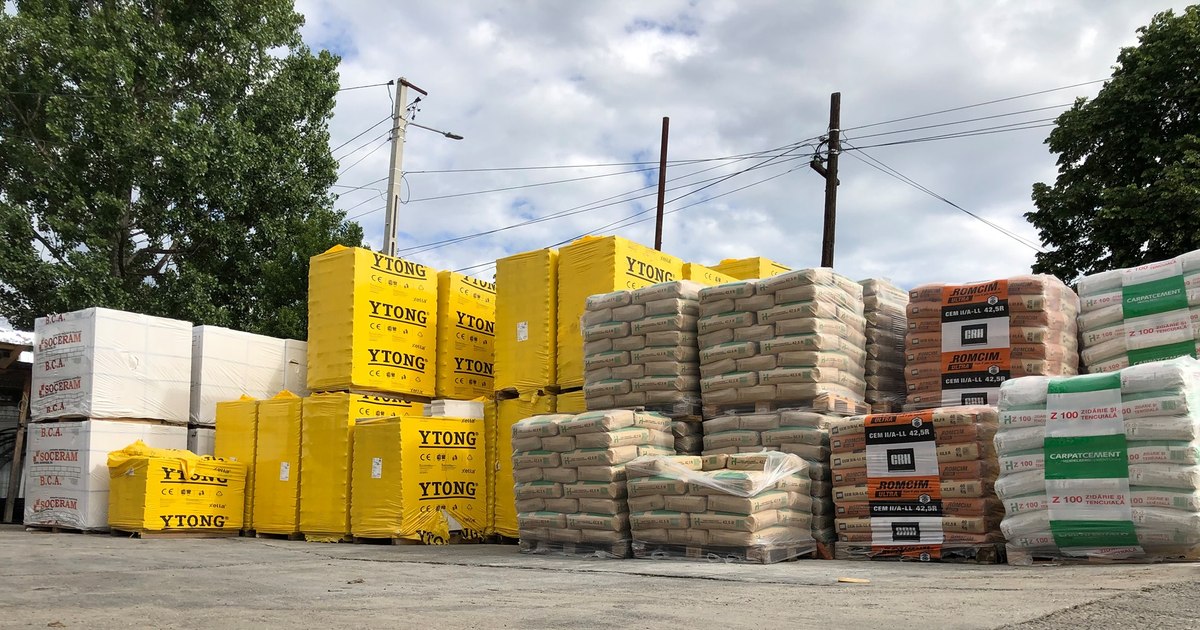
Construction materials can become more expensive by 70% until the end of the year. Facebook photo
The first months of 2026 brought accelerated price increases in the construction sector in Romania, against the background of an increasingly complicated economic and geopolitical context. Domestic economic instability, government measures, the effects of international conflicts and new European rules on carbon emissions and material performance are putting pressure on manufacturers and distributors as well as developers and end customers.
According to an analysis by construction materials distribution company Bauindustry DC, the market has seen significant price increases since the beginning of the year.
“Since the beginning of 2026, essential materials such as polystyrene, adhesives, waterproofing, iron, BCA and brick have increased in price between 15% and 30%. Unlike other years, when price adjustments occurred less frequently, this period also saw monthly increases, sometimes even for the same products. I'm afraid that at this rate, at the end of the year there will be products that we will purchase at prices higher than maybe 50-70% compared to the same period last year“, said Dragoș Vlagali, the director of the company.
According to data analyzed by the company, some of the most visible price increases occurred in basic materials used in almost all construction projects:
- waterproofing increased from 200–250 lei to 260–325 lei;
- adhesives for ceramic tiles went up from 25–30 lei to 29–39 lei;
- polystyrene adhesives went from 22–25 lei to 29–35 lei;
- washable paints went up in price from 120-150 lei to 160-220 lei.
“These rapid increases put pressure on budgets and force the market to adapt on the fly or grind to a haltDragoș Vlagali added.
Developers are becoming more cautious, but investment continues
Rising costs and economic uncertainty are already changing the behavior of real estate developers. According to Bauindustry DC representatives, companies in the field analyze costs and risks much more carefully.
“Developers who have ongoing projects have become much more attentive to costs and are increasingly expressing their concern over the current decrease in Romanian interest in real estate purchases, naturally forced by the domestic context. Nevertheless, the investments continue, because there is an underlying reality that encourages them not to give up: the desire and need of Romanians to have their own property. On the other hand, there is also the category of developers who stock up, precisely to mitigate the impact of price increases on their investments“, explains Vlagali.
The building tax also makes construction materials more expensive
Rising costs also affect the segment of energy efficiency solutions. Walton Electric Romania, a company specializing in modern heating systems and photovoltaic panels, says that prices have already increased by about 12%.
“Prices went up by about 12%, but we absorbed almost 30% of that increase. We see a growing interest in energy efficient solutions, especially electric underfloor heating, which is becoming a frequent choice in new residential projects as a long-term alternative”declared Iulian Diaconu, technical director of Walton Electric Romania.
The EU is changing the rules of the construction game
In addition to pressures from raw material costs and the geopolitical context, the construction industry is now also facing major change at European level.
The new industrial and decarbonization policies promoted by the European Union fundamentally change the way construction materials will be evaluated and selected. If until now the main criterion was the price, the new rules emphasize the performance, traceability and carbon footprint of the products.
Especially in public projects and those financed by European funds, the carbon footprint of materials, technical documentation and traceability, but also the origin of the product, will matter more and more, with clear advantages for EU producers.
The measures complement the CBAM mechanism and will directly affect sectors such as cement, steel and aluminium.
“The building materials market is not only changing because of costs, but because of rules. The European Union is shifting the focus from price to performance, and that is completely changing the way materials are chosen“said Cosmin Raileanu, the founder of Depozit Virtual (vindem-ieftin.ro).
According to him, the industry's problem is a structural one.
“The problem is not just that some materials will become more expensive, but that the industry still operates on a model where costs move from one link to another. The new rules will expose these inefficiencies and force the market to adapt“, adds Raileanu.
Cheap products could gradually disappear from the market
The new European standards will put pressure in particular on cheap imports that cannot demonstrate compliance with emission and performance criteria. In the case of Romania, the effects are all the more important as the market still depends on imports for materials such as steel and aluminum.
In the short term, experts warn that the changes will bring additional costs and further price increases. In the long term, however, the market could become more stable and quality-oriented.
In the coming period, experts estimate that products without clear documentation or without certified performance will be phased out, while imports without carbon standards will become more expensive. On the other hand, European producers will have a competitive advantage and the selection criteria will become more technical and stricter.
“The future is no longer about who buys the cheapest, but about who understands the market and anticipates changes. In an industry of billions, the difference will be the ability to adapt, not just the purchase price”, points out Raileanu.