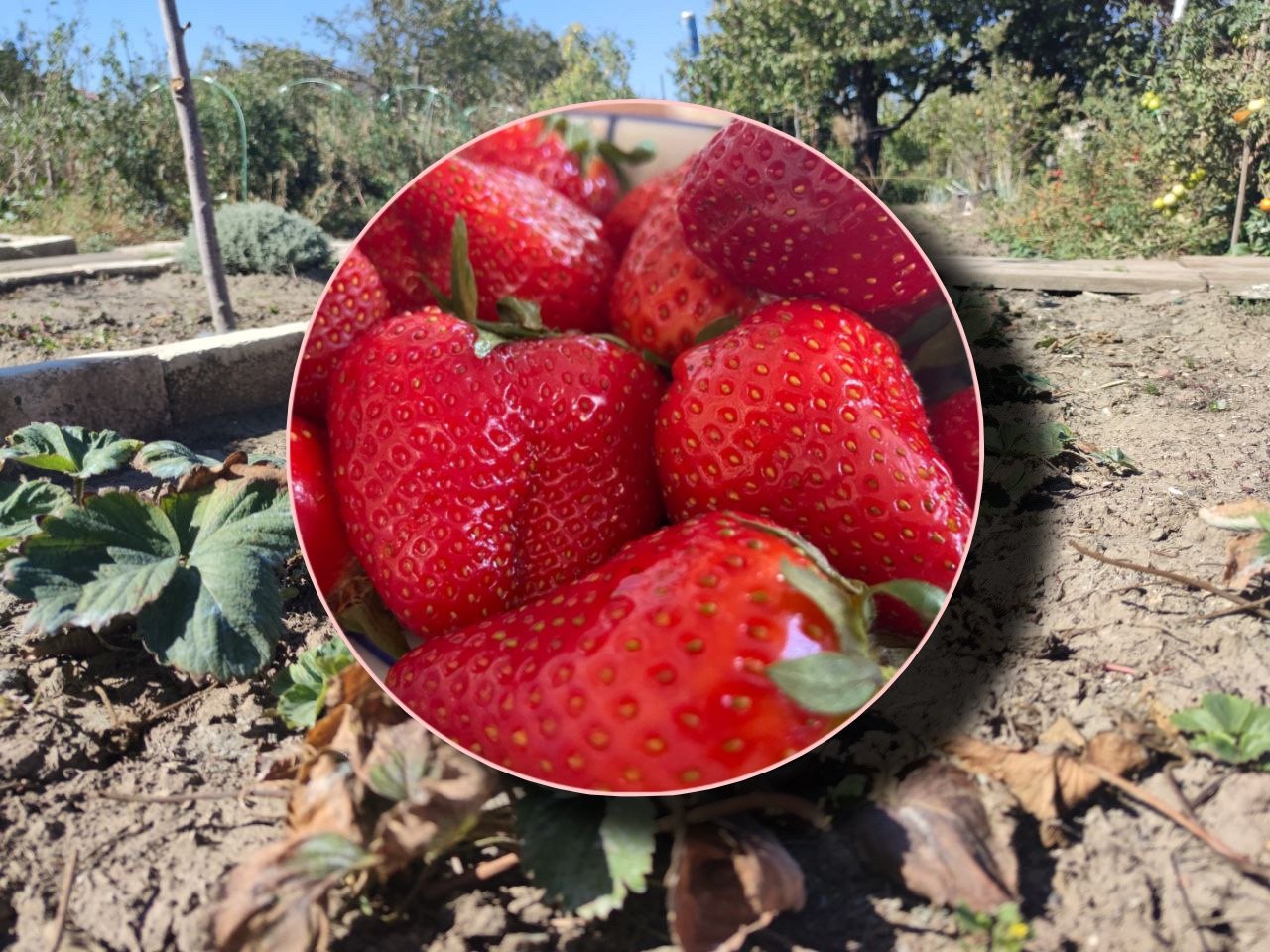
One summer resident – the author of the Zen channel “At Grandfather Egor's Dacha” (12+) – has his own habit every spring. He takes an old enamel bucket and goes to the strawberry beds. Inside the container there is an unsightly grayish-brown powder. It doesn't smell like anything special and doesn't look impressive. As it turned out, it contains only two components. Just five minutes of fussing – and the strawberries remain protected for a long time.
Secret ingredients
The first component is tobacco dust. This is tobacco production waste, a fine brown powder. For insects, it works much like hot pepper does for humans. Plus, tobacco dust fertilizes the soil with nitrogen and potassium.
The second component is diatomite. These are ground up shells of ancient algae. It acts purely mechanically: the smallest sharp particles scratch the chitinous layer of pests, and they die from loss of moisture. In addition, diatomaceous earth absorbs moisture and then gradually returns it back to the soil.
How to cook and sprinkle
The mixture is made from two parts tobacco dust and one part diatomaceous earth. Everything is simply mixed right in the bucket. But before pouring the finished powder, the bed needs to be prepared. All last year's leaves, dried tendrils and old mulch are removed. All this goes into the compost heap. The bushes should be clean and the ground underneath should be open. If you skip this step, the mixture will end up not on the soil, but on the garbage, and there will be no effect.
The powder is scattered around each bush. Not on the plant itself, but at a distance of a couple of centimeters from the base. The row spacing is also lightly powdered with a thin layer. Then they take a small rake and shallowly loosen the top layer of soil – just a couple of centimeters. The mixture is mixed with the soil and remains in place. If the weather is dry, lightly spray the bed with water from a watering can.
When to repeat and what not to do
One April treatment is usually enough until the end of May. If there is a heavy downpour, the procedure should be repeated, because the rain washes off part of the protective layer. For prevention, the mixture can be renewed after three to four weeks, especially if the first uninvited guests are already noticeable.
The summer resident warns: diatomaceous earth should not be mixed with preparations that contain copper. Bordeaux mixture, copper oxychloride – all this is used on another day and separately. Otherwise, diatomaceous earth loses its beneficial properties, and money goes down the drain.
Previously, we reported on what to feed raspberries in April.