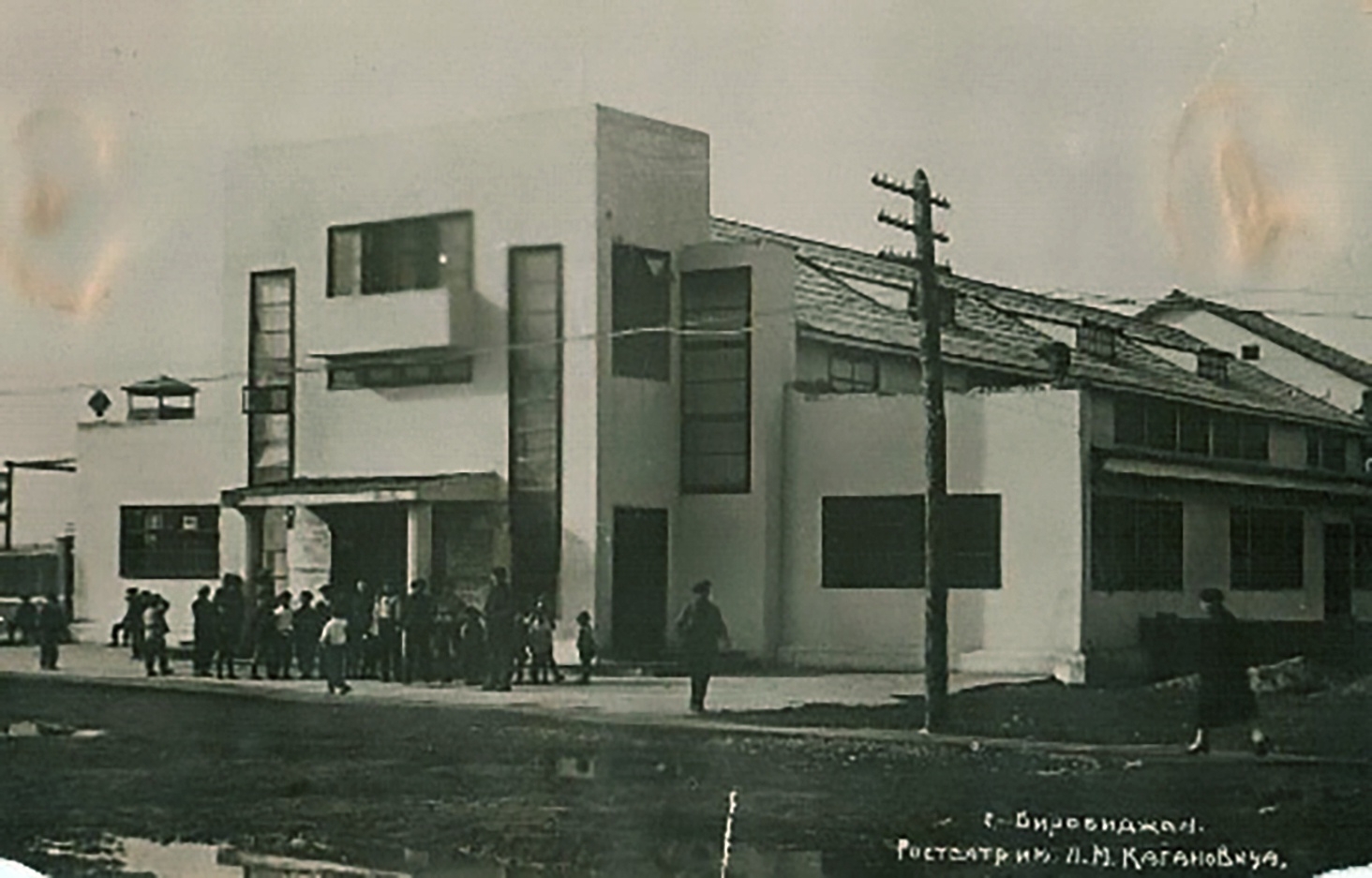
The building of the State Theater of the city of Birobidzhan. On Lenin Street. 40s
Photo: State Archive of the Jewish Autonomous Region
June 15, 1932
Joseph Brener’s book “The Country of Birobidzhan” (0+) contains information that on June 15, 1932, at a meeting of the Bureau of the Birobidzhan RK of the All-Union Communist Party of Bolsheviks, a number of issues were considered: about the opening of a bazaar, about the launch of a parts factory.
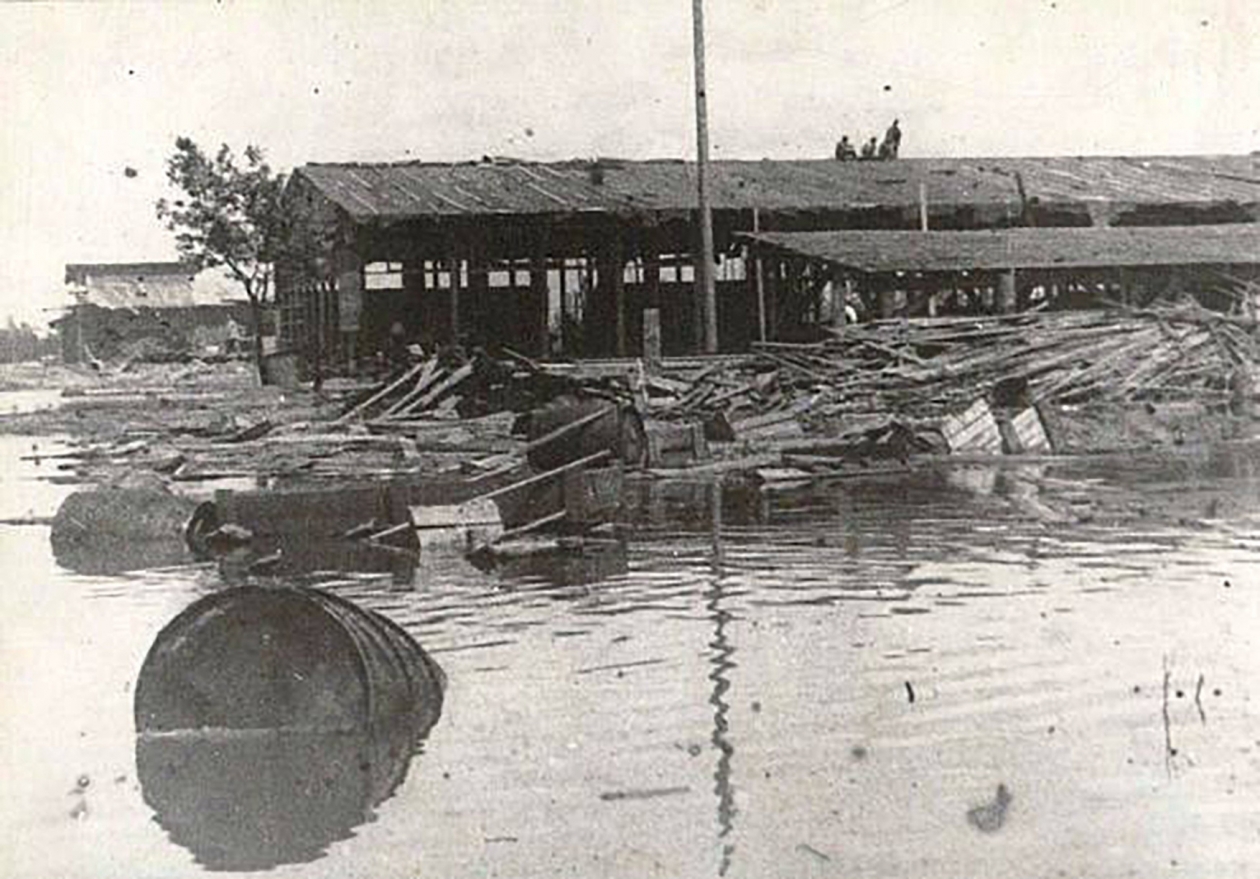
At the same meeting, the issue of preventive measures in connection with the sharp increase in water level in the Bira River was heard. A few days later, severe flooding flooded the city and all nearby villages. In Birobidzhan, all enterprises and organizations were involved in restoring the weak economy destroyed by the elements. This flood also revealed a picture of the city's complete vulnerability to floods.
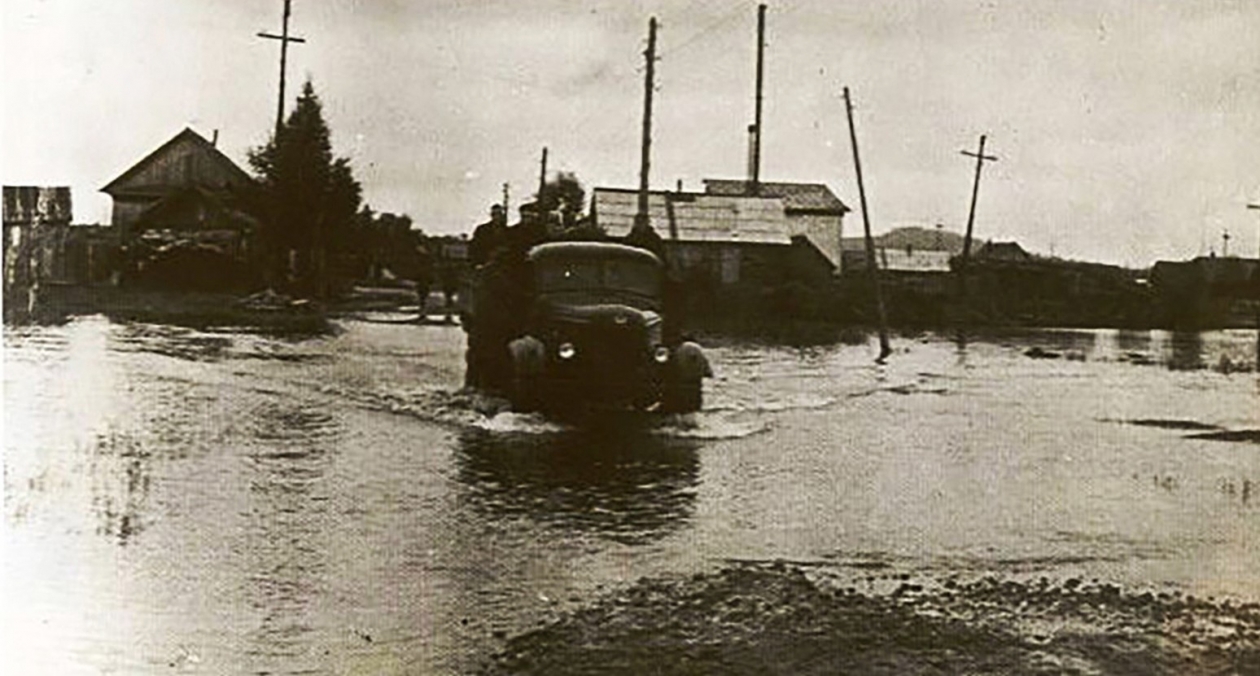
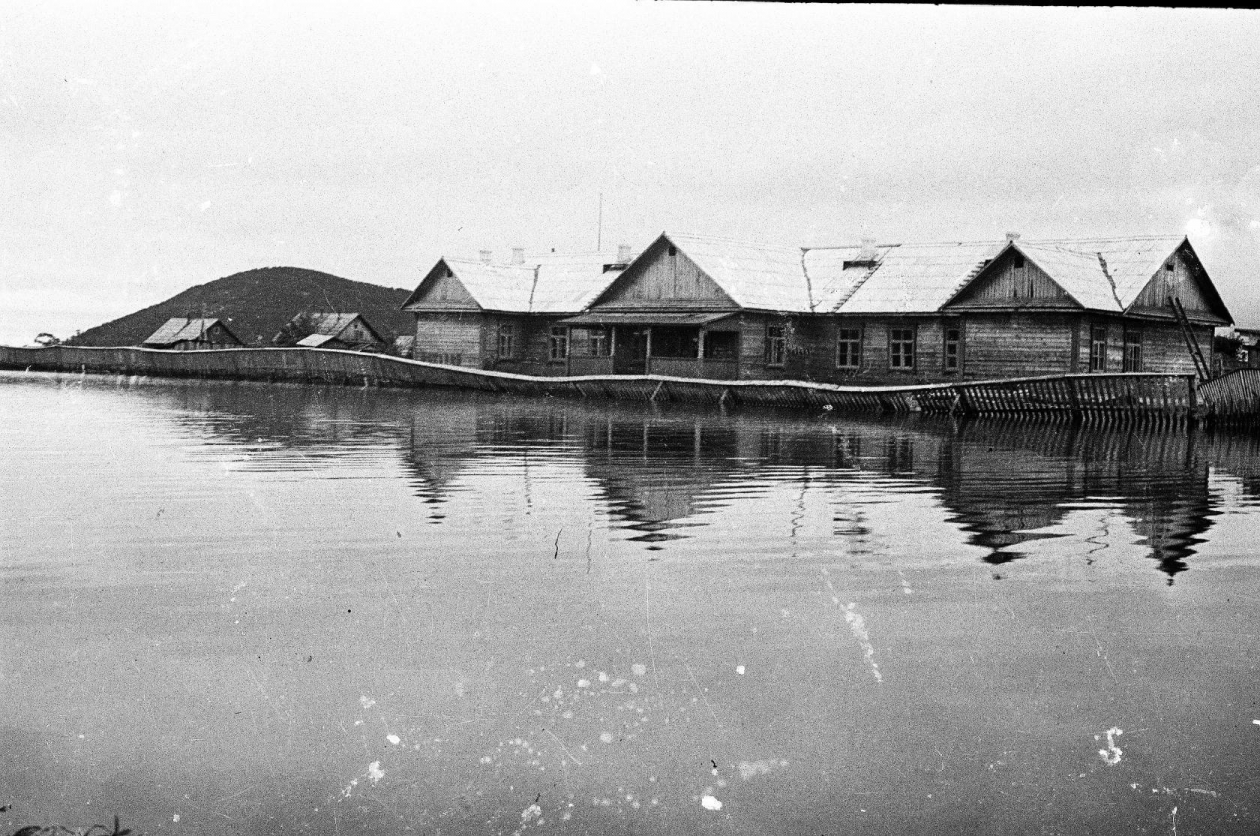
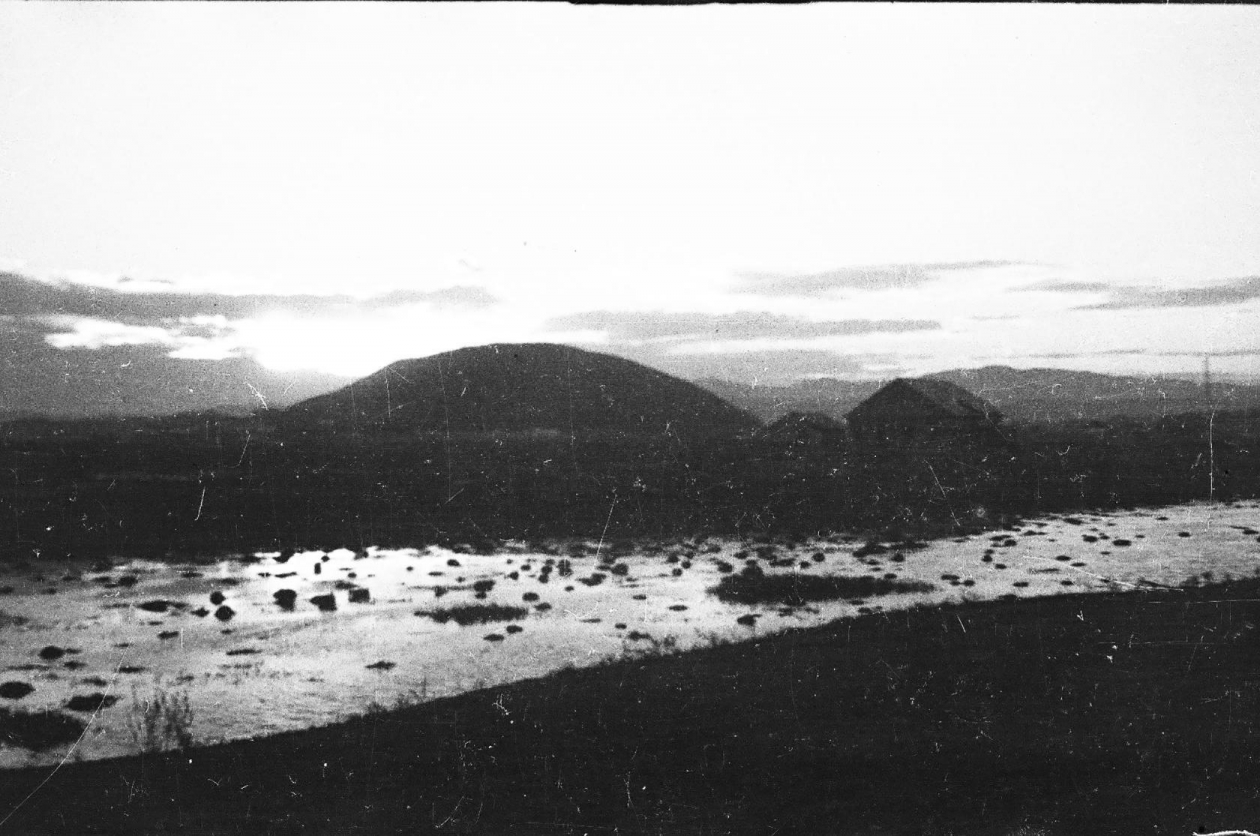
Due to the lack of a master plan for the city, party and Soviet bodies at their meetings make decisions on the allocation of land and the development of the most important, socially significant objects of the city.
June 15, 1939
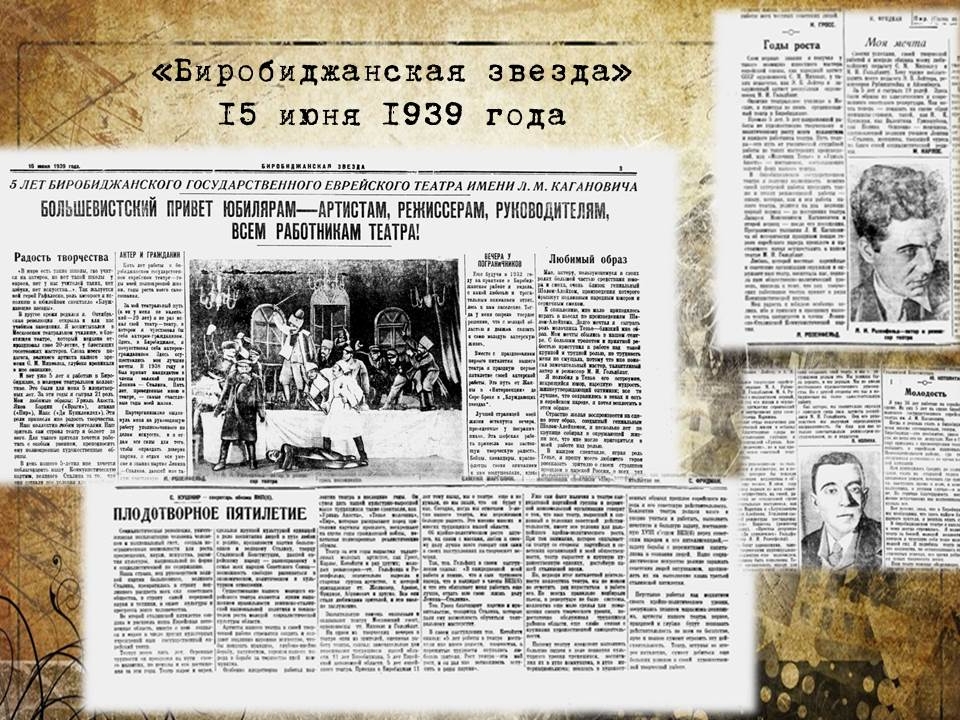
Clippings from the newspaper “Birobidzhan Star”. Photo: Photo: Regional Library
Materials from the newspaper “Birobidzhan Star” (12+) dated June 15, 1939 were dedicated to the five-year anniversary of the State Jewish Theater. L. M. Kaganovich. Congratulations to the theater staff and performances by theater artists were published on the pages of the newspaper.
In one of these publications, theater artist Y. Rosenfeld writes that he received his knowledge from the famous master of the Jewish stage, People's Artist of the USSR S. M. Mikhoels and Honored Artist of the Republic M.I. Goldblatt. Rosenfeld, having graduated from theater school in Moscow, came to the newly organized theater in Birobidzhan.
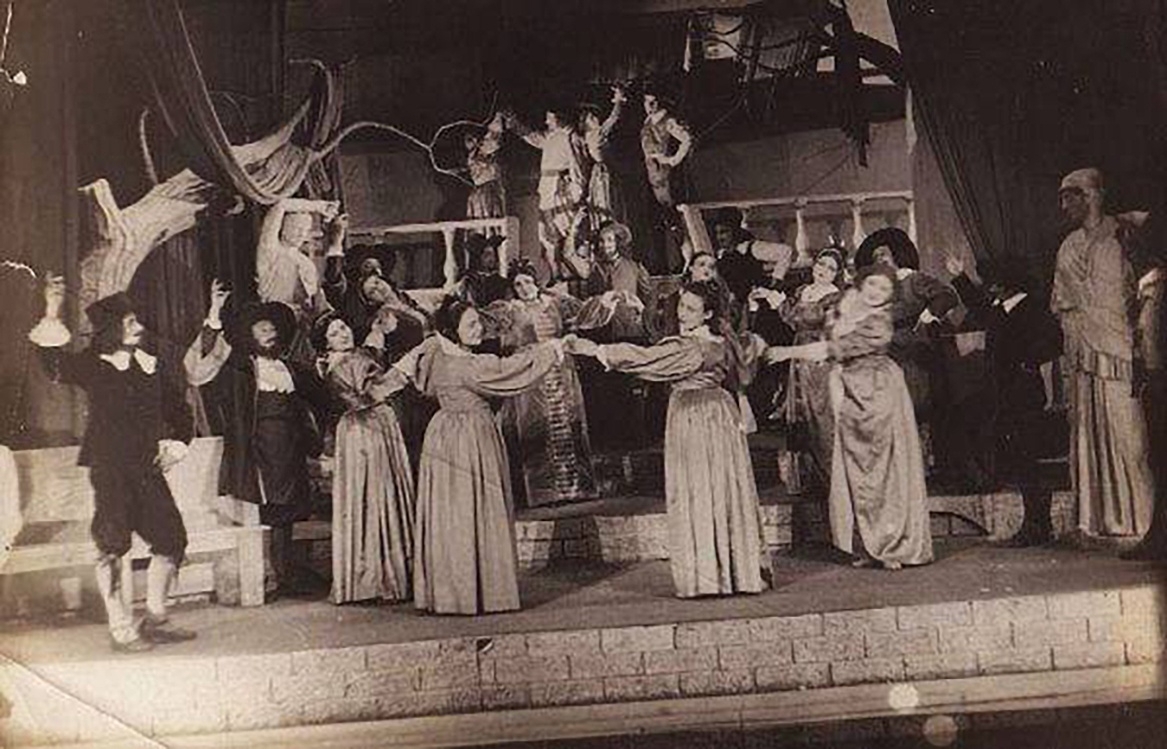
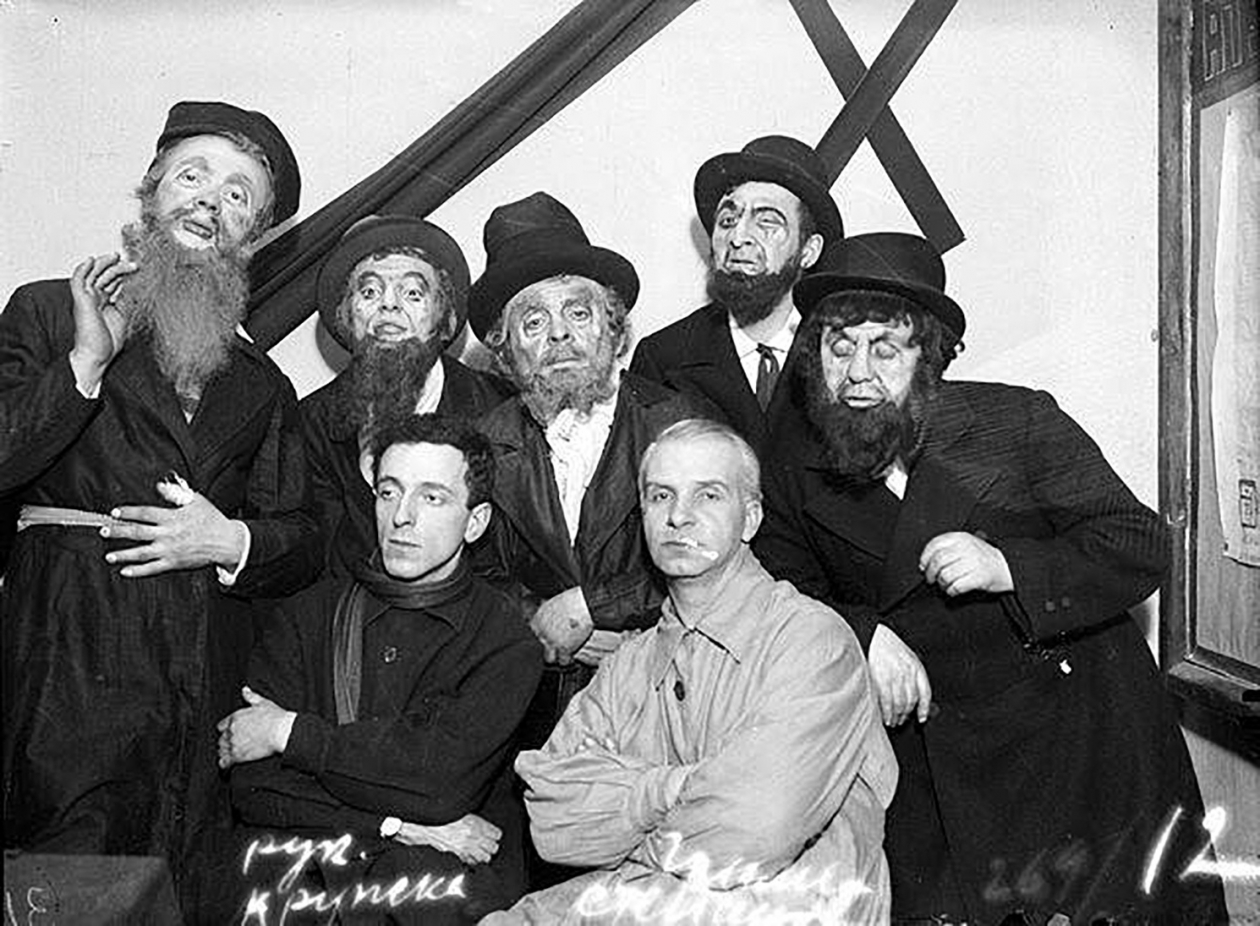
“The path of a theatergoer is the path from student studio work to such masterful works as “Tevye the Milkman” (12+) and “Uriel Acosta” (12+) – productions that make up the golden fund of our theater. At the Birobidzhan State Theater, in addition to my acting work, I also had the opportunity to go through a school of directing – a school that, like all the work of our theater, is divided into two periods: the first period – before visiting the theater by Lazarus Moiseevich Kaganovich and the second period – after his visit…”
Secretary of the Regional Committee of the All-Union Communist Party (Bolsheviks) S. Kushnir, in the article “Fruitful Five Years,” writes about the difficulties the theater overcame on the path of its formation, development and its achievements over the years.
“The existence of our young Jewish theater is a clear expression of the correctness of the Leninist-Stalinist national policy and an indicator of the growth of the young socialist culture of the region. The artists of our theater in their creative work strive to create and create truly folk art in order to show truthfully, deeply ideologically the struggle, patriotism, heroism of our people in the struggle for the triumph of the ideas of communism… The theater has raised talented young artists over the years…”
Significant assistance to the theater was and is provided by the Moscow GOSET, People's Artist of the USSR Solomon Mikhoels and Honored Artist of the Republic Moses Goldblat.
June 15, 1955
The Plenum of the Smidovichi District Committee of the CPSU discussed the progress in implementing the Resolution of the January (1955) Plenum of the CPSU Central Committee “On increasing the production of livestock products.” The Plenum approved additional measures to use internal production reserves, accelerate the development of livestock farming, strengthen the feed base, and provide farms with permanent livestock raising personnel.
June 15, 1972
The meeting of the activists of the Smidovichi district party organization approved the Resolution of the May (1972) Plenum of the CPSU Central Committee “On the International Situation” and recommended that party organizations begin extensive work to explain among the workers the Leninist international policy of the CPSU, the practical activities of the Central Committee of the party to implement the Peace Program developed by the 24th Congress of the CPSU.