Bulgarians choose their future on Sunday, and the stake is a special one, just like in Hungary. Political analyst Ștefan Popescu explains, for “Adevărul”, why Romanian-Bulgarian relations are still suffering and what needs to be done.
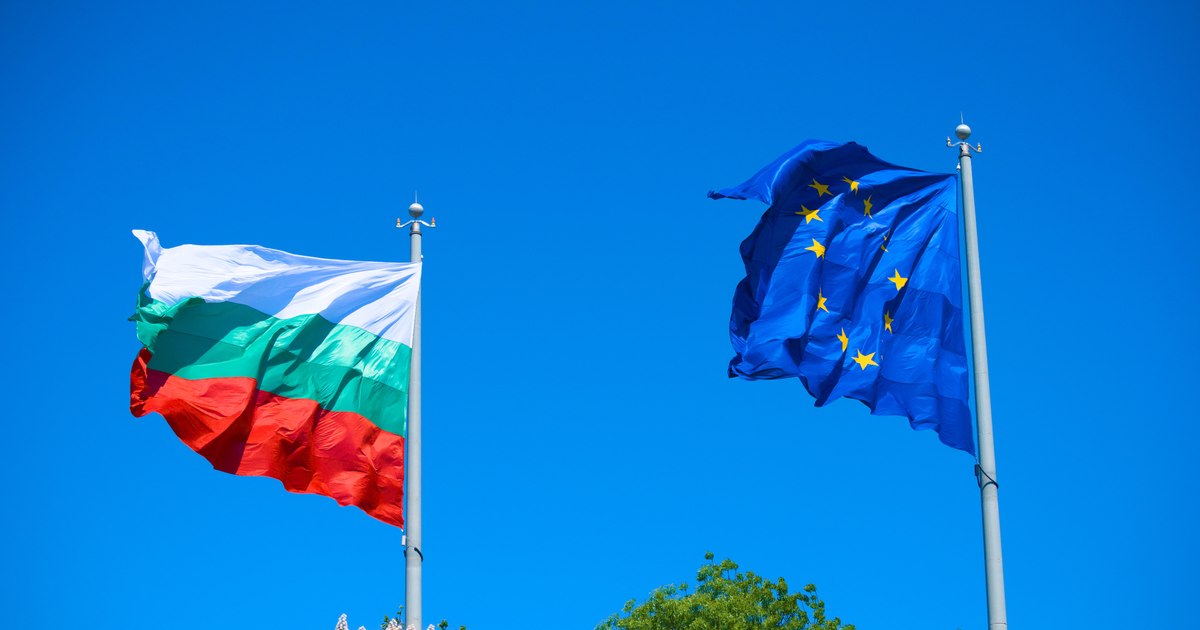
Bulgaria is in its eighth election in just 5 years. PHOTO: Unsplash
Bulgaria is severely affected by the heightened political instability that has led to the collapse of seven governments in Sofia in recent years alone. On Sunday, April 19, the eighth election in half a decade will take place in the country south of the Danube, and the stakes are high.
Former President Rumen Radev's “Progressive Bulgaria” party is leading the polls in Bulgaria. The main opponent is GERB-SDS, and in third place is Continuing the Change-Democratic Bulgaria (PP-DB) and DPS would be in fourth place.
We do not have a neighborhood policy
Romania, like all countries neighboring Bulgaria, cannot remain indifferent to the future of this state. However, bilateral relations between the two states were generally good regardless of who was in power in Bucharest and Sofia. However, they were rather superficial and never reached their true potential, according to foreign policy analyst Ștefan Popescu. In an analysis for “Adevărul”, Ștefan Popescu explains why Romanian-Bulgarian relations suffer, but also what should be done, from his perspective.
“We don't have a neighborhood policy, so anything can happen in Bulgaria. Anyone can come there, but nothing will change for us as long as we don't have an adequate policy. It's not so much a question of who is in Sofia or Budapest, but who is in Bucharest, who is in charge of our foreign policy. This is our big problem, not that x or y comes out in Bulgaria. On the other hand, we also have good people in Foreign Affairs, but they cannot do it alone solve certain deficiencies. We have very good ambassadors. In Bulgaria, one of the best ambassadors is Mrs. Predescu, who I hope will continue, because she has a special, exemplary career. So we have people in certain areas, that is, we have the right people in the right place. The problem is that Romania's foreign policy has been lacking for many years he calls the neighborhood policy: in vain we would like one or the other to come out to the Bulgarians if we remain the same and continue not to have a neighborly relationship with them”, says Stefan Popescu.
The Romanian elites do not know how to relate to their neighbors
The only country with which Romania tried to develop a neighborhood policy, but not here on its own initiative, was Ukraine. In this case, Romania was indirectly forced by the allies to strengthen relations with Kiev and become more involved.
“I am removing Ukraine from the neighborhood policy because we treat it as “something else”, it is not part of it, I would not include it in the neighborhood policy. So that's why I'm telling you: whoever is in Sofia, a new government matters very, very little,” says Popescu.
The problem of the lack of a neighborhood policy is caused by the obtuseness of the Bucharest elites, the expert believes. Because of this, Romania could not capitalize on the potential of relations with its neighbors. Romania has always relied on relations with the United States of America and with France and Germany. However, the reality of recent years shows that they should have developed more solid relations and alliances with their neighbors in parallel.
“The level of relations of our elites, especially in a period of crisis, must be done with the elites in the neighborhood, in the neighboring states. Because you see very well that there is a great degree of uncertainty in the ability of the great powers to project their influence in certain areas. I can't cover them anymore. Neither is the United States of America – they are oversaturated with crises. France, too, has its own problems, as does America, and Germany is not faring any better and needs to do some sorting out as well. And then, in a period of resettlement and difficulty on the part of the great powers to assume where their direction is going and the assumption of certain spaces, then the neighborhood policy must become the cardinal point alongside internal consolidation”. explains Ștefan Popescu.
What the great powers are doing, and we don't want to do
For now, however, none of the governments that have led Romania, including the one in power, have done these things.
“We don't do one or the other. We don't do the internal consolidation because I notice a desire to weaken the big profitable state companies, which have strategic projects of the order of billions of dollars in progress. And we don't do neighborhood policy either. We only tried to have good relations with the United States, with France and Germany. And it's very good that we tried that, but we should have been careful to develop a neighborhood policy at the same time. Which we didn't do at all”says Popescu.
Internal consolidation is another empty notion, as far as Romania is concerned. Ștefan Popescu gives the example of France, which was aware of the great challenges of the times and decided, like Germany, the USA and other Western states, to focus on the essential elements that are the basis of the strategy of a state that respects itself and ensures its own security, including energy.
The first essential tests for the new Hungary. Romanian professor from Oxford: “He will have to specify the future relationship with Russia”
“In Romania we want to sell the state companies that produce energy and that are profitable. In France, we saw that EDF, on the contrary, from 80% nationalized it, they made it so that it was 100% within the French state, because energy is the first element of competitiveness. Or in Romania there is talk of gigafactories, large factories, data storage centers, which are large energy consumers, including the restart of the defense industry. I want to say that all these projects are unfeasible and we end up looking only at energy prices. Why would an investor come to Romania when energy prices are higher than in all the neighboring countries? If we look at an investment map, I don't really see any big investments coming to Romania.” claims the analyst.
Many of the companies that arrive in Romania, however, go for the assembly of some components and less for their production here.
“It depends on whether we refer to the assembly of some products or to the actual construction, to the production itself. If we bring components from elsewhere, we do not develop anything horizontally. Romania needs to develop horizontally. That means creating jobs. And that's how layoffs are announced everywhere. Does anyone think about where those people will go?”he adds.
Why Romania remains underdeveloped
Western states have chosen a different path compared to Romania, and in the face of the economic and energy crisis they are looking for solutions, while Romania has remained immobile and is slowly sinking. And the bad news is that Romania also lacks economic diplomacy, in addition to its inability to develop close relations with its neighbors.
“In all states, and not only, in the entire Western world we see very well that the state is a planner. The state orients capital towards certain strategic directions. It is running after capital because it is no coincidence that in the last 3-4 months the Prime Minister of Canada, the Prime Minister of Finland, the President of France, the Prime Minister of Spain have taken the path of Beijing. Because they are looking for investments. Romania does not even do economic diplomacy. It is also disinterested in this”. claims the expert.
If the progressive party of Rumen Radev starts with the first chance in Bulgaria, Ștefan Popescu is cautious in his approach. In his opinion, Romania must be much more pragmatic, proactive in bilateral relations with its neighbors and less reactive. In fact, regardless of whether Radev will win in Bulgaria or whether the opposition grouped around Assen Vassilev, from the “Continuam Chimbarea” party, will win, Romania will continue to have nothing to lose due to its inability to develop deeper relations with Sofia. Also, the answer regarding the future of the bilateral relationship would lie primarily in Bucharest, concludes the expert.
“As president, Radev had, I say, a constructive attitude towards Romania. But I avoid reporting for better or worse, including towards Hungary, in the recent case. Especially since we see that the Belgian prime minister and even France tend to take certain steps towards Russia, so I don't know if we should criticize Hungary or Bulgaria exclusively because they choose to have pragmatic cooperation with Russia. They choose this regardless of who is in government there, and now we have saw Péter Magyar's statements that Hungary will maintain pragmatic relations with its neighbors. We cannot ignore the fact that Hungary is the second export market for Hungary, and vice versa. We must look at the structure of the exchanges in 2025. So any government will be in Sofia he will take this into account and have a certain openness, but it is not enough, as long as we continue to be passive”, points out Popescu.
Solutions for the development of relations with Bulgaria
Compared to the potential of bilateral relations with Bulgaria, Romania is currently repetitive. Ștefan Popescu says what the directions would be to follow.
Hungary's lesson for Romania. Communication expert: “Our politicians are playing an hourglass game for themselves and their bubble”
“There is so much to do, and here I am referring in particular to the vertical corridor, energy cooperation, the development of road and rail connectivity infrastructures. There is very, very much to be done together with Bulgaria. And, of course, Romania needs to create, together with Bulgaria, a regional format. Because we are nowhere”, are just some of the solutions proposed by Popescu.
All the while, the Baltic countries, the Nordic states and Poland are developing different formats and cooperating exemplarily. In the absence of original ideas, Romania should take these examples, believes Ștefan Popescu.
“There is the Visegrad, there are all kinds of alliances. The countries of Northern Europe, not to mention, have developed a series of structures and collaborate admirably. We notice that Poland is looking to bring weight to the Baltic area by integrating and expanding to the countries of Northern Europe. Romania must create regional formats in the region where it can assert its weight, that it is the largest state in South-Eastern Europe. Instead, nothing is seen. Without a doubt, we should we also point to Turkey, because both countries have very good relations with Turkey. And, unfortunately, the flows go through Serbia and not through Romania. The Bulgarians collaborate much more with us, unfortunately.” says Ștefan Popescu.