Russian President Vladimir Putin is preparing a “Pearl Harbor in space” scenario, a senior US military official warns, in an increasingly tense global context. According to him, the leader of the Kremlin would consider placing in orbit a nuclear weapon capable of hitting satellites, which could generate chaos on a planetary scale, writes the Daily Mail.
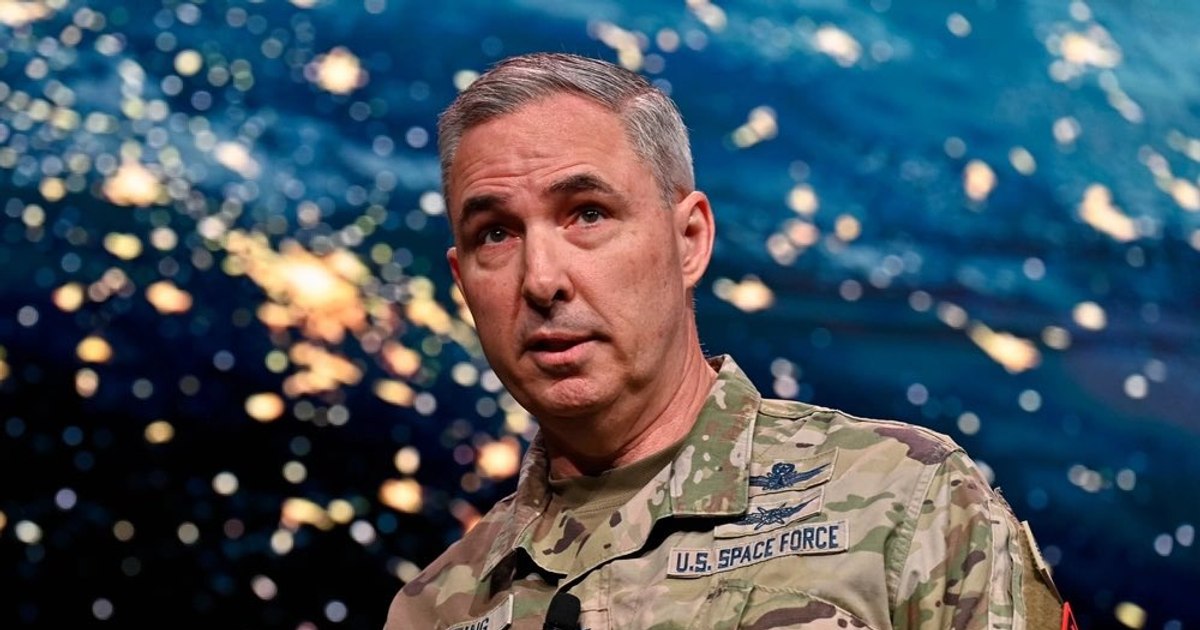
General Stephen Whiting, head of the US Space Command/PHOTO:X
General Stephen Whiting, head of the US Space Command, said the Trump administration was watching these developments with “great concern”. In an interview with The Times, the US official explained that Russia would consider deploying a nuclear anti-satellite weapon in orbit, which would endanger all satellites in low Earth orbit — a scenario considered unacceptable by Washington.
“Russia remains a sophisticated space power and continues to invest in weapons capable of operating in this domain”Whiting pointed out.
Asked why Moscow would resort to such a strategy, the general pointed to the Kremlin's perceived imbalance with the United States and NATO in terms of conventional weaponry. In his opinion, Russia would seek alternative methods to compensate for this handicap, including by neutralizing the space capabilities of the adversaries.
Whiting, however, avoided detailing the sources behind this information.
If these plans were confirmed, they would constitute a serious violation of the Outer Space Treaty, to which Russia is a signatory. At the same time, it would mark a new stage in Moscow's strategy of intensifying aggressive actions in space. The US official also mentioned the constant jamming of satellite communications and GPS systems, carried out on a scale that endangers even civil aviation.
In this tense context, the leaders of the European Union and NATO discussed the need to accelerate the production of armaments in Europe, amid uncertainties related to the commitment of the United States to the transatlantic alliance.
“We have to invest more, produce more and slet's do this faster”, said the President of the European Commission, Ursula von der Leyen, after a meeting with the Secretary General of NATO, Mark Rutte.
European countries are trying to strengthen their military capabilities
European countries are trying to strengthen their military capabilities, faced with both the war in Ukraine and pressure from Washington. Fears about the role of the US in NATO were fueled by the unpredictable statements of Donald Trump, who suggested the possibility of withdrawing from the alliance, dissatisfied with Europe's reaction in the context of the conflict with Iran.
Last year, the NATO allies agreed to raise defense spending to 3.5 percent of GDP in an attempt to respond to American criticism. However, dissatisfaction remains over the ability of the European defense industry to keep up with the new requirements.
NATO officials indicate that the issue of industrial production will be one of the central topics of the upcoming summit of the alliance, scheduled in Ankara.
For his part, Mark Rutte emphasized that “a stronger Europe means a stronger NATO”, noting that the talks with Ursula von der Leyen aimed at strengthening the cooperation between the two structures, increasing the production of armaments, support for Ukraine and protecting critical infrastructure.
The United States has made it clear that it wants European allies to take on more responsibility for the continent's conventional defense to allow Washington to focus on other threats, such as China.
At the same time, European capitals seem to accept more and more that the era in which the continent's security was mainly guaranteed by America is coming to an end, having to assume a more active role in their own defense.
The European Union, which has long avoided direct involvement in defense, has significantly stepped up its efforts in recent years, and some member states support expanding its role. Still, NATO officials warn that the EU should focus on its strengths — such as funding — and not interfere with the alliance's traditional military planning duties.