
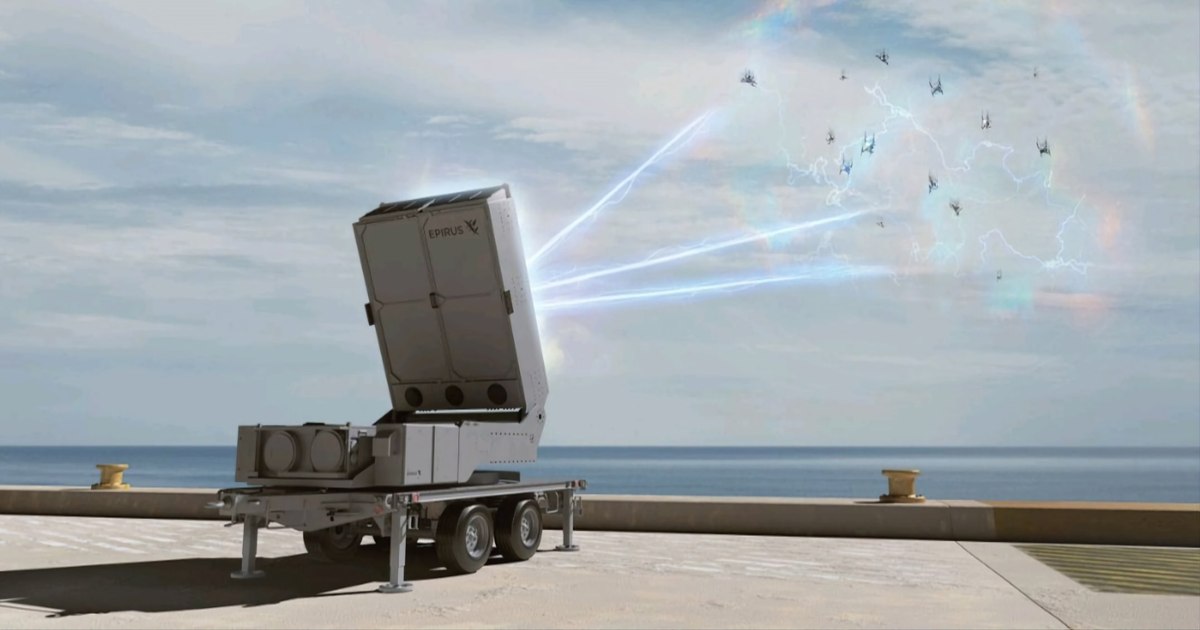
High-power microwave (HPM) systems are increasingly seen as an essential solution in states' efforts to counter the rapidly evolving drone warfare. The technology, which uses pulses of electromagnetic energy to disable the electronic components of drones, is being touted as the next major step in anti-drone defense, the Jerusalem Post writes.
Microwave anti-drone system/PHOTO:X
According to Yossi Margalit, vice president and director of the C-UAS division and low-altitude air defense systems at Rafael Advanced Defense Systems, the HPM represents the “next level” in the field, with capabilities that exceed what was available until now, including after the introduction of laser-based technologies.
Speaking to the Jerusalem Post's Defense & Tech column on the sidelines of the UVID conference in Tel Aviv, Margalit explained that the current arsenal of anti-drone solutions ranges from electronic warfare-based “soft kill” means to kinetic or directed energy solutions such as lasers and microwaves. “We need sophisticated technologies because the threats are sophisticated — more complex than missiles,” he said. “As the challenges diversify, sometimes you have to change your approach.”
High costs to neutralize drones
During the 12-day operation against Iran, known in Israel as Rising Lion, more than a thousand drones were launched, most of them intercepted. But the cost difference remains significant: An estimated $2,000 drone can force defenders to use a $2 million interceptor — a model Israeli officials consider unsustainable.
This is where HPM systems come in. Unlike missiles or lasers, which engage targets individually, HPMs can simultaneously engage multiple drones by degrading their electronic systems, providing a quick and effective response to swarm tactics without the constant consumption of expensive interceptors.
Global investment in HPM technology
The ability to counter cheap, mass-produced drones is one of the main military challenges of today. The United States, Europe and Asia are investing heavily in HPM research. Systems such as Epirus' Leonidas or Thales' ThunderShield have already demonstrated operational potential.
The US Department of Defense has accelerated the development of directed energy weapons in the context of drone threats by Houthi rebels in the Red Sea and the proliferation of Iranian drones on the battlefields of Ukraine and possibly Venezuela.
Japan has been working on the technology for more than a decade and this year allocated about ¥800 million (about $5.2 million) to HPM programs. In January, the Agency for Acquisition, Technology and Logistics presented a new concept image of its future HPM device under development.
Israel advances directed energy solutions
Israel, known for its defense innovation, continues to develop directed energy technologies. Rafael — creator of the Iron Dome system — and Elbit Systems have integrated laser solutions to complement HPM in the fight against drones. The “Iron Beam” laser system is designed for precise and low-cost interception by piercing the structure of drones, missiles or projectiles.
If the HPM can simultaneously disable several drones by affecting the electronics over an extended area, the lasers allow very precise neutralization of a single target. Together, the two technologies outline a layered anti-UAS defense architecture.
This combination reduces reliance on expensive interceptor missiles and gives the military flexibility in the face of diverse threats.
For Israel, the integration of HPM and laser technologies is increasingly considered the strategic direction in countering the drone campaigns used by Iran, Hezbollah and the Houthi rebels.


