The economic consequences of the US blockade overlap with those of the Iranian blockade, generating a global energy crisis.
The origins of a declared war
It all began on February 28, 2026, when the United States and Israel launched Operation “Epic Fury”—a coordinated campaign of airstrikes against Iran, targeting military installations, nuclear sites, and regime leaders. Supreme Leader Ali Khamenei was killed in the first hours of the attack, an unprecedented event that shook the balance of power in the Middle East to its foundations. Tehran's response was not long in coming: missiles and drones targeted Israel, American military bases and the Gulf states aligned with Washington.
The strategic weapon that Tehran chose was not a military one in the classical sense, but an economic one: closing the Strait of Hormuz. As of March 2, 2026, an official of the Islamic Revolutionary Guard Corps confirmed that the strait was blocked, with explicit warnings to any ships that dared to transit.
According to Lloyd's List reports, the IRGC has launched 21 confirmed attacks on merchant ships and placed sea mines in the straits, turning one of the world's most important energy arteries — through which about 25 percent of the world's seaborne oil trade and 20 percent of global LNG exports pass — into a war zone. The immediate economic effects were brutal. The first major shipping companies suspended their operations through the strait. The price of war insurance for a single transit has exploded. The oil markets were violently agitated, with the barrel of Brent exceeding the $100 mark several times, a level not reached for years.
Negotiations in Islamabad: 21 hours without result
The weekend of April 12–13 brought the first direct, high-level diplomatic confrontation between Washington and Tehran since the Islamic Revolution of 1979. Pakistan offered its capital as neutral ground for negotiations, and the American delegation—led by Vice President JD Vance, along with special envoy Steve Witkoff and Jared Kushner—met with their Iranian counterparts for more than 21 hours of intensive negotiations.
The stakes in the talks were enormous: a two-week truce had been agreed just days before, and the world was holding its breath.
According to NBC News and NPR, the Iranian delegation demanded:
- the right to control the Strait of Hormuz and to charge transit fees,
- payment of war reparations,
- the lifting of all sanctions,
- release of frozen assets ($6 billion),
- guaranteeing the continuation of the civilian nuclear program.
Washington, on the other hand, insisted on one key point: the complete abandonment of Iran's nuclear ambitions. Iranian Foreign Minister Abbas Araghchi said Tehran was “centimeters” away from a deal, accusing the US side of “maximalism and constantly changing conditions”.
Iranian Parliament Speaker Mohammad Bagher Ghalibaf, the leader of the delegation, said he had advanced “constructive initiatives” but that the US had failed to win Iran's trust. Among the American demands considered “excessive”, MP Mahmoud Nabavian also mentioned the request for a “common share of the benefits of the Strait of Hormuz” — categorically rejected by Tehran.
In the end, Vance said Washington had presented “the final and best offer” and that “we'll see if the Iranians accept it.” Diplomacy was not officially closed, but the picture was grim.
The American blockade and international reactions
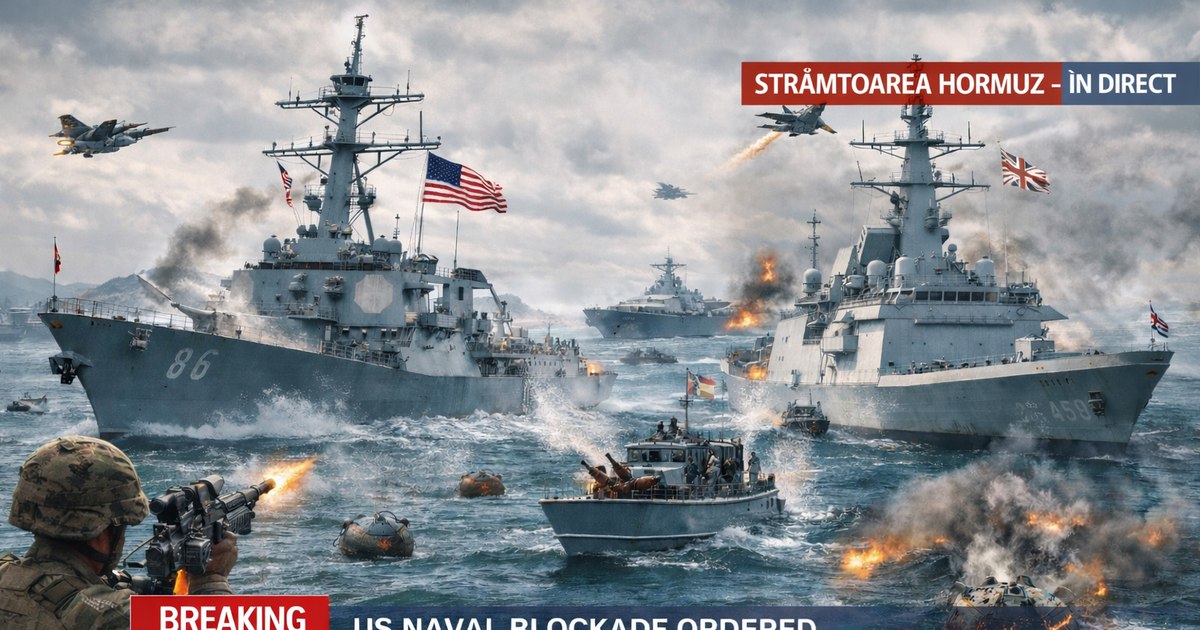
At 10:00 a.m. (New York time) on April 13, 2026, US Central Command implemented the naval blockade announced by Donald Trump. According to CNBC and CBS News, this targets all ships entering or leaving Iranian ports, including those in the Persian Gulf and the Gulf of Oman. Ships transiting the strait to non-Iranian ports are theoretically unaffected.
The US Navy has been ordered to intercept any ship in international waters that has paid taxes to Iran and begin demining operations. International reactions ranged from caution to outright concern. Britain has refused to participate in the blockade, stressing the need to reopen the strait for the global economy. According to CBS News, London is leading efforts to form a coalition of more than 40 states to protect freedom of navigation. France is working closely with the UK and Australia has stressed it was not consulted: “This decision was unilateral”said Prime Minister Anthony Albanese. Iran reacted harshly. The Revolutionary Guard warned that any approaching military vessel would be “dealt with severely and decisively”. Ghalibaf stated that Iran “will not bow to any threat”, and the head of the navy, Shahram Irani, described the blockade as “ridiculous”.
The economic and energy impact: a long-range crisis
The economic consequences of the US blockade overlap with those of the Iranian blockade, generating a global energy crisis. Karen Young, an expert at Columbia University, told CNN: “We already have a shortfall of about 7 million barrels of crude oil and 4 million barrels of refined products. Now, through the blockade, we're also taking Iranian oil off the market.”
It predicts that high prices will persist until at least the end of 2026.
Prices reacted immediately:
- WTI: +8%, at 104.5 dollars/barrel
- Brent: +7%, at 102 dollars/barrel
Bloomberg warns of a worsening global shortage. Ireland has introduced tax cuts and the European Commission has called emergency talks on the impact on the economy, transport and migration.
In parallel, Iran instituted a toll system in the straits. Ships must obtain permits and accept IRGC escort. At least one ship paid $2 million.
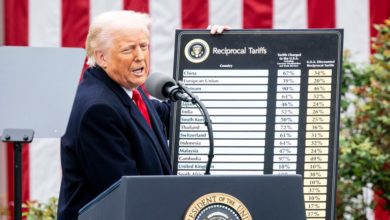
Taxes are assessed in Chinese yuan, complicating US–China relations. Trump has threatened 50 percent tariffs if Beijing militarily supports Iran.
What's next: three scenarios
Nicole Grajewski (Sciences Po) warns that the blockade is not simply a coercive signal, but a de facto resumption of war.
- The optimistic scenarioIran accepts US offer → de-escalation and reopening of the strait.
- The likely scenarioProlonged blockade, limited incidents, high prices.
- The pessimistic scenarioDirect military escalation → collapse of ceasefire and extended regional conflict.
Conclusion
The Strait of Hormuz crisis has transcended the framework of a regional conflict and become a global economic security issue. The world is already feeling the effects: expensive energy, disrupted sea routes and a weakened international order. Diplomatic time is running out fast, and each day of the blockade costs — in dollars, in barrels, and possibly in lives.