
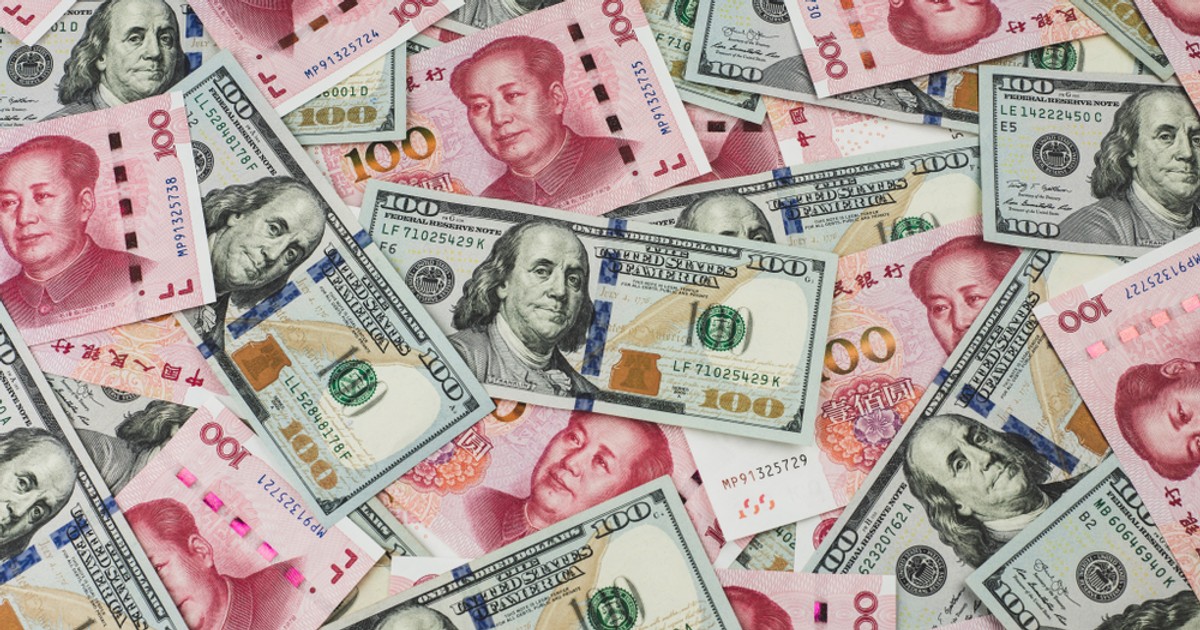
“China sends the strongest signal in years of slowing the growth of its currency (yuan)” Bloomberg reports on Thursday.
The rest of the article is below the video
The agency notes that The Chinese central bank (the local equivalent of our National Bank) set the daily exchange rate much below market expectations. The difference is the largest since February 2022. The exchange rate is 7.0733 yuan per dollar, which is 164 pips weaker than the market expected.
Chinese banks are intervening in the currency market. Yuan versus dollar
Although the yuan has strengthened due to improved sentiment towards Chinese assets, a weaker dollar and easing tensions between the US and China, the authorities appear to be aiming to keep the rise in the rate gradual. This is intended to protect exporters and avoid an increase in volatility. Investors say state-owned banks have also periodically bought dollars to cool profits, reinforcing the central bank's caution.
See also: Xi Jinping tempts Trump: Ukraine for Taiwan? China's diplomatic game in the shadow of war
Even as the yuan approaches its highest levels in more than a year, the broader trade-weighted index remains historically weak, suggesting Beijing does not seek to completely stop the appreciation, but to manage it carefully.
Analysts cited by Bloomberg expect the psychologically important level of 7 yuan per dollar to remain until the end of the year.
Chinese yuan under state control
Unlike most currencies of major countries, the yuan is a currency with a unique status in global markets because remains largely under the tight control of the People's Bank of China (PBOC) and the authorities in Beijing. It is not a fully convertible currency and does not have a fully floating exchange rate.
Every day, PBOC sets the central rate of the USD/CNY pair (reference rate, so-called “fix”), around which the yuan can fluctuate within a limited range (currently 2%). This “managed floating exchange rate” mechanism means that the government actively influences the value of the currency, which allows it to stabilize the economy and protect it against sudden speculation, but also raises international criticism regarding potential exchange rate manipulation to support exports.
See also: China lifts restrictions on the export of rare earth metals. Trade truce with the USA
The relationship between the yuan and the US dollar is fundamental to the global economy and geopolitics. A strong dollar often puts weakening pressure on the yuan, and interventions by state banks such as recent ones are aimed at controlling this pace.
The value of the yuan against the dollar directly affects the competitiveness of Chinese exports: a weaker yuan makes Chinese goods cheaper abroad, which boosts exports but could lead to trade frictions with the US. In turn, the controlled, gradual strengthening of the yuan is seen as a signal of greater strength of the Chinese economy and a step towards making the yuan a more important reserve currency in the world.


