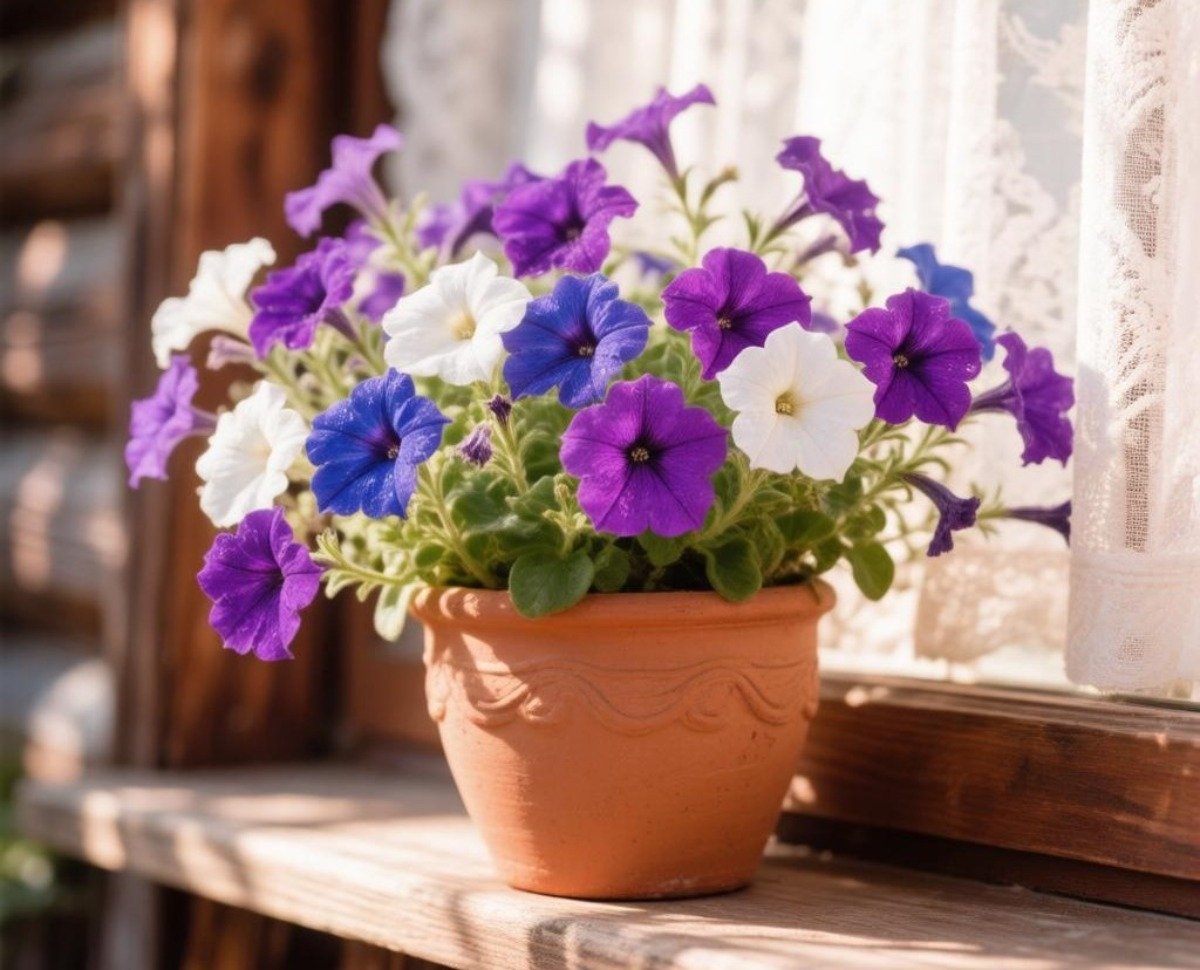
You've probably noticed that after being transplanted into a flower bed, petunias often stop growing. The leaves turn pale, the roots are in no hurry to colonize the new land, and you have to wait weeks for the first flowers. But there is a way to help plants adapt and start blooming vigorously in June.
If the seedlings look lethargic after moving outside, do not rush with nitrogen fertilizers. Help the roots first. Spill the soil with a solution of “Kornevin” or succinic acid (1 tablet per liter of water). This will reduce stress and speed up the formation of new roots. After three to four days, when the plants begin to grow, you can begin basic nutrition.
For an active start, add 1 tablespoon of azofoska or nitroammophoska to a bucket of water. These fertilizers contain a balanced complex of nitrogen, phosphorus and potassium, necessary for the growth of green mass and the formation of the first buds. Water each plant at the root, using 0.5 liters of solution per bush.
After a week, repeat feeding, but focus on microelements. Add a teaspoon of potassium humate to the water or use the drug “Cytovit”. This will improve nutritional absorption and make the leaves bright green and firm.
Within two weeks you will notice the appearance of the first large buds. The bushes will become dense and branched, and flowering will be abundant and continuous all summer.
Question and answer:
How to feed petunias for abundant flowering?
Phosphorus and potassium are needed to set buds. Use monopotassium phosphate or a special fertilizer for flowering plants that is low in nitrogen.
How often to water petunias in open ground?
In dry weather, water daily, avoiding water getting on the flowers. In the rainy beginning of May, make sure that water does not stagnate in the roots, otherwise blackleg may develop.