“I have no idea what they're trying to accomplish.” The chaos of the Trump administration is stirring resentment around the world. “They hurt themselves”

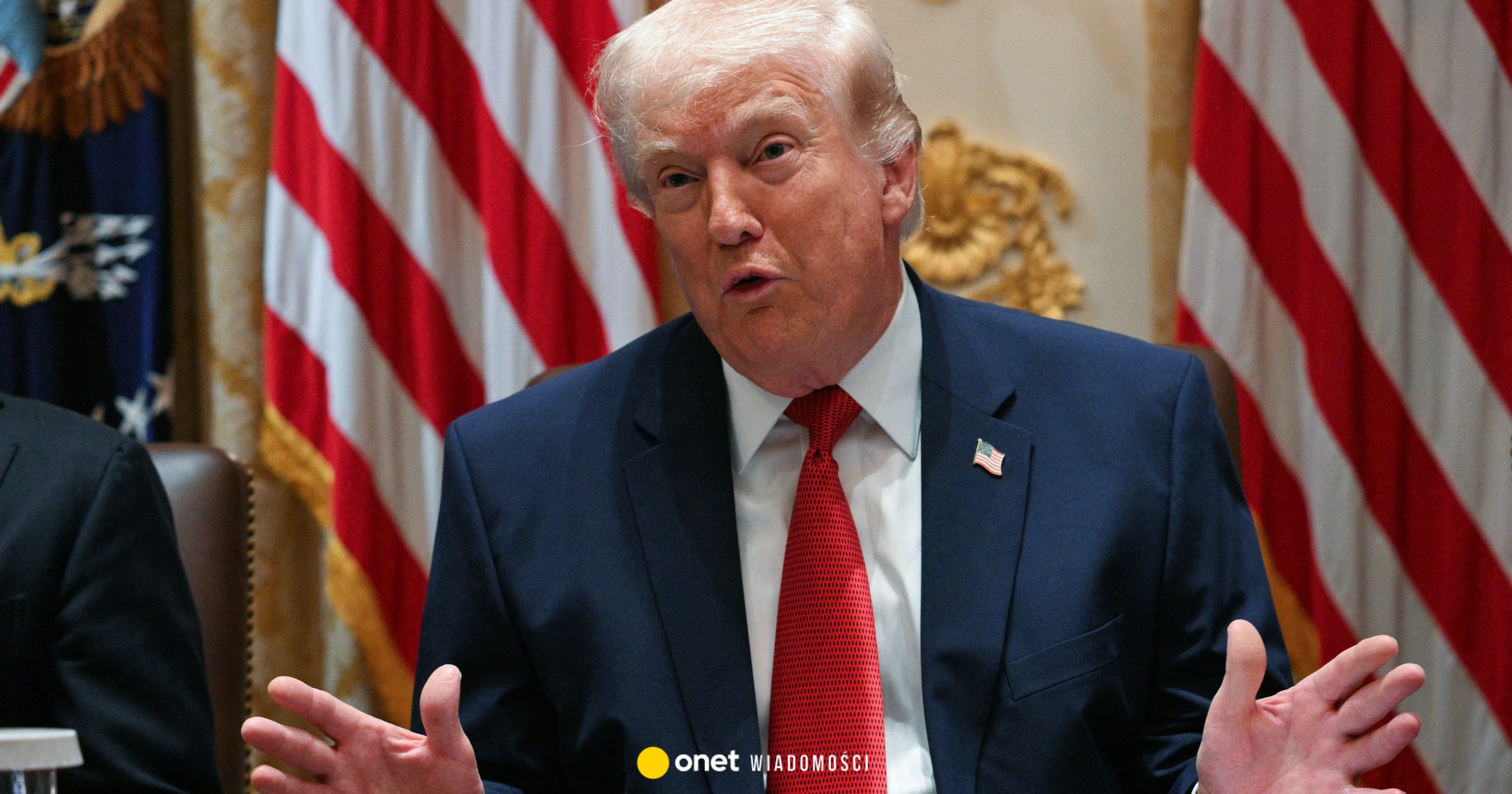
Trump's top envoy for negotiations with Iran, Steve Witkoff, said on Thursday, March 26, that the administration is prioritizing diplomacy. Meanwhile, Trump is sending thousands of additional marines to the Middle East, and Tehran believes the White House is using the talks as cover for further attacks.
The US president himself stated that he would “continue to be theirs [Irańczyków] destroyed,” while at the same time insisting that Iran enter into a peace agreement. These conflicting signals are causing confusion among U.S. partners in Europe, Asia and the Middle East, who are losing trust in Americans.
“I have no idea what they're trying to do,” the Asian diplomat said, referring to U.S. goals for Iran and White House communications about the possible next stage of the conflict.
The officials interviewed by POLITICO journalists included representatives of countries that the administration asked for help in the campaign against Tehran. Although Trump has often spoken about his plans for Iran, some allies no longer trust him.
“It's quite an expensive move to move all these resources to the Persian Gulf only to withdraw them if an agreement is actually reached,” says a second Asian diplomat. “I look at what the United States is actually doing, not what the president writes on Truth Social.”
Growing uncertainty about future U.S. plans since then suggests Trump is losing goodwill.
“It shows nervousness”
On Thursday, March 26, Trump extended the suspension of attacks on Iranian power plants, stating on social media that he was doing so “at the request of the Iranian government” during ongoing negotiations, which he said were “going very well.”
Asked for comment, the US State Department referred to Trump's social media post in which he stated that he was extending the suspension of attacks.
White House spokeswoman Anna Kelly said Trump's “first instinct is always diplomacy” but if Iranians “do not accept the reality of the current situation, they will be hit harder than ever before.”
On February 28, the United States and Israel launched airstrikes against Iran, initially with the stated goal of regime change and blocking Iran's ability to obtain nuclear weapons. Trump has given up publicly pushing for regime change, but has recently focused on military goals that, in addition to Iran's nuclear program, include eliminating Iran's ballistic missile launchers, support for regional allies and the ability to block a key shipping route, the Strait of Hormuz.
Trump claims that “the war has been won,” but the United States is sending amphibious ships, landing craft and thousands of marines and sailors to the Middle East, prompting analysts and allies to speculate that the United States is planning to take over Iran's Khark Island, through which 90 percent of its cargo passes. Iranian oil exports.
One European diplomat told POLITICO that Trump may be deliberately sowing confusion as he considers how to end the war.
But in both cases, it could weaken already fragile alliances.
“The US argument has changed and damaged its own cause and trust,” said a third Asian diplomat.
Witkoff confirmed on Thursday, March 26 that Pakistan has provided Iran with Washington's 15-point plan to end the war, but it is unclear whether Iran will agree to send officials to Pakistan at some point for active negotiations.
Steve WitkoffJim Watson/AFP / AFP
Pakistan's Ministry of Foreign Affairs did not immediately respond to POLITICO's request for comment.
The Trump administration hopes to convene talks in Pakistan as early as this weekend, but it is unclear whether they will take place, according to two officials, one from the U.S. and one from an Arab country.
America's partners are not necessarily going to give up on Iran. After all, it was Tehran that decided to retaliate against ships in the Strait of Hormuz.
In a recent speech in Washington, Sultan Al Jaber, the United Arab Emirates' minister of industry and advanced technology, called Iran's actions “extortion on a global scale.”
“Using the Strait of Hormuz as a weapon is not an act of aggression against one country. It is economic terrorism directed against all countries, all consumers and all families,” he said during a meeting organized by the Middle East Institute think tank.