A sad prediction from a Russian political scientist. It announces Putin's new games

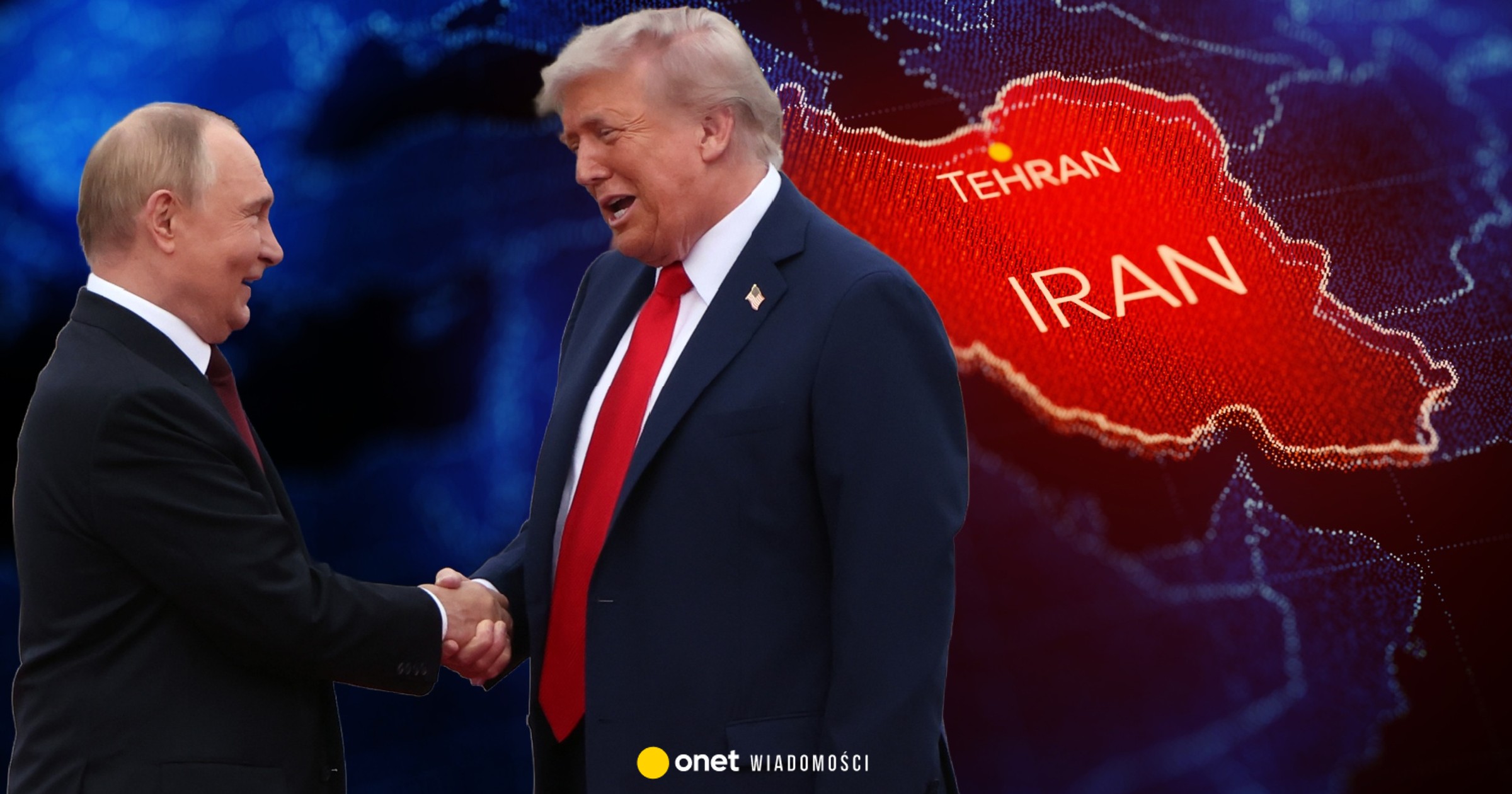
Putin probably believes that shifting Washington's attention to Iran and the Middle East will not only distract him from the Ukraine issuebut will also limit the possibility of Western countries supplying weapons to Ukraine. There have already been comparisons of the number of Patriot missiles used in one week of the Persian Gulf war and in several months of the Ukrainian conflict.
These maniacal considerations may once again instill in the Russian leadership unwavering confidence in the possibility of military victory in Ukraine; which in turn, together with the money accumulated in the budget, it may prompt you to play a new game of everything.
The next war in the Persian Gulf has been going on for ten days and has significantly changed the accents of global politics. Current events can be viewed from different points of view, but if something seems completely certain, it is the dominance of political factors over economic ones, which is obvious when deciding to attack Iran.
On Monday, Donald Trump diplomatically stated that “only fools can disagree with that […] current oil prices, which will fall rapidly once the Iranian nuclear threat is eliminated, are a very small price to pay for security and peace for the United States and the entire world.” We do not argue: the price is indeed small, but we would like to understand how quickly the world will stop paying it and whether it will really be that easy to buy peace and security with the money spent.
Market revival
Of course, observing fascinating price fluctuations of plus or minus 30-35%. during the day are now a thing of the past: it is almost certain that they will not happen again in the coming days.
At the same time, it is difficult to find reasons why oil prices should return to the level from February, when they fell below $39. [142 zł] per barrel: not only was production curtailed for some time and not only were deliveries from major oil-producing countries suspended, but also “stockpiles” of millions of barrels of crude oil on dozens of tankers of the Russian “shadow fleet”, which had been waiting for unloading in the Indian Ocean for a long time, apparently disappeared. According to Bloomberg reports the number of transactions involving this oil has broken records.
It is no coincidence that against this background, the US Ministry of Energy in yesterday's forecast significantly increased the average price of oil (WTI grade) for 2026, increasing it from USD 58 to USD 79 per barrel. [212-289 zł]assuming that the current oil price will remain the reference point not only for the coming months, but also for the average annual value.
Moscow is undoubtedly monitoring the current situation with great attention and there, too, political factors probably dominate over economic ones. The loss of an ally might not have upset the Kremlin authorities too much, because recent cooperation with Iran was rather important for its image.
However, Putin will not remain indifferent to Washington's next insult to the sovereignty of a regime close to Russia. The economic benefits this war may bring to him will never outweigh the political costs – except in the unlikely event of a triumphant victory for the mullahs' regime over Israel and the United States.
The Kremlin is counting the money
However, the financial consequences of the conflict in the Middle East may prove to be quite significant.
Just a week ago I analyzed the situation of the Russian budget, for which the oil price of PLN 5,500 is critical. rubles per barrel [255 zł]and preferably even higher. This can be achieved at an oil price of $74. per barrel [271 zł] and the current ruble exchange rate or at the price of $50. per barrel [183 zł] and an exchange rate of 112 rubles per dollar [52 zł].
The first option now seems to be achievable, or it would be more accurate to say, implemented and certainly preferred by the Kremlin. It is necessary for it to become the basic scenario for the entire current year continuing the war for at least a few weeks. In this case, the price will be able to increase compared to current values and become a benchmark for long-term futures contracts; Moreover it will begin to affect fuel prices in Western countries, causing demand for additional raw materials on the market.
The latter is even more important to the Kremlin than the current price, because if Saudi Arabia is unable to provide an adequate increase in supplies due to the blockage of major transport routes, Russian oil will become an important balancing factor.
Of course, there is no reason to believe that Europe will revise the sanctions system, despite Putin's appeals and Viktor Orban's hysteria – but Russia can be satisfied with non-European marketsand the Kremlin is absolutely right that it may even “distribute to various niches” the liquefied natural gas it currently supplies to Europe and which the EU intended to stop accepting from 2027. Unless external pressure on buyers forces the Kremlin to grant huge discounts or risky schemes using a “shadow fleet” are implemented.
Moreover, everyone understands that even minimal formal easing of sanctions will mean less attention to enforcement and will happen “the beginning of the end” of the sanctions regime. Therefore, it is difficult for me to imagine serious steps in this direction, but the easing of sanctions against India could turn into something similar to the well-known practice of an annual moratorium on the application of the Jackson-Vanik amendment [blokowała przyznanie Związkowi Sowieckiemu statusu najwyższego uprzywilejowania w handlu z USA].
Tempting oil
In other words, we have entered such an “uncertain time” that it is simply impossible to clearly predict the economic consequences of the American “special operation” on the state of the Russian economy.
But in addition to these economic and financial impacts are changes in oil and gas revenues [obecnie można jedynie stwierdzić, że w marcu i kwietniu wyraźnie wzrosną one w porównaniu z rekordowo niskim wynikiem ze stycznia i lutego] and, accordingly, the size of the budget deficit, the policies of oil-producing companies, the behavior of importers, etc. – there will certainly also be consequences resulting not so much from this “objective reality” but from the expectations prevailing in the Kremlin.
The latter are easy to read: Putin probably believes that shifting Washington's attention to Iran and the Middle East will not only distract him from the Ukraine issuebut will also limit the possibility of Western countries supplying weapons to Ukraine. There have already been comparisons of the number of Patriot missiles used in one week of the Persian Gulf war and in several months of the Ukrainian conflict.
These maniacal considerations may once again instill in the Russian leadership an unwavering confidence in the possibility of military victory; which in turn, together with the money accumulated in the budget, it may prompt you to play a new game of everything — up to the point of increasing resources for the army in order to seriously supplement it and organize another attempt at a major offensive.
In other words, everything that is happening creates a combination that may once again make the Kremlin feel that the time has come to go even further along its chosen adventurous path. And this despite the fact that until recently the need to correct it seemed practically obvious. Therefore, I would say that the war in Iran – which came at an extremely convenient time for Putin – may alleviate Russia's economic problems, but plunge it even deeper into the abyss of political madness.