The world splits into two zones. “Europe is in danger of being crushed” [OPINIA]

It sounds like the epitome of conspiracy theories: circles that almost no one knows exist, regular meetings around the world, and tech experts who make decisions worth hundreds of billions of dollars during their coffee breaks. In fact, these little-known circles are the driving force of the global economy.
In many international bodies, company representatives agree on the technological standards of the future. Most recently, for example, Nokia, Ericsson, Huawei and Qualcomm as part of the 3GPP group [3rd Generation Partnership Project to międzynarodowe konsorcjum organizacji standaryzacyjnych] discussed how smartphones and smart devices should communicate in the future 6G mobile telephony standard.
Such agreements are the invisible glue of global trade. Thanks to them, German cars can drive on the streets of Shanghai and American chips can be installed in devices in the Czech Republic. However, this is where the current weak point of the global economy lies.
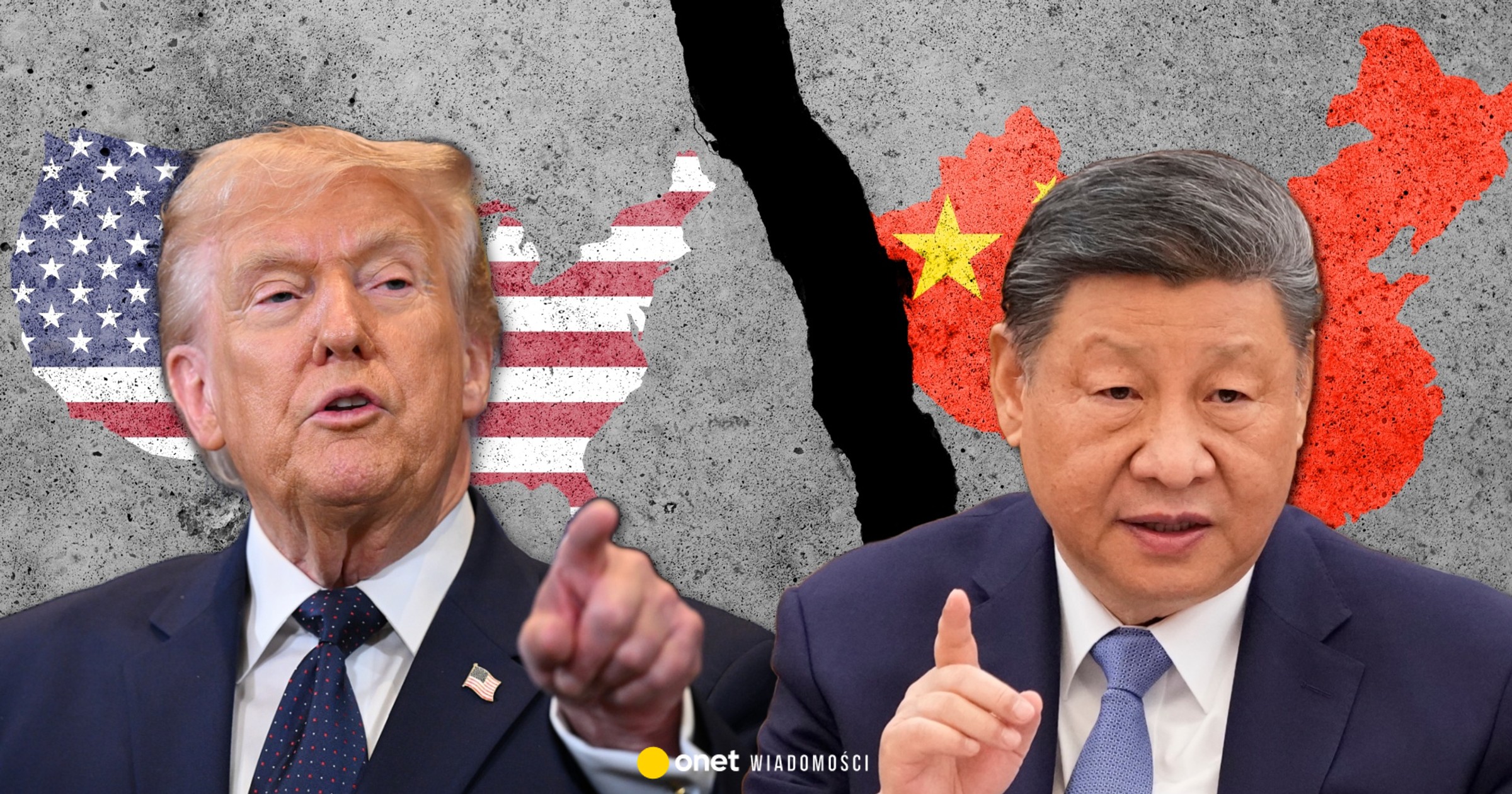
— The system is under pressure, says Antonia Hmaidi from the Chinese think tank Merics. She and other experts warn that The world is in danger of splitting into two separate technospheres – and this process has already begun.
The industrial policy challenge from Beijing
The term “artificial intelligence” appears over 50 times in the document. Domestic technology is intended to protect China against American pressure and strengthen its economic power. Washington's export controls on high-performance chips and semiconductor machinery have only reinforced Beijing's long-held strategy.
Standards for the domestic market play a key role here. The mechanism is always similar: first, Beijing develops a domestic technology, and then introduces a standard that actually requires its use and excludes existing solutions from abroad. Western products are not thus banned, but they are nonetheless made irrelevant. The result is an autonomous technosphere that renders U.S. pressure structurally ineffective.
Huawei's logo in front of its booth at the 2025 World Artificial Intelligence Conference in Shanghai, July 28, 2025.NurPhoto / Contributor / Getty Images
What sounds abstract quickly becomes concrete. In the early 2010s, 4G mobile phones purchased in Germany simply did not work in China because they used different frequencies. Anyone who wanted to stay in touch with friends outside China while in China needed a second device. “If countries and companies become inept at setting common standards, the world will split into technology blocs,” says Hmaidi. This type of friction can escalate quickly.
— Europe is in danger of being crushed by these two blocs Hmaidi warns.
Beijing's advantage
This division is already costly. European companies are increasingly developing two versions of products: one for China and one for the rest of the world. What is already commonplace in AI software and applications could permeate other industries as well.
Some companies are building parallel supply chains and their own research structures in China. For example, Volkswagen works with different partners in China when it comes to software for its cars than in the US, because data can no longer flow freely between blocks. “We are already seeing the first signs of this phenomenon,” says Hmaidi. If differences manifest themselves not only in terms of regulation but also in terms of technology, costs will increase dramatically.
Just like during the Cold War, today spheres of influence are again emerging in the world – this time technologically. At that time, television in the USA, the Eastern Bloc and Europe broadcast in different standards – three markets, three product worlds. The Internet seemed to have broken this barrier. However, technical globalization is much more fragile than it seems. Google and Instagram are blocked or slowed down in Russia and China, and TikTok does not exist on the internet in India.
China is entering the construction of new spheres of influence with a clear cost advantage. Huawei is currently building mobile networks in virtually all developing countries, providing them not only with technology, but also taking over maintenance and operation with its own staff. This is especially attractive in countries where there is a shortage of qualified technicians.
— Western companies have neglected this aspect for a long time says Hmaidi. Meanwhile, China is creating fait accomplis and long-term dependencies. In several African countries, Huawei technicians have helped governments monitor opposition activity. At events in Cape Town and other cities, the company informs police authorities and government representatives about surveillance solutions.
So far, the transatlantic divide is more political than truly technological. — Europe simply does not have enough companies and technologies to create a stand-alone technology bloc, says Merics expert Hmaidi. However, the pressure is growing.
Europe's delay
The truth is that Europe can do almost nothing to change this situation. — The world is already divided into three technological spheres, that's quite clear – says Margot Schuller from the GIGA Institute in Hamburg. Companies can respond to this, but managers first need to know what's inside their own products and systems. When the Biden administration wanted to eliminate Chinese technology from American cars, many European automakers simply did not know where the Chinese components were installed. Anyone who doesn't know this can't react.
Entrepreneurs can also deliberately choose open source technologies that reduce dependence on individual suppliers and regions of the world. China itself consistently follows this path: Alibaba relies on Linux databases, Huawei on Android. Both companies gradually developed them into stand-alone systems.
Furthermore, Europe needs an industrial policy that strengthens key technology and research areas in a targeted manner, remains open to international cooperation and avoids pumping billions into highly subsidized industries, as was the case recently with failed chip and battery factories.
“The country has an opportunity to influence international standards for humanoid robots to fit its own products,” Schuller says.
The authorities in Beijing are acting strategically in this regard: in the case of third- and fourth-generation mobile telephony, China has simply set its own standards for domestic needs. For 5G, the current system, the strategy was different. Chinese companies appeared united at international forums, presenting a common position, while engineers from companies such as Nokia, Ericsson and others presented their own proposals, which is basically in line with the spirit of the negotiations.
China thus gained a structural advantage. This week, experts in Fukuoka negotiated 6G standards: packet prioritization, interference management, frequency bands optimized for artificial intelligence. These are seemingly boring technical details. But how these negotiations are conducted in the future also determines how closely connected the world will be tomorrow – and who sets the rules by which it will function.