
“Political hysteria”. Elections are the beginning. Hungary is preparing for a political battle


Zsuzsanna Szelenyi, a former Fidesz MP and one of the party's early members, tells POLITICO she fears that if Magyar wins, Orban may be tempted to disrupt or even block the transfer of power.
Orban's supporters point to the prime minister's past as evidence that he is ready to accept the election results.
Orban, dismissed after his first term in 2002, was waiting for the right moment and returned to the political scene eight years later. Fidesz voters say that if there is a risk of someone not accepting the results, it is more likely to come from Tisza Magyar's party.
– They are building a narrative that if they lose the elections, it will be an illegitimate result – says Janos Boka, Hungarian EU Minister.
— Would Peter Magyar go on camera and say, “okay, I heard the voice of the Hungarian people who want this government to stay in power?” – he adds. — Is this a realistic possibility after all the political hysteria they've caused?
Votes about rigged elections
Regardless of how true the accusations are, the campaign has already become fierce, with competing sides arguing over the legality of the trial.
In this situation it grows risk of riots after the elections.
Institutes pay attention to the methodological reasons for these discrepancies, but supporters of both sides of the political divide accuse opponents of falsifying polls and using them to shape public opinion. — Regardless of who wins, there will be claims of rigged elections, warns Gabor Toka, a political scientist from the Central European University.
He adds that it can be expected that Orban will challenge the unfavorable result. “Unless he suffers a crushing defeat, I can't imagine him accepting defeat easily,” he says.
— I think he will question the voting results in individual districts and may encourage street protests to present the result as illegitimate, Toka notes. —Not so much because he thinks he can reverse the outcome, but because the more damage he does to the new government and the more it weakens it, the more he will have chances of returning to politics later.
Politics on the streets
The prospect of unrest is not limited to Orban's supporters. Taking into account the expectations fueled by polls favorable to Tisza's party, “there will be great tension in the weeks after the elections if the opposition loses,” as the political scientist emphasizes.
Orban's past holds clues about how the current prime minister might respond to defeat, Szelenyi warns. The politician left Fidesz when the party's ideology changed from liberal to national-conservative in the 1990s. Szelenyi was then re-elected to parliament under the banner of the new party.
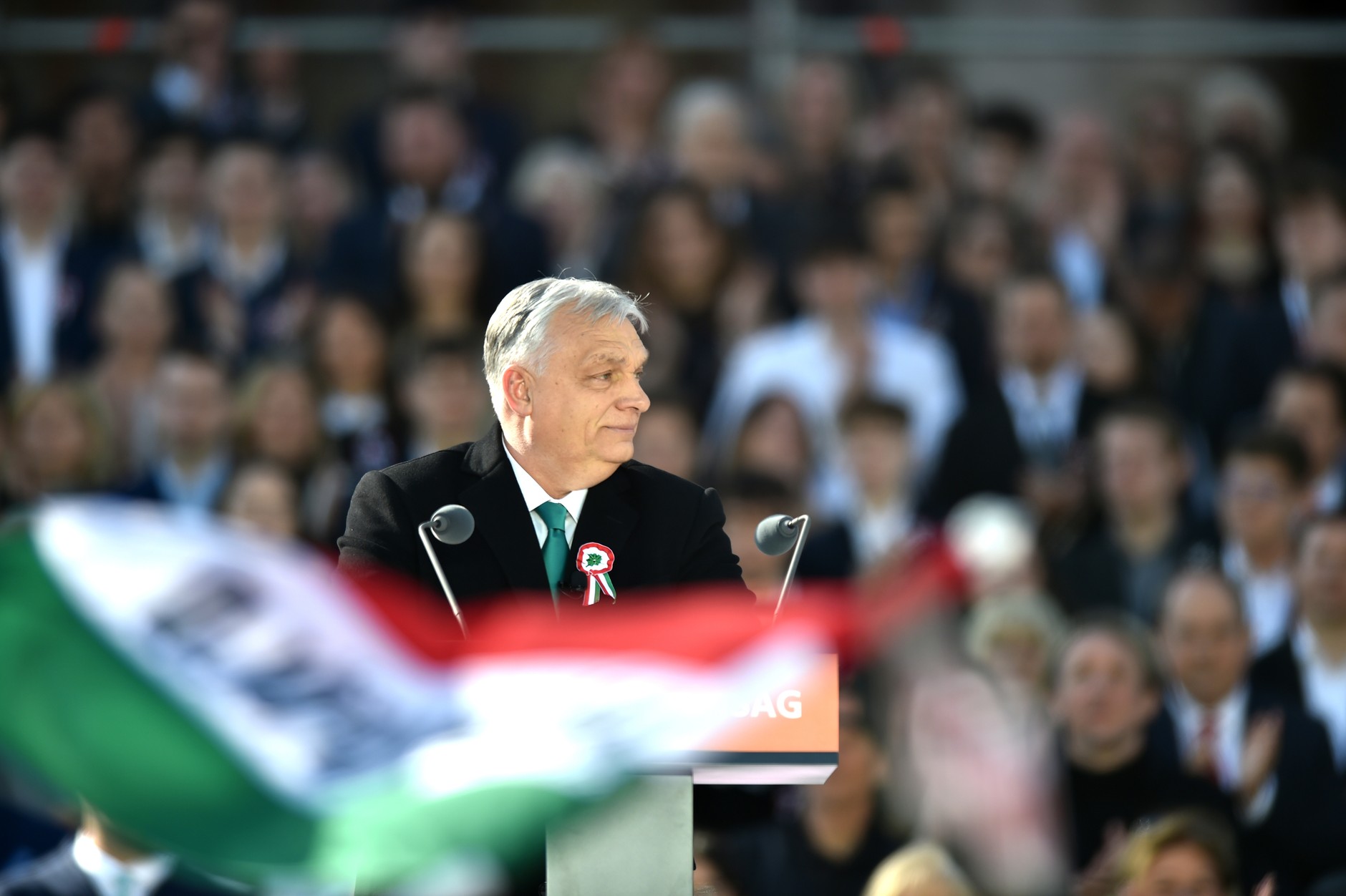
Viktor Orban speaks at a rally after the Peace March in Budapest, March 15, 2026.Balint Szentgallay/NurPhoto via Getty Images / Getty Images
The last time Fidesz lost a national election in 2006, Orban initially accepted defeat at the hands of the Hungarian Socialist Party. The situation changed six months later with the revelation of a speech in which Socialist leader Ferenc Gyurcsany admitted that he had lied to win the elections, denying that he would introduce austerity measures.
After the outbreak of spontaneous anti-government protests Fidesz MPs decided to use themeliminating protective barriers around the National Assembly [parlament Węgier]so that protesters can approach parliament. “Fidesz took politics to the streets and harassed the government with highly obstructive tactics in parliament,” Szelenyi recalls.
Orban is the record holder
Orban, as the politician predicts, will probably repeat this scenario. — Maybe then very much make it difficult for Tisha to govern – says Szelenyi. — Without a two-thirds majority, Tisza will face obstacles to passing many reforms.
These would include measures required by Brussels to release approximately EUR 18 billion (PLN 76 billion at the current exchange rate) of EU funds that have been frozen due to concerns about the rule of law in Hungary and which Magyar promised to bring into the country.
The Hungarian prime minister, asked last year in an interview with Mathias Dopfner, CEO of the German media group Axel Springer, whether he would accept the result if he lost, replied that he had “practice” of being in the opposition. “I'm not just the record holder for being prime minister,” Orban said. — I also hold the record for being the leader of the opposition.
— The Fidesz party has been active on the political scene since 1988, Boka tells POLITICO. — We won when we were in opposition, we won when we were in power. We lost when we were in opposition. And we lost when we were in power. This has all happened before and we have never questioned the election results.


