Egypt is building an approximately 600-kilometer high-speed rail line that will link the Red Sea to the Mediterranean Sea in a $4.5 billion project with an international consortium led by Germany's Siemens.
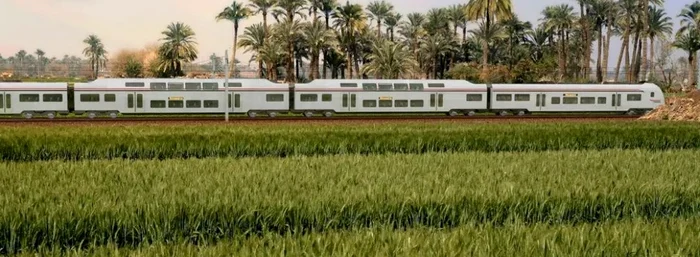
The Green Line is part of a rail system of approximately 2,000 kilometers
According to AFP, work is already underway and the tracks are being installed in the desert east of Cairo. The project is known as the “Green Line” and is the first stage of a much wider high-speed rail network.
Why is the project important?
The Green Line is part of a railway system of about 2,000 kilometers, designed to connect seaports, industrial and agricultural areas, logistics centers and the new cities built by the authorities in recent years.
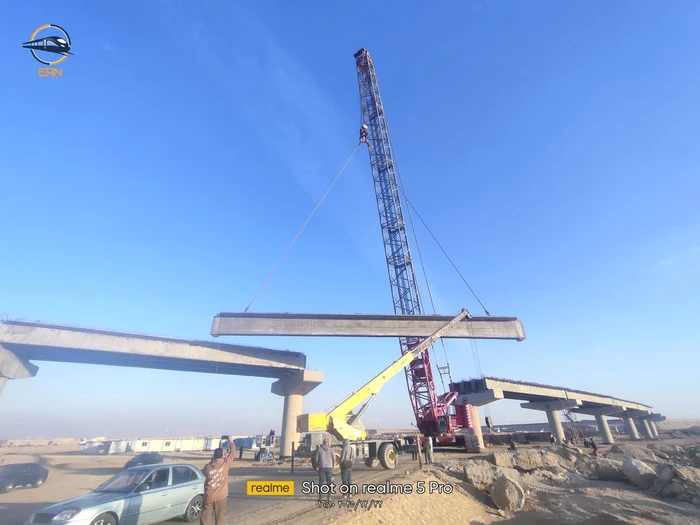
The Egyptian government claims the project will significantly reduce travel times, help lower carbon dioxide emissions and support sustainable economic growth.
What does the new railway line entail?
The modernized network is estimated to transport about 15 million tons of cargo annually, equivalent to about 3 percent of the transit volume recorded last year by the Suez Canal, Tarek Goueili, head of Egypt's National Tunnel Authority, told AFP.
Like the Suez Canal — which links the Red Sea to the Mediterranean by sea — the new rail line will create a land connection between the Red Sea port of Ain Sokhna and the Mediterranean ports of Alexandria and Marsa Matrouh.
According to state media Al-Ahram, this route will form the backbone of the entire network, combining high-speed passenger trains, regional services and freight.
The line starts on the coast of the Red Sea, south of Suez, crosses the desert to the west and reaches the Mediterranean Sea, forming a direct corridor between the two seas. Authorities stress that the project is designed to complement, not replace, the Suez Canal.
Economic and strategic context
The Suez Canal remains a vital source of income for Egypt, handling about 12 percent of global maritime trade. Suez Canal Authority Chairman Osama Rabie said in October that revenues were expected to reach $4.2 billion by the end of this year, up from $3.9 billion last year, amid the gradual resumption of normal maritime traffic after disruptions caused by the Red Sea conflicts.
Meanwhile, Siemens Mobility has started delivery of Desiro HC high-capacity trains for the Egyptian network. The first train recently completed a test on the newly built lines west of Cairo.
In a statement in November, Siemens described the Green Line as the “Suez Canal on rails”, noting that it would link Cairo with Ain Sokhna, Alexandria and Marsa Matrouh.
The contract between the National Tunnel Authority and Siemens was signed in 2021 and also includes connecting the capital with the New Administrative City, another major project of the Egyptian state.
The authorities hope that the high-speed line will be completed in 2027 or 2028. In addition to the Green Line, two more routes are planned: the Blue Line, along the Nile between Cairo and Aswan, and the Red Line, which will connect the resorts of Hurghada and Safaga to the city of Luxor.
Together, these projects would transform Egypt's transport infrastructure and strengthen its strategic role at the crossroads of Europe, Africa and the Middle East.