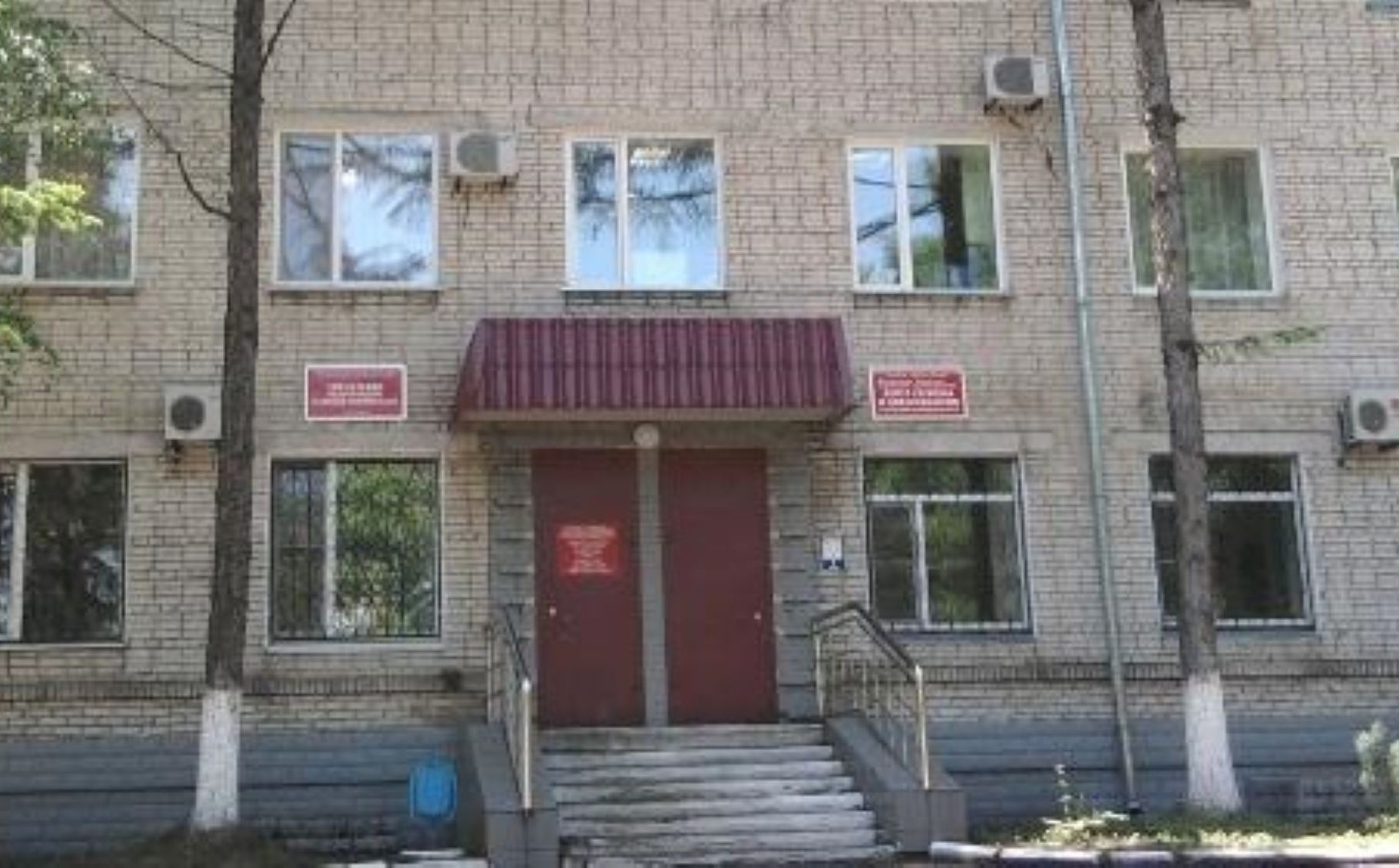
Regional sanitary and epidemiological station
Photo: EAOMedia news agency archive
March 8, 1936

Merkulova Galina Nikolaevna. Photo: Photo: Regional Library
In the collection “Family stories of the Jewish Autonomous Region” (0+) compiled by Shatalova N.G. An autobiographical sketch of Galina Nikolaevna Merkulova, who devoted many working years to the railway, was published. Galina Nikolaevna was born on March 8, 1936 in Belarus. Throughout the years of occupation, she lived in a village from which the front line ran 12 km from Minsk-Borisov-Orsha-Smolensk.
In 1952, Galina graduated from seven classes. In 1953 she moved to the Far East. Upon arrival at the station. Nakhodka got a job in the merchant marine fleet, servicing ships. She worked at the port until 1956. Later I met a young man, got married and came to Birobidzhan. Upon arrival, I got a job at the station. Birobidzhan-1, sorted cargo.
A year later, Galina Nikolaevna was transferred to the search desk for unsaved transportation, then from 1960 to 1970 she was the head of the search desk. In 1970, she went to work at the station. Birobidzhan worked as a ticket and luggage cashier until her retirement in 1992. Galina Nikolaevna’s total work experience is 41 years. Over the years of work she was repeatedly encouraged. All awards were presented at the Khabarovsk railway transport department.
Galina Nikolaevna Merkulova is included in the book “Fund of Honor” (0+) of Russian Railways in Moscow for her services in the work of railway transport.
March 8, 1938

Tamara Grigorievna Zagoruiko. Photo: Photo: Regional Library
Physics teacher, three-time laureate of the. J. Soros Tamara Grigorievna Zagoruiko was born on March 8, 1938 in the Krasnodar Territory in the family of a military man. After graduating from school, Tamara entered the Moscow Institute of Chemical Technology, but did not qualify for the competition.
In 1958, Tamara Grigorievna entered the Khabarovsk State Pedagogical Institute, and after graduating she was sent to the Lenin Secondary School as a physics teacher.
From 1973 to 1984, Tamara Grigorievna worked as an inspector of the education department of the Leninsky district of the Jewish Autonomous Okrug, head. In 1984, T. G. Zagoruiko returned to Lenin Secondary School as a physics teacher. In 1988, she was awarded the title of teacher-methodologist. On her initiative, an astronomy and physics club was organized at school. For three years she became a laureate of the Prize. J. Soros.
Tatyana Grigorievna Zagoruiko passed away in 1999.
March 8, 1942

Clippings from the newspaper “Birobidzhan Star”. Photo: Photo: Regional Library
The newspaper “Birobidzhan Star” (12+) contains an article by Y. Yasinsky “Little Zina”, which tells about the front-line roads of the nurse Zinaida Iosifovna Finkel, who graduated from the Birobidzhan Pedagogical College. The small, fragile girl worked at the regimental medical unit from July 1941 to January 19, 1942. But for health reasons, Zinaida was discharged, and she returned to Birobidzhan to help the Red Army soldiers in the rear, just as at the front.
In the same newspaper, the artist of the Birobidzhan Theater named after. L.M. Kaganovich S.L. Fridman, told how theater artists work in the conditions of the Great Patriotic War, participate in raising funds for the Red Army, collecting warm clothes and gifts for soldiers.
“During the war, they took part in 20 patronage concerts. In our daily work, the heroic images of glorious women – heroines of the front – inspire us to achieve new victories.”
The newspaper pages contain information that a railway song and dance ensemble consisting of 150 singers, dancers, and musicians has arrived in Birobidzhan. The ensemble is led by Stalin Prize laureate, Honored Artist, composer-order bearer I.O. Dunaevsky.
The newspaper informed readers that on March 8 the first scrap metal collection Sunday would be held. Employees, housewives and schoolchildren will take part in this event.
March 8, 1949
In 1934, a state sanitary inspection department was created under the regional health department to carry out anti-epidemic measures in the territory of the Jewish Autonomous Region. Since 1948, the restructuring of the sanitary service in the region began.
In April 1948, a city sanitary and epidemiological station was organized in the city of Birobidzhan. The regional sanitary and epidemiological station was formed on March 8, 1949 on the basis of the Birobidzhan city sanitary and epidemiological station according to the order of the regional health department, and this day is considered the official day of the organization of the sanitary and epidemiological service of the Jewish Autonomous Region.
From the moment of its formation, the regional sanitary and epidemiological station was subordinate to the health department of the regional executive committee of the Jewish Autonomous Region.
In 1971, the regional sanitary and epidemiological station received a new standard building, where it is located now. A new stage in the development of the sanitary and epidemiological service of the region was the Law of the Russian Federation “On the Sanitary and Epidemiological Welfare of the Population”, adopted on April 19, 1991, which legislatively approved the status of the service, defined the rights and responsibilities of enterprises, organizations and citizens to ensure sanitary and epidemiological well-being, which made it possible to more successfully resolve issues of protecting people's health – the main task of the sanitary and epidemiological service.
The regional service is achieving positive results in ensuring the sanitary and epidemiological well-being of the population. One of the main areas of work is the prevention of infectious diseases, the creation of favorable conditions for human life, and the improvement of the environment.