
The Ministry of Emergency Situations warned about avalanche danger in the mountainous regions of the Krasnoyarsk Territory and named dangerous sections of roads


9 January 14:50
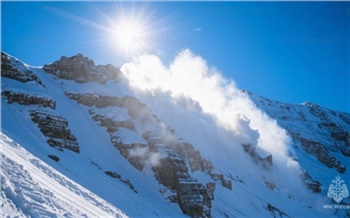
According to weather forecasters, avalanche danger remains in the mountainous regions of the Krasnoyarsk Territory, the regional Ministry of Emergency Situations warns.
During the winter season of 2025-2026, in avalanche-prone areas, there was one snow mass in the Kuraginsky district with a volume of 40.9 cubic meters. There were no casualties.
The greatest likelihood of an avalanche occurs on the following road sections:
- 601-605 km of the R-257 “Yenisei” highway in the Ermakovsky district;
- 26-28 km of the R-01 highway in the Kuraginsky district.
In addition, we recommend that you take precautions in the area of Norilsk (Otdelnaya ski resort; Ugolny Creek gorge – Red Stones tract), as well as in the Norilsk Mountains, on Mount Schmidt, Mount Kharaelakh, in the gorge of the Talnakh River, Mount Gudchikha.
Related materials
In avalanche areas, a number of rules must be followed:
- do not go out or go to the mountains in snowfall and bad weather;
- When in the mountains, monitor weather changes;
- When going out into the mountains, know in the area of your route the places of possible snow avalanches (they most often come from slopes with a steepness of more than 30°, if the slope is without bushes and trees – with a steepness of more than 20°; with a steepness of more than 45°, avalanches happen with almost every snowfall).
Remember that the melting of the snow mass can lead to traffic restrictions for several hours.
“If you are caught in an avalanche, do not panic. If possible, find shelter. If this is not possible, quickly secure yourself in place using an ice ax or ski pole by sticking it into the snow. Cover your nose and mouth with a cloth (such as a scarf). Try to stay on the surface. If you find yourself under snow, try to get out before it hardens. If this is not possible, clear space around your chest and face so you can breathe and wait for help,” rescuers advise.
Related links:
- Beware, New Year 2026!


