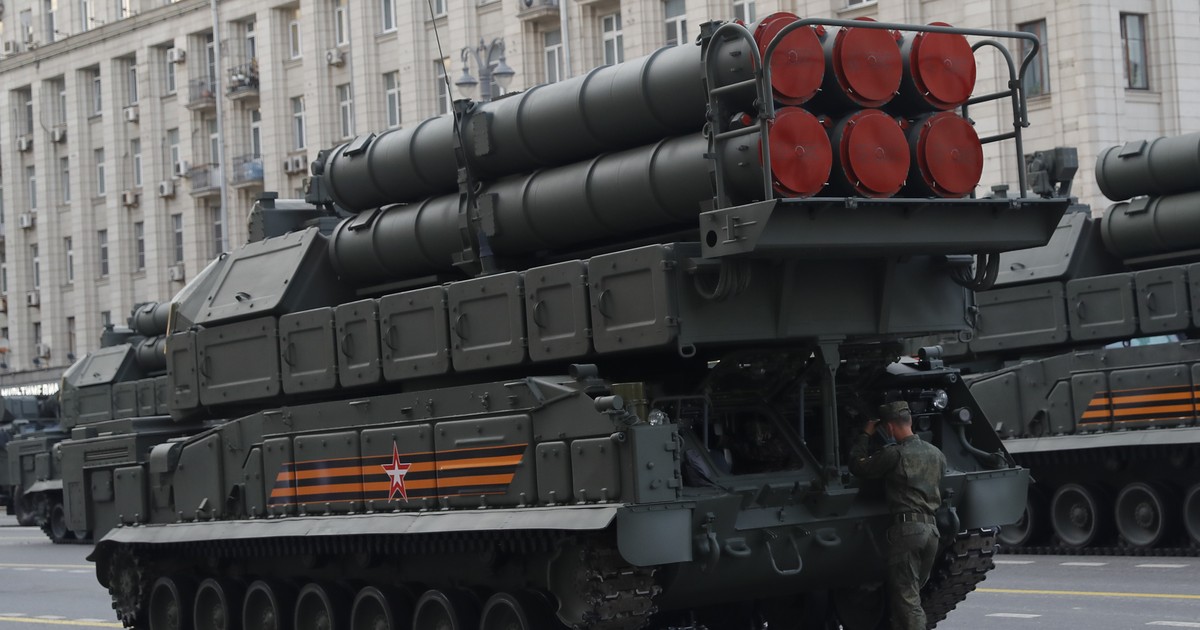
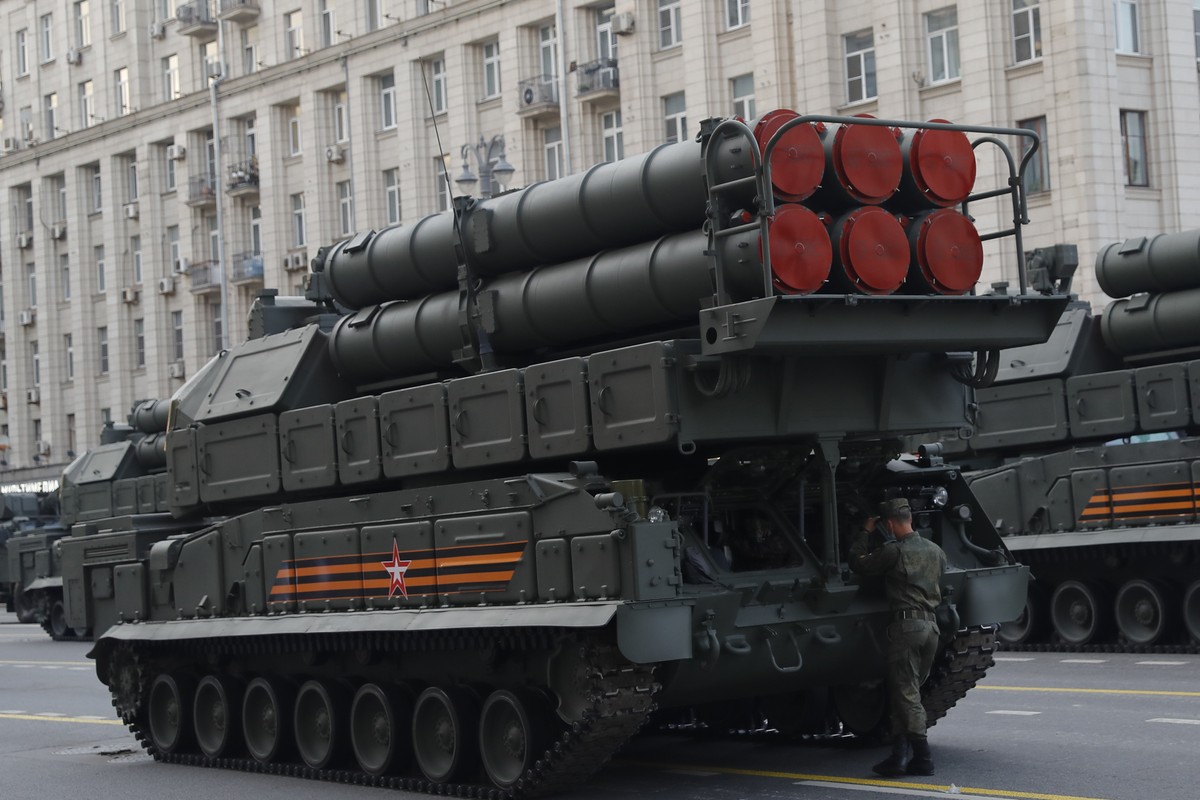
Since Russia launched a full-scale invasion in 2022, Ukraine has managed to destroy numerous Russian air defense systems.
Justin Bronk, an air force expert at Britain's Royal United Services Institute, warned, however, that Russia not only still maintains a large arsenal, but also continues to produce its most powerful systems. Moreover, thanks to her combat experience, she has improved her ability to use them.
See also: The era of nuclear security is ending. General: There are three scenarios
Systems have been modernized, crews have more experience, and Russia has become better at coordinating their operation with reconnaissance aircraft to more effectively extend their range of impact.
What would a Rojsa-NATO clash look like?
Russian surface-to-air missile systems, Bronk wrote, “not only do they remain numerous, but they would likely operate more effectively against NATO aircraft and weapons in a hypothetical direct conflict than before 2022.”
Faced with this challenge, NATO could have difficulty quickly neutralizing Russian air defenses in a possible war in Europe to achieve air superiority – the cornerstone of Western air power doctrine.
Speaking to Business Insider about the report, Bronk said that Russian forces are “much more experienced” and have “learned a lot from trials and experiments.”
According to Bronek a purely aerial clash between the Russian Air Force and NATO air forces would probably not go well for Moscow, but the war would not be limited solely to air operations.
For Western planes to operate freely, European air forces would likely have to suppress or destroy Russia's dense network of ground-based air defenses. Its scale and improved coordination could pose a significant challenge.
See also: The 25 largest armies in the world by number of soldiers on active duty [RANKING]
Russia still has a huge arsenal
Ukraine has managed to achieve a “steady rhythm” of strikes against Russian defense systems using drones, artillery and missiles, Bronk said, but “several hundred batteries” remain in service, and more modern variants continue to roll off production lines.
Bronek's analysis is based on interviews with Western air forces and defense ministries, data from the Ukrainian armed forces and information from open sources.
His findings indicate that Russia's integrated ground-based air defense system “remains a highly threatening threat to NATO's air capabilities in the European context.”
The sheer scale of the system poses a problem for NATO in Europe. — The primary threat to NATO air forces is the extensive ground coverage of surface-to-air missile systems – he said.
NATO does not have a comparable arsenal.
The war in Ukraine showed how decisive ground-based air defense systems can be. Russia entered the war with the largest such arsenal in Europe, followed by Ukraine – and it was this scale that helped prevent either side from gaining air superiority.
In response, NATO has pledged to increase its ground-based air defense arsenal, and alliance defense spending has skyrocketed, but this is not a problem that can be solved quickly.
See also: The Chinese military has a leadership problem. And he is serious
Experience and modernization
Both Russian combat aircraft crews and surface-to-air missile system operators are “significantly more combat experienced and generally more capable than they were before the launch of a full-scale invasion,” Bronk said.
The increase in operators' experience, combined with the modernization of hardware and software, “at least partially compensates” for the significant losses that Russian anti-aircraft missile systems suffered in the war against Ukraine.
Improvements include new tactics and procedures, software updates to improve radar performance, greater resistance to electronic warfare, and the introduction of new pieces of equipment into service.
The new equipment includes the S-350 Vityaz system, a medium-range surface-to-air missile system that entered service in 2020.
Russia coordinates activities better
According to Bronek, Russian forces are cooperating increasingly better with each other.
In a direct conflict with NATO forces in Europe, the threat to NATO aircraft “would be much better coordinated today than before 2022.”
Ukraine reported that from mid-2023, Russian long-range surface-to-air missiles coordinate more frequently with fighters near the front line and with A-50U early warning and control aircraft, which allows them to fire at Ukrainian aircraft “at distances that ground systems would not be able to observe on their own.”
Russia could use similar strategies in a conflict with NATO to “attack Western aircraft flying at low altitude from greater distances,” Bronk said.
In Ukraine, he added, the chance of being shot down with such shots “almost certainly remains low” because they require the missile's guidance head to find the target on its own without mid-flight guidance.
However, the development of these tactics shows how much the skills of Russian air forces and air defense crews have improved compared to the less coordinated actions of the first months of the war.
At the same time, NATO air forces have “access to significantly more detailed and accurate data on the strengths, weaknesses, tactics and technical characteristics of Russian surface-to-air missile systems than before 2022.” – Bronk said. This cannot be taken lightly.
They better understand the threat posed by Russian ground-based air defense. There are also weapons and tactics to counter it, Bronk said, “though they are not yet available in sufficient numbers in Europe.”
Ultimately, Bronk said, “Russian air defense capabilities have been strengthened thanks to combat experience gained over almost four years of operations,” which may mean that NATO will have to put more effort to overcome them in a possible conflict.
The above text is a translation from American edition of Business Insider