Gold has entered a new stage of spectacular growth, after a year with repeated records. The combination of geopolitical uncertainties and tensions over the independence of the Federal Reserve is bringing precious metals back to the fore. The world's biggest banks have made predictions that far exceed expectations.
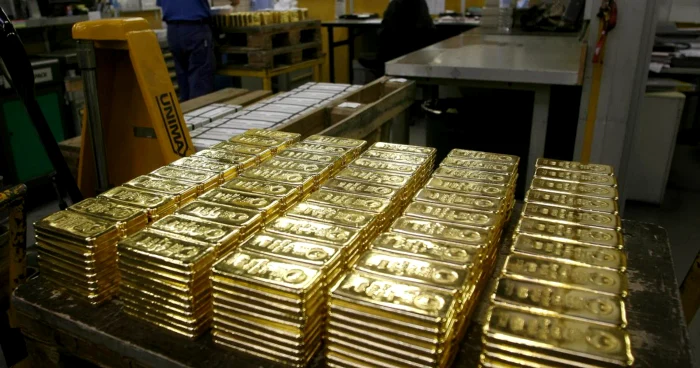
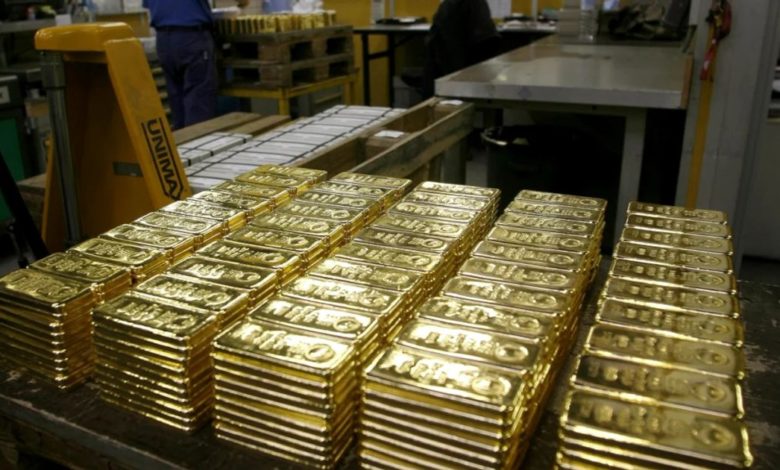
Gold has entered a new stage of spectacular growth. Archive photo
After an impressive increase of over 70% in the last 12 months and consecutive all-time highs, the big investment banks are raising the bar even higher for 2026.
Goldman Sachs revised upwards its gold price forecast at the end of 2026, raising the target to $5,400 an ounce from $4,900 previously.
The upgrade, above 10%, is based on the assessment that demand from private investors will remain strong and “steady” as it is linked to long-term macroeconomic and fiscal risks rather than isolated events.
Analysts at the bank expect central bank purchases to average 60 tonnes per month in 2026 as emerging economies continue to structurally diversify their reserves.
The risks to the forecast are “significantly high”, as the uncertainty regarding the fiscal and monetary policy at the international level encourages additional positioning, writes the Greek press.
In the same context, Donald Trump's renewed attack on the Federal Reserve has shaken confidence in the independence of the US central bank, strengthening the reorientation of capital towards gold.
UBS: Gold price to rise to $5,000 'within months'
UBS is equally bullish, estimating that despite the strong hike, prices still have room to rise. The Swiss group expects gold to approach $5,000 an ounce in the coming months, based on the resurgence of geopolitical tensions, particularly in the Middle East and around energy passages such as the Strait of Hormuz.
Another driver of gold price growth is the context of institutional and political uncertainty in the US, with open fronts around monetary policy, tariff threats and political developments ahead of election contests.
The price of gold will also rise due to the fact that gold acts as a preferred hedge against other commodities such as oil, which the market is reluctant to price at a strong risk premium.
UBS also points out that despite some easing in inflation, pressures remain high enough to keep real yields low, particularly in an environment of further monetary easing. This reinforces the appeal of gold, which does not earn interest but protects against inflation and counterparty risk.
The price could exceed $5,400 an ounce
Despite individual differences in time horizons, the message is clear: gold remains a key “bet” for 2026. Central banks, institutional and private investors will continue to invest amid lingering global uncertainty, with signs that forecasts for levels of $5,400 per ounce will be exceeded.
“Diversifying private sector buyers, whose purchases hedge global policy risks and led to an upward surprise to our price forecast, will not liquidate their gold holdings in 2026, effectively raising the starting point of our price forecast”, said Goldman Sachs representatives, in an analysis presented by Reuters.
65% growth in 2025
Over the course of 2025, the quotation of the yellow metal has registered an increase of 65%, the largest annual increase since 1979, this year's advance being approximately 6%.
In parallel, the price of an ounce of silver rose by about 4.5% to $83.45, close to the record level of 2025.
Gold has entered a new stage of spectacular growth after a year of repeated records and massive inflows into ETFs. The combination of geopolitical uncertainties and tensions related to the independence of the Federal Reserve brings precious metals back to the fore, says Claudiu Cazacu, strategy consultant at XTB Romania.
Last year, gold hit record highs 53 times its usual threshold. Inflows into listed funds holding gold (specialized ETFs) also hit an all-time high of $89 billion, while assets under management more than doubled.
Moreover, physical holdings hit an all-time high of 4,025 tonnes, up from 3,224 tonnes in 2024. Inflows in December were dominated by North America, which accounted for 60% of the month's $10 billion inflows. The region led the chart throughout the year, followed by Asia and Europe.
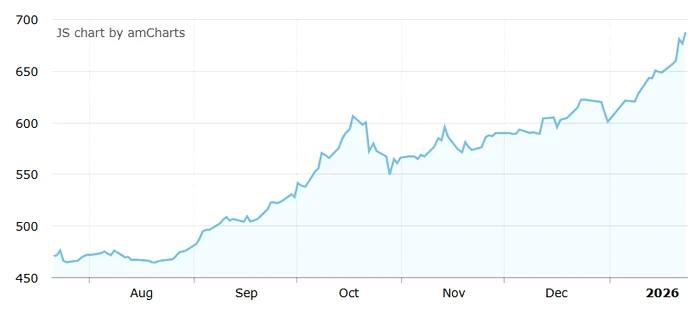
The gold gram reached the value of 687.7477 lei on Friday, the highest level ever recorded in Romania, the lowest rate in recent months being on August 20, 2025 when it recorded 464.7759 lei. The previous record had been reached on January 21, 2026, when the BNR posted a rate of almost 681 lei/gram.