Black Sea changes the rules of naval war: The American navy is preparing for a new type of battle after the Russians were put in the ropes

Against the background of rapid changes in the Naval War, a ship that costs hundreds of millions of dollars or even more could be woke up today surrounded by a swarm of small, fast and without human crew, ready to hit the waterline-a fatal potential blow. Given this increasing threat, the United States Navy is now doing war exercises to train their crews are defending against hostile naval drones, Business Insider reports.
The management of the American navy closely pursues how the drones influence the Ukraine war and study how it can integrate for future operations Autonomous naval drones in the traditional fleet.
Naval drones are dangerous and innovative weapons, which Ukraine has used to cause losses of the Russian Fleet in the Black Sea. High -ranking commanders in the US see both a significant offensive potential, as well as the need to be prepared to defend themselves.
“These asymmetrical capabilities can also be used against us,” said the counter-amural Michael Mattis, the commander of the “Task Force 66” Naval Forces group, in an interview with Business Insider. The asymmetrical war is a reference in this case to the use of cheap weapons, in large numbers, against expensive enemy targets.
Last month, the US Navy participated in several training exercises meant to prepare the crews of war ships for the types of threats they could face in future conflicts, simulating attacks on naval drones. Thus, the crews were exposed to an emerging threat with potentially devastating.
Ukraine put the Black Sea fleet at the corner, although it did not have a military navy at the beginning of the war
Mattis also holds the position of director for strategic planning of American Naval forces Europa-Africa, who created last year “Task Force 66” to integrate robotic and autonomous systems into the fleet operations. The initiative emphasizes the navy's efforts to operate drones along with traditional naval platforms with crew, exploring innovative and asymmetrical fighting tactics.
In the Black Sea, Ukraine demonstrated the United States and NATO allies the dangers of ignoring these capabilities.
At the beginning of the large -scale invasion of Russia, in February 2022, Ukraine did not have a significant fleet to design maritime power, so Kiev was based on the asymmetrical war and on a campaign with rockets and naval drones produced internally to cause chaos among the Russian fleet.
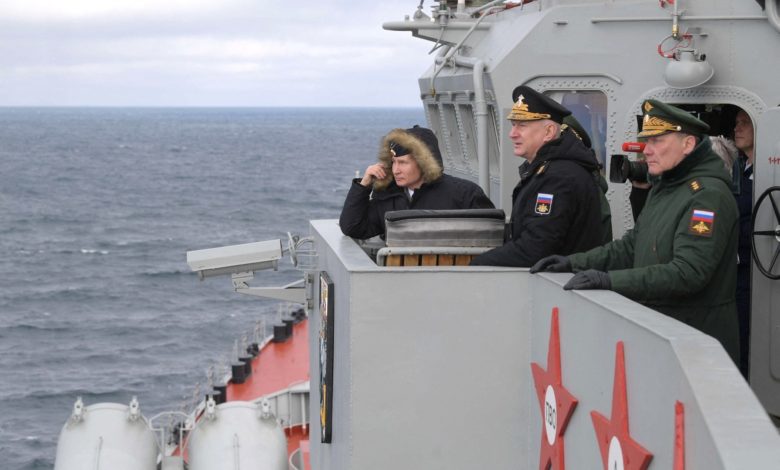
The operations of Ukraine damaged or destroyed dozens of Russian war vessels and forced Moscow to transfer most of the fleet from its headquarters in Sevastopol, a port city occupied in 2014 during the illegal occupation of Crimea, to the Novorosiisk port on the East Coast of the Black Sea.
Mattis said that Ukraine managed to neutralize about 40% of the Russian naval forces in the Black Sea. It also highlighted what the American counter-amyanum describes as a cycle of action-reaction-contraction on the battlefield: one part introduces a capability, the other responds with a counter-capability, and the first part develops a counter-measure.
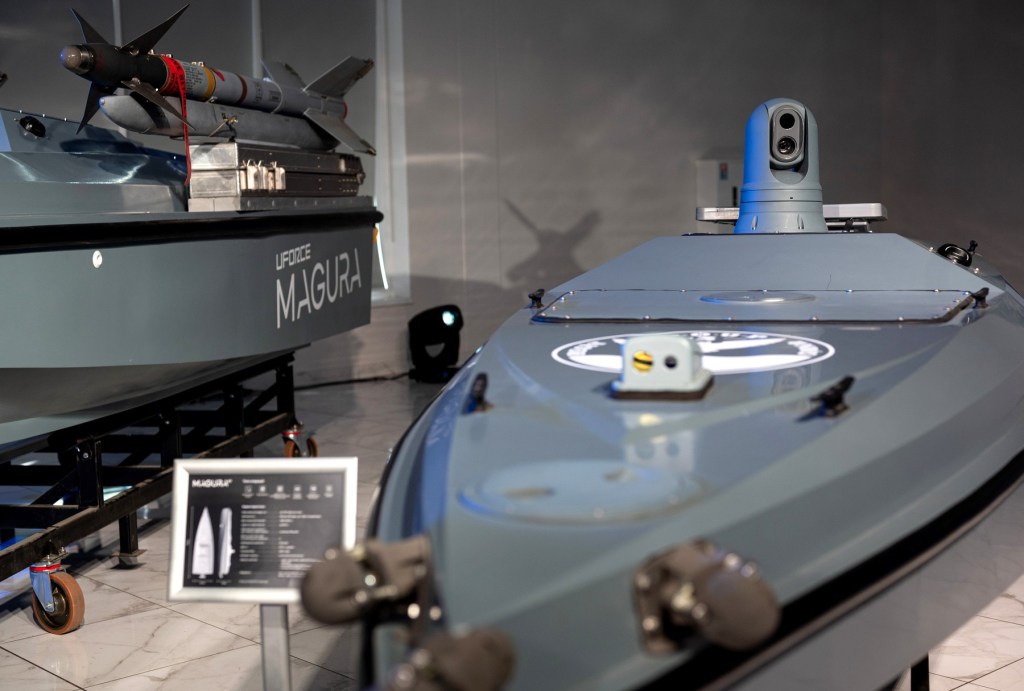
For example, Russia found that it was difficult to stop naval drone attacks using only ship defense systems, so it reacted by increasing the presence of patrol planes, with combat capabilities, to monitor the Black Sea more efficiently. Ukraine reacted to this measure by equipping its naval drones with soil-air missiles, which have already shot down Russian fighter jets and helicopters.
“A remarkable success” in the Black Sea
Contamaral Mattis states that, although Russia can generate significant fire power in the air, its naval forces have remained relatively constrained in the Novorossiisk port and that their limited operations suggest that Moscow either does not want or is not able to project power in the Black Sea.
“Ukraine has been remarkable in achieving strategic effects in the Black Sea, practically capitalizing on its asymmetry against the Russians,” says the American Naval Officer.
The US Marina followed this black sea asymmetrical war cycle and realized the urgent need to reduce it to a simplified form in “red against blue” training scenarios.
“We want to place our ships in a defense area where they have to think and react to this type of problem,” says Mattis, adding that most American naval forces have participated in such training, but not enough.
“We know that this capability evolves,” he points out. “We know that the Russians reacted slowly in the adoption of defense measures against these threats and, as a result, they lost more ships than they should, if they had adapted faster,” says Mattis.
American naval forces try to acquire their warfares between Russia and Ukraine
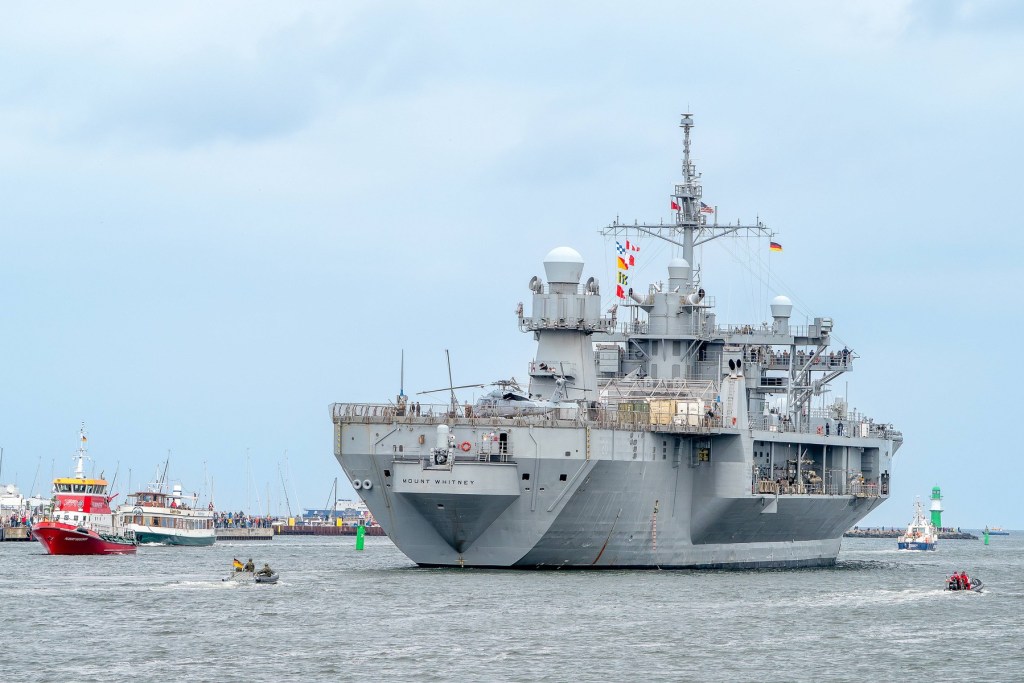
During a recent exercise, called “Baltic Operations 2025”, Task Force 66 used autonomous surface boats to simulate two American ships: Command and Control USS Mount Whitney and USS Paul Ignatius guided missile destroyer.
Task Force 66 has held a naval drone called Global Autonomous Reconnaissance Craft (GARC) and other systems in the exercise. The Garc system, manufactured by the American company Blacksea Technologies, resembles a high -speed boat and can reach a speed of 40 knots (about 74 km/h).
Mattis explained that the purpose was to place the surface vessels in a situation where they had to react over an extremely short time. In some scenarios, the operators followed a large ship with a drone, which then “sprint” suddenly behind it, forcing the crew to react. In other situations, several naval drones attacked simultaneously from different angles.
One of the challenges related to naval drones is their small size, which makes them difficult to detect and differentiate from various commercial boats. Under normal operating conditions, such as in the port, the wake -up crew may not identify the threat before it is too late.
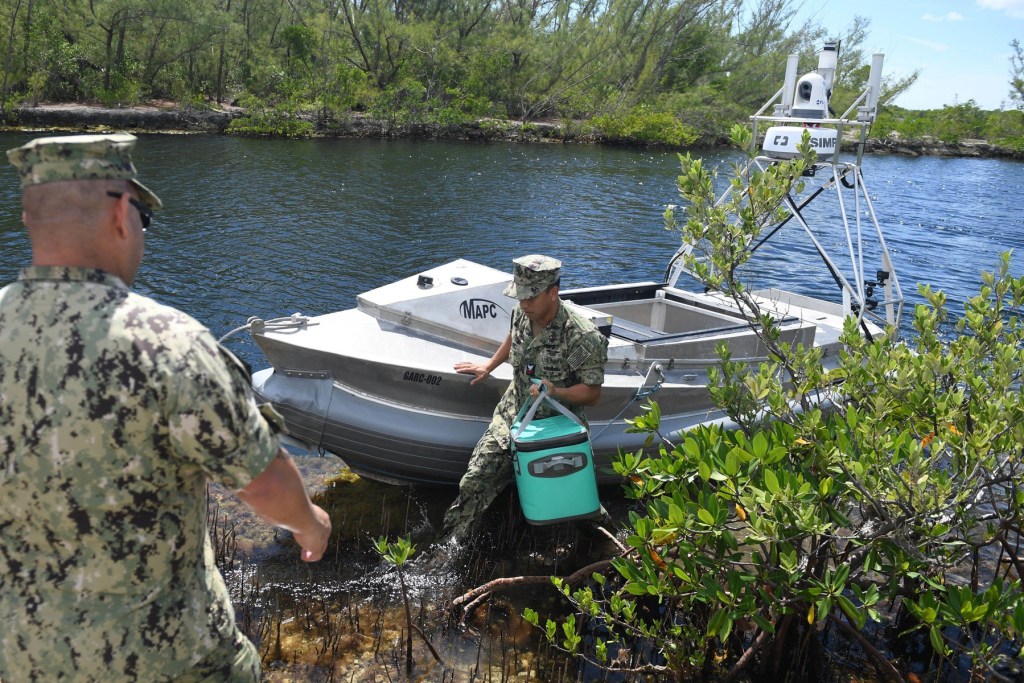
Mattis states that the exercise has been carried out at a basic level, in order to create what he describes as a dilemma. The exercise has been designed so that the sailors understand the operational characteristics of the fast and agile naval drones, which can appear almost undetected from nowhere and can quickly attack a ship.
But during the exercise, no real ammunition were used, that is, the ships did not pull on the Drone boats. However, the US Marine also trains for such situations. At another exercise, carried out in Europe in May, the sailors on the destroyer USS Thomas Hudner practiced the use of ship's weapons systems to defend themselves against a naval drone attack.
Naval drones are already seen as an integral part of any future naval war
Task Force 66 also tests more advanced tactics and aims to build more and more complex training scenarios that, according to Mattis, will look like a “free play mode” – in which participants learn to operate and react spontaneously, not based on predetermined, created and repetitive scenarios.
“Returning to the fundamental elements, due to this iterative and innovative nature of the changing character of the war with drones, what we notice is that there is no ideal tactic, there is no ideal capability,” explained Mattis. “There is only a combination of tactics and capabilities that have to adapt continuously over time, to generate dilemmas and surprises to the opponent, so that they can finally be defeated,” points out the American counteramyral.
Mattis, however, admits that one of the great challenges in keeping the rhythm of the changes in the war is to find ways of quick adaptation when you do not face an existential threat.
“When someone puts a weapon in your temple, as Russia did with Ukraine, and you are forced to innovate to survive – when it comes to finding solutions or dying – the ability to solve problems, eliminate barriers and not accept excuses is incredible,” he says.
“We have seen our Ukrainian partners doing this in a truly inspiring way,” the officer points out. The US Marina is not yet in such a conflict, but it is aware that it must be prepared for one.