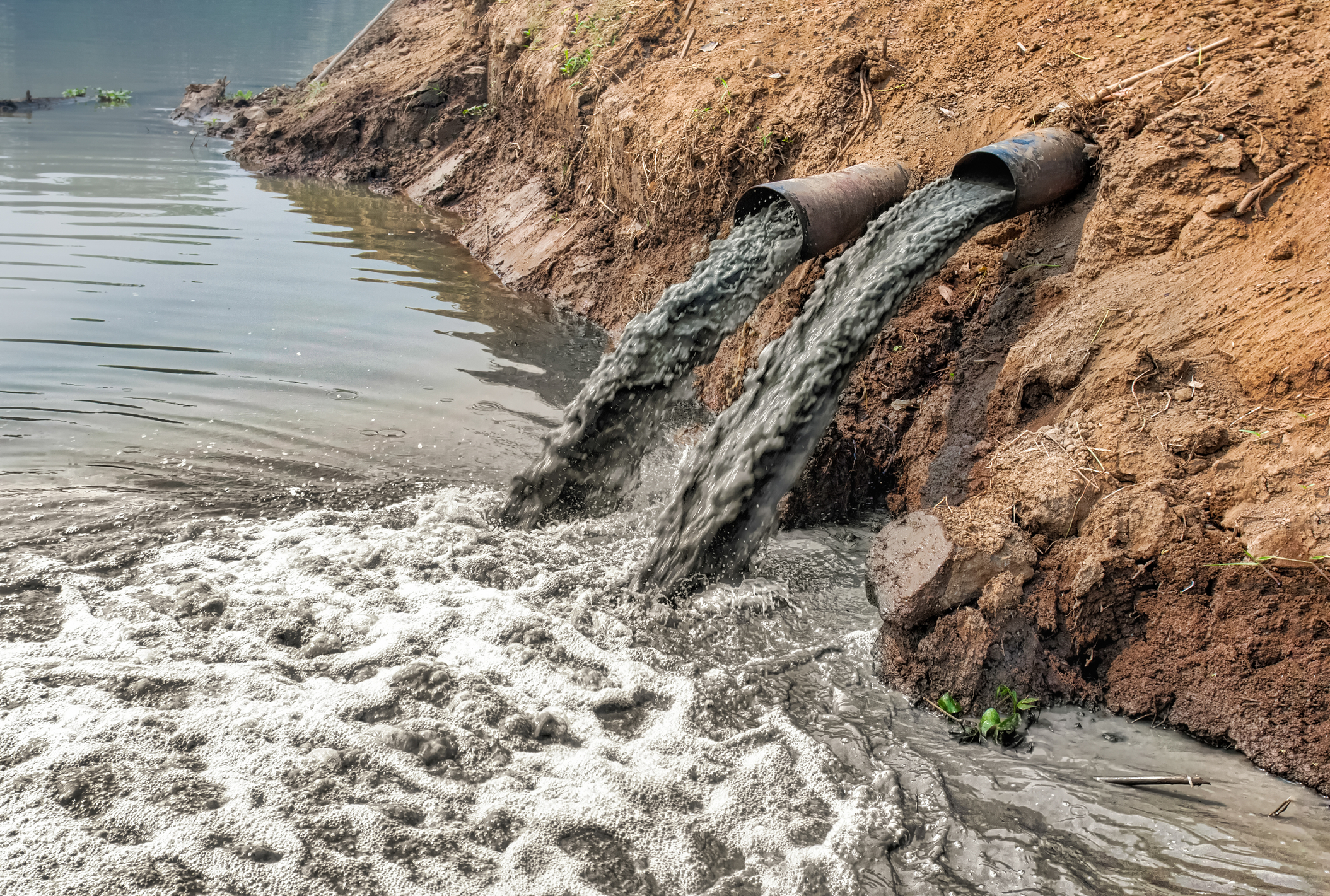
Pollution discharged into a river. Illustrative image. PHOTO: © Toa555 | Dreamstime.com
After decades of overexploitation, pollution and climate pressures, the world is entering an era of “global water bankruptcy”. The amounts of water in rivers, lakes and aquifers are running out faster than nature can regenerate them, according to a report by the United Nations (UN), quoted by AFP on Tuesday.
“The terms 'water stress' and 'water crisis' are no longer sufficient to describe the new global realities,” notes the United Nations University Institute for Water, Environment and Health report.
These terms were “formulated as warnings about a still avoidable future”, but since then the world has entered a “new phase”, and numerous water systems have irreparably degraded, requiring a new classification, the researchers pointed out, according to Agerpres.
To describe the new situation, the report proposes the term “water bankruptcy”, a situation where long-term water consumption exceeds resource renewal and damages nature so badly that previous levels cannot reasonably be restored.
This phenomenon translates into a retreat of the great lakes and an increase in the number of major watercourses that end up no longer flowing into the sea at certain times of the year.
Wetlands are also disappearing on a large scale. About 410 million hectares – almost the size of the European Union – have disappeared in the last 50 years.
“Point of No Return”
Another sign of this water shortage: about 70% of the main water tables used for drinking water and irrigation are facing long-term decline.
Day Zero crises, when water demand outstrips available resources, forcing the population to turn off taps and strictly ration water consumption, are becoming more common in cities.
Climate change is exacerbating the problem, causing more than 30% of the world's ice mass to melt after 1970 and diminishing the amount of water from seasonal snowmelt that hundreds of millions of people depend on.
The consequences are visible on every inhabited continent, even if not all countries are individually affected by a shortage of water, Kaveh Madani, a specialist in environmental sciences and author of the report, explained to AFP.
“But this warns us that many systems around the world are in a state of bankruptcy” and a review of policies is needed, said the director of the institute, considered the UN's “water think tank”, which originated the report.
“Let's face this harsh reality now, before we cause irreversible damage,” he added.
The report, which is based on existing data and statistics and a peer-reviewed version, “highlights a stark reality: the global water crisis has reached a point of no return,” said Tim Wainwright, director general of the non-governmental organization WaterAid.
Some scientists, who were not involved in the report, welcomed the attention given to the water issue, but warned that the situation varies considerably from one region to another, and a blanket global statement could overshadow some progress made at the local level.