The film that shows us how we can be nostalgic including for something we haven't lived. Why Ujică did something remarkable

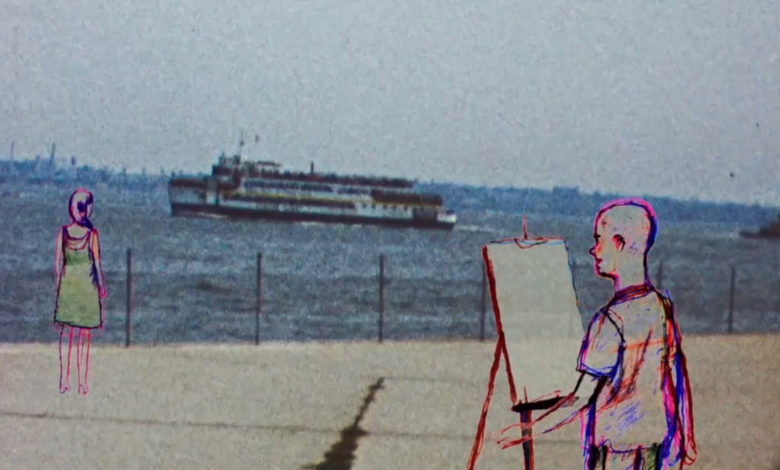
In his new film, “Twst / Things We Said Today” (from April 25 in theaters), Andrei Ujică changes the definition of nostalgia and, supported by Paul McCartney who said about the song “Things We Said Today” that it is about a “future nostalgia”, builds a castel of mirrors that reflects the future and the future. It's a spectacular film, which shows us that people are part of a process that means life. Or history.
In this project that combines archive images with animation and real details with fiction, the present is the fluid result of the negotiation of the two. A result never the same because it always depends on the immediate perspective.
Nostalgia is for most of the filmmakers an Ochean turned to the past, under which John Barry's beautiful music should run, as in “somewhere, once” or “away from Africa”.
Something lyrical, soft, unidirectional. Ujică is far too smart to be prosaic and too lucid to be sentimental. It is so sentimental that he would not say easily in an interview that “Twst” is his most personal film.
“Somday when we're dreaming … then we Will Remember Things We Said Today”
“One day, when we dream … We will remember the things we said today,” the Beatles sang in 1964. At that time, the teenager Ujică had already chosen the Beatleși camp, not that of The Rolling Stones. He had not turned 14 when, in August 1965, The Beatles held their historical concert on Shea Stadium in New York.
He knew their music because in Banat the immigration to the West brought new music on vacation. He remained with The Beatles in the heart because they were the image of a culture he aspired to (and he was to know later emigrating), but did he live the next future nostalgia for freedom and discovery of a cinema in which the past becomes vocabulary for fiction?
Maybe everyone lives this type of nostalgia, but in childhood or adolescence you do not have the subsequent experience to be able to discern the true meaning. I also experienced it in the evenings of childhood the smell of the queen of the night in the garden. For a long time I did not understand what fascinated me at that rich scent and full of promises, but also a difficult nostalgia. I needed to grow up and leave home that, at one point, I identify those olfactory emotions by almost the same words as Paul Mc Cartney, “Nostalgia in advance”.
From illness to emotion
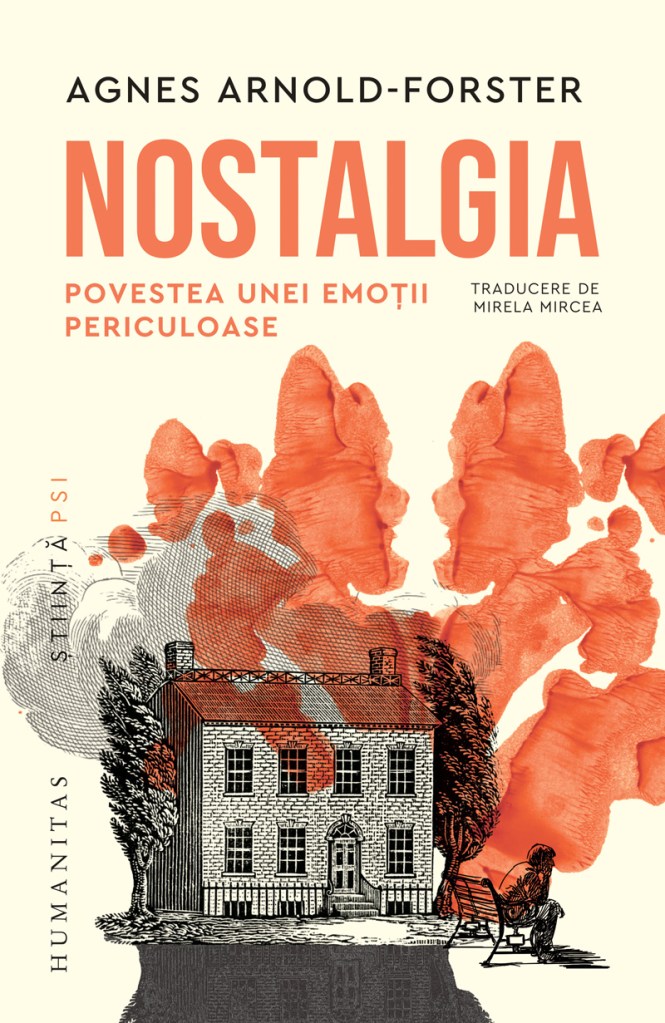
The incident makes these days a appreciated book about nostalgia to appear in translation at Humanitas Publishing House.
“Nostalgia. The story of a dangerous emotion” (“Nostalgia: A history of a Dangerous Emotion”), written by the historian Agnes Arnold-Forster, explains how the nostalgia evolved (how to define her “parent”, the Swiss Johannes Hofer in the seventeenth century, studying the European) to emotion, once technical progress has allowed people to travel and settle in other countries.
But, the author writes, “one of the most surprising things about nostalgia is not only the transformation of disease into emotion, but also its slow transformation from something associated with a place in a time associated” (I translated from English after the original).
That would explain, I say, nostalgia for eras that I have not experienced, but which we perceive, compared to the present, as good-such as the interwar period.
But, if the nostalgia is based on an emotion caused by a memory (as Arnold-Forster says), it may be nostalgia after the past eras is also a kind of underground collective memory, not just escapism.
Perhaps the nostalgia is more interesting to exploit in writing than in the cinema (although what does uJică is also a kind of literature.). Italo Calvino wrote somewhere that he sees travel as a rediscovery of something known, and for André Aciman Nostalgia is the main ingredient of fascinating essays in which the places where he lived (Alexandria – Egypt, France, Italy) become a single geography – fluid and, especially, interior.
Aciman (who became popular after Luca Guadagnino screened the novel “Call me by Your Name”), talks about an eye to the past, with which we operate when we research our memories.
But the eyeglass can be turned and vice versa
I discovered Aciman 21 years ago, when I read about the volume of “False Papers” and asked a friend from America to buy it. I liked those nostalgic essays so much that I found the email on the net and sent him an enthusiastic letter, telling him that his memories subtly communicate with my own memories, although they are quite different. And that, probably, the mechanism of remembrance reaches an area where the memories of all people communicate.
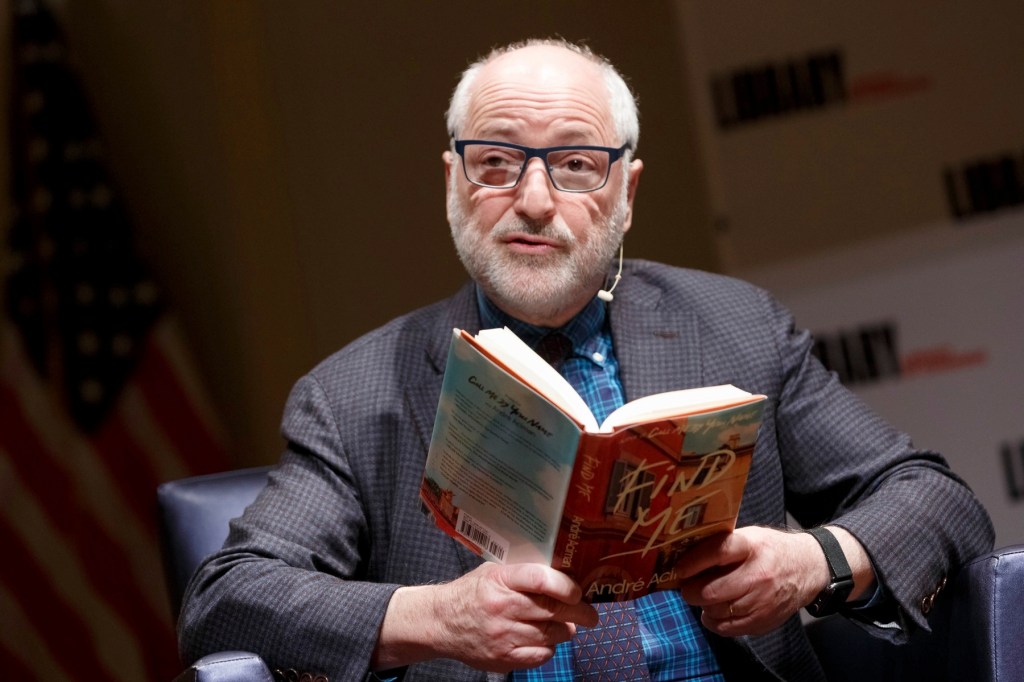
Or maybe it's just about emotion, which is the same regardless of support.
To my great astonishment, Aciman replied. “” After all, it does not matter where we come from: we each take an Alexandria in the heart, a place we lost, which has removed from us, but which continues to influence our lives. Movies that we design everywhere.
Aciman seemed to mourn the fact that the literature could not fix these “films designed on the air” (so that they are not put in words) and used the word film Not because he saw in the cinema the safest way of immortalization of the present, but because technically speaking the cinema was the most faithful solution. Designed in the air, memories did not necessarily become visible, but only homogeneous.
Returning to Ujică's film
Compared to Aciman, Andrei Ujică is like a neurosurgeon – only concerned with precision. In fact, when he finishes the assembly at “Twst”, the “Madame Bovary” recited, as if he wanted to make sure that the emotion, if desired by the author, can only appear from a maximum rigor. When the book becomes through sanding like a crystal, the emotion will appear – and it will not be the emotion of the book, but the emotion designed on the book by each reader.
“Twst” is not about The Beatles's concert at Shea Stadium or Pop Culture, neither about the social movements in America, nor about his life, nor about the real characters to whom the author borrows personal details, but (they take over the term, but it is the best) a “time capsule”. That is, a set of elements whose communication invokes (like Aladin's lamp) – that something ineffable and indefinite that accompanies every moment of history or a life taken.
See the movie without any expectations
Ujică researched the time in all his films, but what is more spectacular here is the way the past is currently mirrored, the reality in fiction and the individual in the collective – and mutually. Their permanent communication, as if it were a moving matter. I don't think Ujică found a clear answer to his questions, but that makes life still interesting, right?
Intentionally I did not want to give details from the movie and I preferred to arouse your appetite by bypassing it. See him without any expectations or Defense. Sun in his matter and you will arrive-maybe not during the projection or not immediately after, at some hot reserves where everything is moving and everything is possible.
On YouTube, there are more and more remastered, colorful and sound archive images that completely change your perspective on the past. Old images over a century that looks like this.
And they, and the film of Ujică suggest that time is not unidirectional and that people are part of a process that means life (or history). Even though this was not the most important thing he wanted to communicate to Ujică in “Twst”, it remains the most important.