On Wednesday evening, there were many indications that the US was going to attack. The Iranians closed their airspace. The Americans partially evacuated their military base in Qatar. Moreover, as Pleitgen reports, they sent six air tankers from there.
According to the journalist, this could mean two things. First, the planes were not supposed to stay on the ground in case of an Iranian counterattack. But secondly, as Pleitgen emphasizes, it's just as well the tankers may have been part of a larger military operatione.g. to refuel fighter planes flying towards Iran.
The context is important: Trump promised help to the Iranians, if the Islamic regime starts shooting at protesters. And that's exactly what the Iranian authorities did, probably murdering thousands of their citizens.
The article continues below the video
If the US president did call off the attack, what could have prompted him to do so? – In my opinion, it is very possible that it was a decision made literally at the last second – says a CNN correspondent in an interview with Ronzheimer. — Perhaps there was a moment when the military told him: this is the point of no returnand then Trump said: okay, but we're not doing that.
Pleitgen speculates that Trump may not have been convinced that a military attack would have the expected results. In other words: perhaps he stopped believing that force would really weaken the regimeso he withdrew.
Even if it were possible to eliminate the Iranian authorities, serious questions arise: – Does it exist? some power that would be able to take control of this countryensure stability and lead everything in a direction that would suit the US? I'm not sure if there was really clarity about the plan for the day after the attack, the journalist admits.
“A completely different scale than Venezuela”
Additionally, many unpredictable factors would appear in the region. Pleitgen, who has repeatedly reported on events in Iran, explains: – We must not forget that Iran is a country of 90 million people. Many people there are armedthere are guerrilla units and loyal militias operating throughout the region. However, this is a completely different scale than Venezuela.
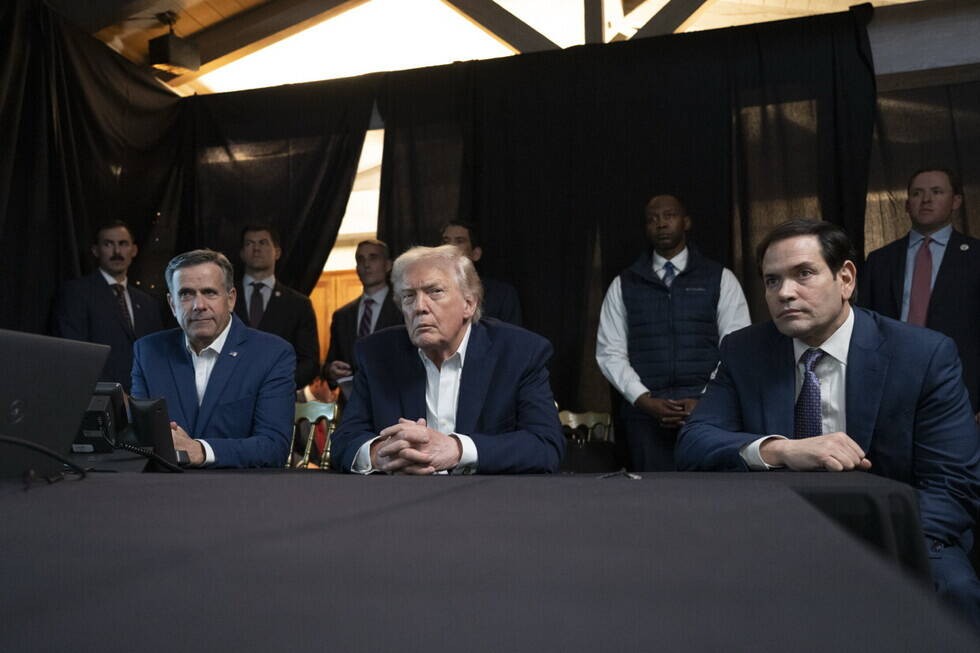
John Ratcliffe, director of the CIA, Donald Trump, president of the United States, and Marco Rubio, secretary of state, supervise a live shot of Nicolas Maduro, president of Venezuela. Palm Beach, January 3, 2026EPA/WHITE HOUSE PRESS OFFICE HANDOUT / PAP
— I think it was a very difficult decision, says the American journalist. — If so many things have already been activated (bases in the region were evacuated, perhaps planes were already in the air), then canceling such an operation is not easy.
Paul Ronzheimer adds: – I hear from various countries, e.g. Qatar and Saudi Arabia, that they strongly opposed the attack. First of all, we know that Qatar has a lot of influence over Donald Trump and perhaps that is where they used their influence.
Possible reason: Arab countries are more satisfied with weak Iranian authorities than with a completely new, potentially chaotic situation in the Middle East.
“Trump could have problems with his supporters”
It's coming to this also the internal aspect: — Trump's own electorate is against foreign adventures, as they call it, notes Pleitgen. — Especially if the conflict lasted longer, the president could have serious problems with his supporters. That certainly mattered too.
This means that Trump knows perfectly well that his voters are very critical of long and costly military operations abroad. With House elections coming up in 2026, the American president may not want to risk too much on the international stage.
Does this mean that an American attack on Iran will definitely not happen? It's still not clear. — Trump can always decide to make a new move or go back to this plan. The American president reserves freedom of action in the future says Pleitgen.
I’m Ashley Davis as an editor, I’m committed to upholding the highest standards of integrity and accuracy in every piece we publish. My work is driven by curiosity, a passion for truth, and a belief that journalism plays a crucial role in shaping public discourse. I strive to tell stories that not only inform but also inspire action and conversation.