What is the “purple miracle” and how it can save our lives. The foods that must be consumed daily to protect us from the worst diseases


Specialists have discovered that purple or dark blue vegetables and fruits with purple hues are a true miracle for health. Consumed daily, they lead to increased protection against cancer, have an antioxidant and anti-inflammatory effect, but also protect the brain or heart.
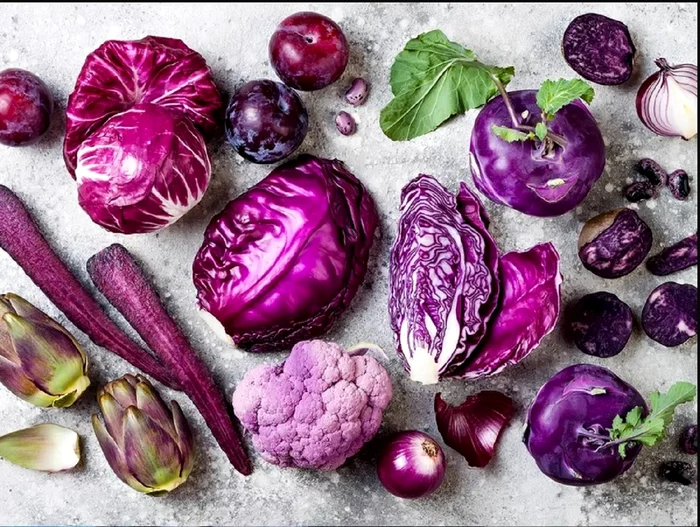
Purple vegetables and fruits PHOTO getty images
The number of cases of cancer, obesity, type II diabetes and cardiovascular diseases is increasing worldwide. The problem is that all these ailments – characteristic of the elderly a few decades ago – have begun to affect more and more young people. This in the conditions in which they are preventable through an appropriate lifestyle, in which nutrition plays a key role. People simply have at their fingertips a lot of miracle foods that, if consumed regularly, can prevent all these extremely serious diseases.
New studies show that we can talk about a real “purple miracle” in the field of nutrition. That is, fruits and vegetables of purple color or dark blue with purple shades, have particularly beneficial effects on health and, consumed daily, can protect us from many extremely dangerous diseases, such as those stated at the beginning of the article. Most of these vegetables and fruits are quite common in Romania and can be found at any grocer, market or supermarket. For example, red cabbage, red onion, plums, purple collards, eggplant and many others.
An increasingly aging and sicker population
Due to stress, unhealthy diet, pollution and lack of exercise, a significant part of the world's population is increasingly prone to premature aging and serious conditions, such as type II diabetes, cancer or cardiovascular diseases. Specialists say that oxidative stress of cells and chronic inflammation in the body cause the most serious problems. In this context, medical research is increasingly focused on finding remedies to reduce oxidative stress and inflammation in the body.
“Oxidative stress and chronic low-grade inflammation are widely recognized as fundamental factors contributing to the pathophysiology of many chronic diseases, including obesity, metabolic syndrome, type 2 diabetes, and cardiovascular disorders. Disruption of redox homeostasis triggers the activation of redox-sensitive signaling cascades, such as nuclear factor kappa B (NF-κB), c-Jun N-terminal kinase (JNK), and mitogen-activated protein kinase p38 (p38 MAPK), which amplify inflammatory responses, impair mitochondrial function and alter metabolic regulation. These processes form a vicious cycle that accelerates tissue damage and disease progression. As a result, they have become key targets for preventive dietary strategies aimed at restoring redox balance and modulating inflammation.”state Polish specialists Jarosław Nuszkiewicz, Joanna Wróblewska, Marcin Wróblewski and Alina Woźniak in “Anthocyanin-Rich Purple Plant Foods: Bioavailability, Antioxidant Mechanisms, and Functional Roles in Redox Regulation and Exercise Recovery” for the National Library of Medicine.
In this context, a category of plants with miraculous effects was discovered.
These are the ones that contain a large amount of anthocyanins, a powerful food antioxidant. “In this context, bioactive plant compounds with antioxidant and anti-inflammatory properties, such as anthocyanins, have received increasing attention. Their ability to influence molecular pathways involved in oxidative stress and inflammation suggests a potential role in supporting metabolic health, reducing disease risk, and increasing physiological resistance. As dietary antioxidants, anthocyanins may help prevent diseases such as cancer, diabetes, inflammation, and various neurological and cardiovascular conditions.”Polish specialists argue in the same paper.
The new color of health and longevity
The foods richest in anthocyanins are purple fruits and vegetables. That is, blackcurrants, blueberries, purple sweet potatoes, red cabbage, purple collards, plums, grapes, blackberries, eggplant, purple tomatoes, red onions, purple beans. Most of them can be easily found at any grocer, market or supermarket. Especially red cabbage, red onion, grapes, plums, blueberries and eggplant.
In fact purple, blue and red are the colors of health. And this in the context where anthocyanins are flavonoid pigments responsible for the red, blue and purple hues of berries, grapes, cabbage and other plant foods. These pigments give the color red in acidic environments and change to blue at a higher pH, these tones mixing in the plants that produce the deep purple hues characteristic of blueberries, black rice and sweet potatoes. Anthocyanin-rich foods contain various functional pigments known as anthocyanidins, such as cyanidin, delphinidin, pelargonidin, peonidin, petunidin, and malvidin. Berries are among the richest natural sources of anthocyanins, with levels reaching up to 611mg/100g. Blueberries, blackberries, blackcurrants and elderberries provide particularly high amounts of the key compounds making them true health miracles.
In turn, purple grapes and their juices, as well as dark-colored grape varieties used in red wine, contain high levels of malvidin glycosides, peonidin and petunidin. Plums provide additional cyanidin-rich contributions, while eggplant peel contains nasunin, an acylated anthocyanin. Among vegetables and grains, purple cabbage provides up to 75 mg/100 g, while purple sweet potatoes contain stable acylated anthocyanins, dominated by the cyanidin and peonidin forms. Pigmented staples such as black rice and purple corn provide anthocyanins in nutrient- and fiber-rich staples. All these compounds with complicated names for those who are not specialists in chemistry and food engineering are very useful for the human body. In particular, they have an important antioxidant and anti-inflammatory role that prevents cancer, type II diabetes and cardiovascular diseases. They also have an extraordinary effect on brain health, studies show, preventing diseases such as Alzheimer's. “Purple fruits and vegetables rich in anthocyanins – such as black currants, blueberries, purple sweet potatoes and red cabbage – are increasingly recognized for their beneficial health properties. These natural pigments exert antioxidant and anti-inflammatory effects, which makes them relevant both for the prevention of chronic diseases and for recovery after exercise.” states Jarosław Nuszkiewicz, Joanna Wróblewska, Marcin Wróblewski and Alina Woźniak, in the mentioned work.
As the Polish specialists show, these foods extremely rich in “purple power” given by anthocyanins and derivatives, also help to improve sports performance and recovery after exercise. “Synthesis of preclinical and clinical findings supports the potential of anthocyanin-rich foods as functional components in optimizing health, athletic performance, and recovery strategies”reports in “Anthocyanin-Rich Purple Plant Foods: Bioavailability, Antioxidant Mechanisms, and Functional Roles in Redox Regulation and Exercise Recovery.”
What is the optimal dose for the “purple magic” to happen
Numerous studies carried out on human samples show us how much anthocyanins we should consume per day, to have the expected effect for our health. Specialists say that doses vary from one individual to another, but also from the food consumed. However, experts from the Food and Agriculture Organization (FAO) and the World Health Organization (WHO) have established a universally accepted daily dose that can have extraordinary benefits on an individual's health. It is about 2.5 mg/kg per day.