The customs duties desired by Trump, blocked by an American court. Washington's administration reaction

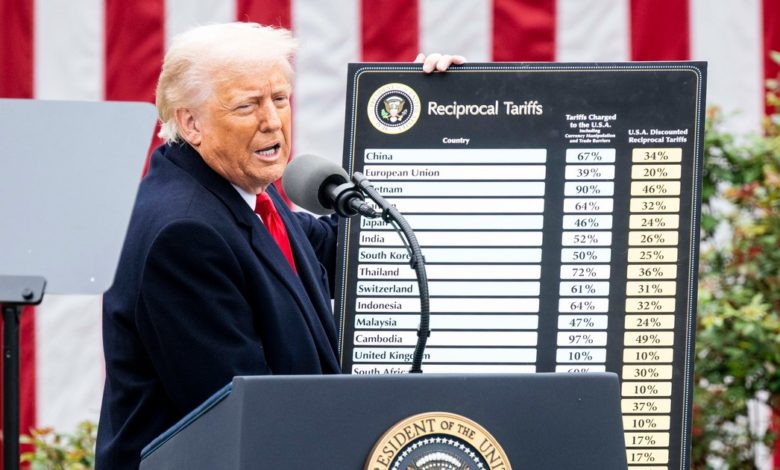
An American court specialized in international trade issues blocked by a decision published on Wednesday the so-called customs duties “reciprocal” of at least 10%, desired by Donald Trump and imposed on all products that enter the United States.
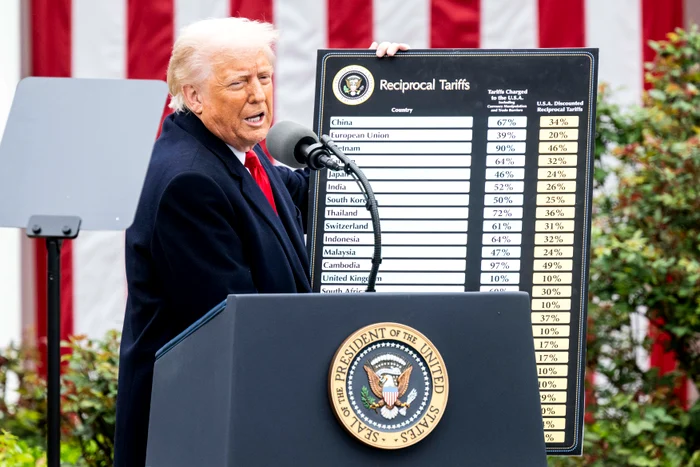
Trump's desired taxes, blocked by a US profimia photo court
According to the US International Trade Commission (ITC), the president cannot invoke the 1977 Economic Emergency Law, used by Trump to justify the use of executive orders in order to impose these customs duties, to “imposes an unlimited surcharge on products that come practically all countries”according to the decision consulted by AFP.
For judges, the executive orders issued on April 2, which require a minimum 10% rate on all the products entering the United States and up to 50%, depending on the country of origin, “They exceed the powers granted to the president in the Law on Emergency Economic Response (IEPA) to regulate imports by using customs duties”transmits Agerpres.
In a written opinion that accompanies the decision, one of the judges, who remained anonymous, estimated that “An unlimited delegation of the authority in terms of customs duties would be a renunciation of the legislative power for the benefit of another branch of the government”which is contrary to the American Constitution.
“Iepa allows the president to adopt the necessary economic sanctions in case of emergency to combat an extraordinary and unusual threat +”the court stressed.
Trump administration reaction
The Trump administration has submitted, according to reports, a notification of appeal, and officials from the White House reacted to the court decision by public statements stating its authority in this case, writes The Guardian.
“It is not within the competence of some judges and to decide properly a national emergency situation”said Kush Desai, spokesman for the White House.
The financial markets, on the other hand, welcomed the decision. The US dollar was appreciated according to the court of the court, registering increases especially in relation to the euro, the Yen and the Swiss franc. The futures contracts on Wall Street have grown, and the Asian scholarships followed the same trend.
If it is maintained, the decision is a major blow to Trump's strategy to impose high customs tariffs to obtain concessions from commercial partners, to bring jobs in the US and reduce the commercial deficit of $ 1.2 trillion – some of the main promises of his campaign.
Without the immediate lever offered by 10% up to 54% rates, imposed by Trump based on IEEPA (the Law on International Emergency Economic Powers), which applies in threatening situations “Unusual and extraordinary” During a national emergency, the Trump administration would have to adopt a slower approach, through lasting commercial investigations, under other commercial laws, to support their tariff threats.
The decision can be challenged
The decisions of the Manhattan International Trade Court, which judges disputes related to international trade and customs laws, can be challenged at the US Court of Appeal for the Washington DC federal circuit, and finally, at the US Supreme Court.
At least seven processes challenge these rates, which represents the main pillar of commercial policy promoted by Trump. As a rule, the rates must be approved by the Congress, but Trump claims that he has the authority to act unilaterally, invoking that the country's commercial deficits are a national emergency. He imposed rates against most countries in the world, causing agitation on financial markets.
Trump has applied customs rates against most countries in an attempt to reduce the huge and long -lasting commercial deficits. Previously, he has imposed taxes on imports from Canada, China and Mexico to combat illegal flow of synthetic immigrants and opioids across the American border.